

Los Angeles rewards families who plan ahead. Between hotel or vacation rental check-ins, strollers and jet-lagged little ones, you can burn a day just moving from point A to B. When you pick a family-friendly hotel or vacation rental in Los Angeles that sits close to your must-dos, rides feel shorter, nap windows stay intact, and you use fewer Uber rides.
We built this guide for parents and grandparents who want rideshare to be smooth, safe and predictable. You’ll see how California car seat laws work with state laws, how to pick the right car seat option inside the Uber app and how to handle LAX without turning your arrival into a luggage relay race.
California car-seat rules in plain English
California’s baseline is simple: your child rides in a restraint that matches their age, height, and weight. The California Highway Patrol child safety seat guidance outlines the main checkpoints, while the California DMV Driver Handbook section summarizes where kids must sit.
Under 2: rear-facing unless 40 lb or 40 or more inches tall per Vehicle Code Section 27360
Under 8 or under 4’9″: restraint in the back seat per the California DMV Driver Handbook section
Front-seat installs: allowed only in limited cases per Vehicle Code section 27363
These state laws require car seats that match your child’s size, even when the trip feels short. That applies in your own car, a taxi or any ride-share. The driver can be ticketed if a child is unrestrained, so you’ll get farther faster when you show up ready to install.
The current national safety recommendation from organizations like the American Academy of Pediatrics and the Centers for Disease Control and Prevention is that children should remain rear-facing as long as possible, until they reach the maximum rear-facing height or weight limit allowed by their specific car seat manufacturer.
This recommendation replaced the older “until age 2” guidance. Many newer convertible car seats now allow children to remain rear-facing until age 3–4 depending on their size and the seat’s limits.
When you’re using rideshares in Los Angeles with a young child, you have a few practical ways to handle car seat safety. The best choice usually depends on your child’s age and size, how much gear you want to carry, and how predictable you need the trip to be.
This is often the most reliable option because you control the fit. You choose the right car seat, you know its history, and you can set the harness the same way you do at home.
A convertible seat works well if you need both rear-facing and forward-facing capability in one seat. If you already travel with a Doona, you also get an instant stroller at the curb, making it easier to move through the city.
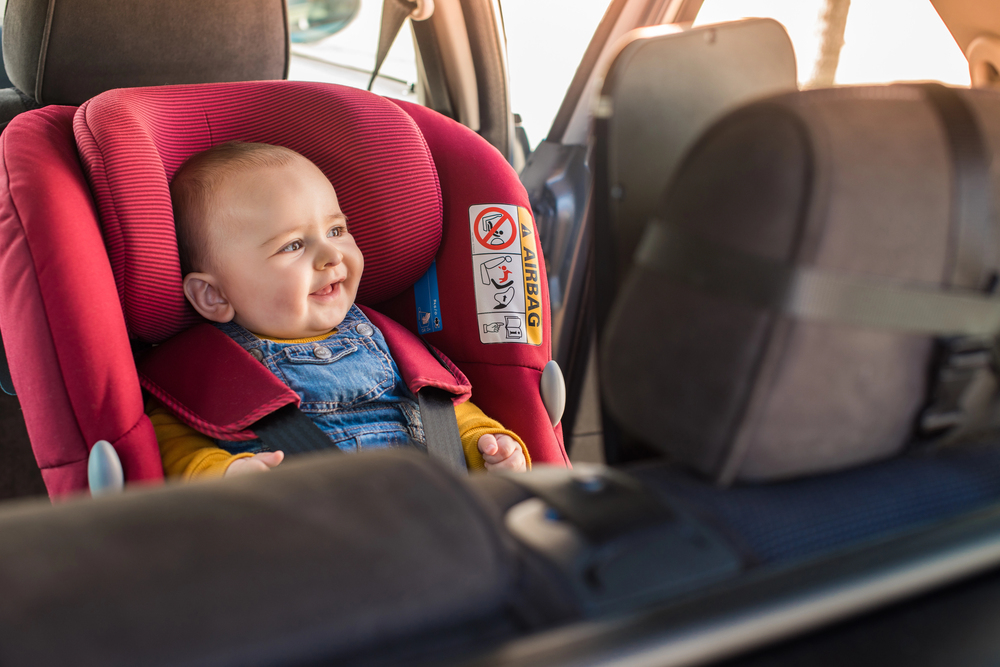
Rent gear at your destination and still use a proper car seat
Families flying into Los Angeles often do not want to drag bulky gear through terminals, shuttle stops, and hotel lobbies. Renting a car seat and stroller at your destination can reduce the hassle while still giving you a proper restraint for rideshare trips. Services like BabyQuip let you reserve vetted gear, including car seats and strollers, for delivery directly to your hotel.
Important: while BabyQuip can help with other baby gear, we do not install car seats.
If you choose this option, confirm the seat meets your child’s height and weight requirements.. You will still install the seat yourself, so the process remains familiar. Manufacturer-provided instruction manuals and installation videos are often available online if you need guidance.
Use Uber Car Seat when it matches your child’s needs
In some parts of Los Angeles, Uber offers a car seat option. Uber says the seat provided is the Nuna RAVA, a convertible model that supports rear-facing and forward-facing use within specific weight ranges, as outlined in the Uber Car Seat help article.
You still need to verify that the seat fits your child and that they are buckled correctly. If your child falls outside the listed size or weight range, choose another option.
Consider private child-focused ride services when you want built-in family logistics
There are times when it helps to use a service designed with families in mind, especially when you want a driver who is used to transporting children and handling the details that come with it. HopSkipDrive and Kango both appear in searches for kid-focused transportation, and their official sites present them as services built around screening, scheduling, and parent visibility.
HopSkipDrive says its drivers complete a 15-point certification process and annual vehicle inspections. Kango highlights background checks and TrustLine screening in California, including TrustLine certification with fingerprinting.
Avoid rides without a car seat whenever possible
This is the least safe option. A toddler on an adult’s lap is not restrained, and in a crash, your arms will not protect them. Even short rides in Los Angeles can involve sudden stops, quick merges, and distracted drivers.
If you are close to taking a trip without a car seat, stop and look for another solution. Public transit that allows your seat, a walkable outing, or lodging closer to your destination will all reduce the pressure to compromise.
Your lodging choice decides your daily ride budget more than any app setting. Family-friendly hotels in Los Angeles that sit near your one big outing cut down the number of times you need to reinstall car seats, and it keeps your kid’s schedule from unraveling.
Pick family-friendly hotels in Los Angeles with easy pickup zones
Look for a hotel that has a clear front drive or a marked rideshare pickup spot. A predictable curb helps your rider’s routine: open the door, install, buckle, then go.
Hotels that handle strollers well matter too. Wide elevators, luggage carts and a lobby you can navigate with a stroller prevent a pile-up right when your driver arrives.
What to look for when you’ll be using ridesharing all week
Proximity is the headline, then come the details that keep you calm.
A lobby that is not a maze when you have a stroller and bags
Staff who will store luggage so you can take one last ride after checkout
A spot where you can stage a car seat install without blocking traffic
Once your hotel supports the routine, you can plan one main outing per day and let nap time stay sacred.
“Which ride should I tap?” inside the Uber app or Lyft
The app is where most parents lose time, because the default ride type is not always the best fit for luggage, a booster and passengers with strollers. You’ll make better calls when you treat the screen like a tool, not a slot machine.
If you’re comparing Uber and Lyft, start with the car you need, then work backward to price. That keeps safe rides on the menu. When you’re using Uber in LA, save a pickup note that says you’ll be installing a car seat so the driver expects a short pause at the curb.
Start with vehicle size before you think about price
If you have one adult, one child and a compact travel seat, a standard ride can work. Add a stroller, a carry-on and a backpack and you may need an XL.
That decision lands before you debate Uber or Lyft. The Uber car has to physically fit your gear and still allow a safe install.
What does “Car Seat” mean when you see the car seat option
If Uber Car Seat shows in your area, you may see “Car Seat” as a vehicle type after you enter pickup and dropoff. Uber’s partner page explains the Car Seat ride uses a Nuna RAVA and lists Los Angeles as a supported market on the Uber Car Seat partnership page.
Treat it as a seat reservation, not a guarantee that your exact trip will always have car seats available. Even though Uber offers the product, availability can vanish during surge times.
Lyft and the “bring your own seat” expectation
Lyft’s rider policy states you should plan on bringing your own car seat for children that need one on its Policies for passenger use of Lyft page.
That means Lyft drivers are not required to provide car seats. Many ridesharing services like Uber also do not promise a seat unless you book a specific product that advertises it.
LAX with kids: getting from the terminal to your ride without chaos
LAX adds one extra layer: many app pickups happen at LAX-it. If you arrive with a stroller, two bags and a toddler who skipped their nap, you want a simple script.
FlyLAX’s LAX-it page outlines the pickup flow. Read it once before you land so you don’t hunt for signs while your driver circles.
LAX-it directions in 3 steps
Go to the arrivals level and follow the green LAX-it signs
Walk or take the free shuttle to the LAX-it lot
Request your ride once you reach the lot, so your driver meets you where pickups happen
That flow also applies if you decide to grab a taxi, since the LAX-it area services cabs and app pickups.
The car seat moment at LAX-it
Plan to install after the car arrives, not while you’re standing in the pickup lane guessing which vehicle is yours. Keep your seat out of its bag, loosen the belt path and have the harness preset to your child’s shoulders.
When the Uber car pulls up, greet the driver, tell them you’ll install quickly and start. Most frustration comes from searching for buckle hardware while your passenger door is open in traffic.
A fast install routine you can do at the curb
Rideshare installs feel stressful because time pressure distorts your brain. A repeatable routine fixes that.
The 120-second checklist
Confirm the seat belt locks and route it through the belt path
Press down where your child’s bottom goes and tighten
Check for less than one inch of movement at the belt path
Buckle the harness and pinch-test at the collarbone
Stow the stroller so it cannot fly forward
If you need a refresher on belt locking or installation basics, the NHTSA child car seat guidance gives a clear overview.
A rear-facing car seat setup protects the head and spine for small children, so you’ll choose it when your child is under 2 and within the seat limits. Once your child is older and meets the seat’s requirements, a forward-facing car seat can be used with a harness.
In LA traffic, you’ll feel the difference during hard braking. The safer position makes the ride calmer for you and your little one.
Booster seats, travel vests and compact backup plans
Not every family wants to travel with a full convertible seat, especially when you’re flying and you want one hand free. A booster can help for older kids.
RideSafer says its RideSafer Travel Vest is certified to FMVSS 213. WAYB markets the Pico travel seat as FAA- and NHTSA-approved.
Pack a travel vest only when it matches your child’s size and your planned ride pattern. A tool you can’t install smoothly becomes dead weight.
A ridesharing service gives you tools that help you feel less alone in the back seat. Turn them on before you travel, not while your toddler is crying, then you’ll actually use the safety features when you need them.
Uber describes its multi-step driver screening and background checks on Uber’s background checks page. It also explains RideCheck, which can prompt a safety check-in if the trip goes off-course on the RideCheck page.
Use a family profile before you land
If you’re traveling with grandparents or you’re splitting up for naps, the family profile feature can help you keep payment and ride tracking organized. Uber explains Family Profiles on its Family Profiles page.
Once it’s set, you can share the ride in the app and keep eyes on ETAs while you juggle bags.
Confirm the basics every time you ride
We like a short, repeatable check that doesn’t turn into a speech.
Match the license plate and name
Keep your child’s door locked until you’re ready to load
Ask for the air to be on before you install, since kids overheat fast
Keep snacks sealed until you’re moving
That’s rideshare safety in real life, not a checklist that lives in a blog post.
What to do when a driver hesitates about car seats
Drivers worry about time, not your kid. If you lead with clarity, most friction disappears.
Start with one sentence: “We have our car seat and we’ll install it fast.” When you stay calm, the driver stays calm.
If the driver refuses, cancel and request another ride. You don’t win an argument at the curb and you don’t want to ride with someone who’s already annoyed.
Planning LA days so you take fewer rides
Your best safety strategy is fewer installs. That’s where itinerary design matters.
Aim for one main outing per day, keep your lunch close to that outing and build a soft landing back at the hotel. A museum morning and a pool afternoon beats three cross-town rides that blow up nap time.
Families often underestimate LA distances. When you plan around proximity, you avoid rushed installs and last-second carpool detours that pressure you into bad calls.
Quick answers to the questions parents ask most
Do I need a car seat in an Uber or Lyft in California?
Yes. California car seat laws apply in any vehicle carrying your child, including a rideshare or taxi, and the driver is legally required to ensure the child is properly restrained.
Does Uber provide a car seat in Los Angeles?
Uber says Uber Car Seat can be available in Los Angeles and the car seat provided is the Nuna RAVA on its Uber help page. Availability depends on supply in your area at that moment.
What if I have a stroller and luggage?
Request a larger ride if you need it, then load the stroller last so it stays accessible. Passengers with strollers move faster when the stroller does not get buried under suitcases.