

Key Takeaways
Keep tide pool outings comfortable:
- Start with secure shoes: Choose snug, closed-toe footwear with traction that stays put when wet.
- Dress for easy movement: Pick flexible, quick-dry clothes with sun coverage and light, removable layers.
- Pack a dry reset: Bring spare clothes, socks, warmth and a towel for sandy, wet moments.
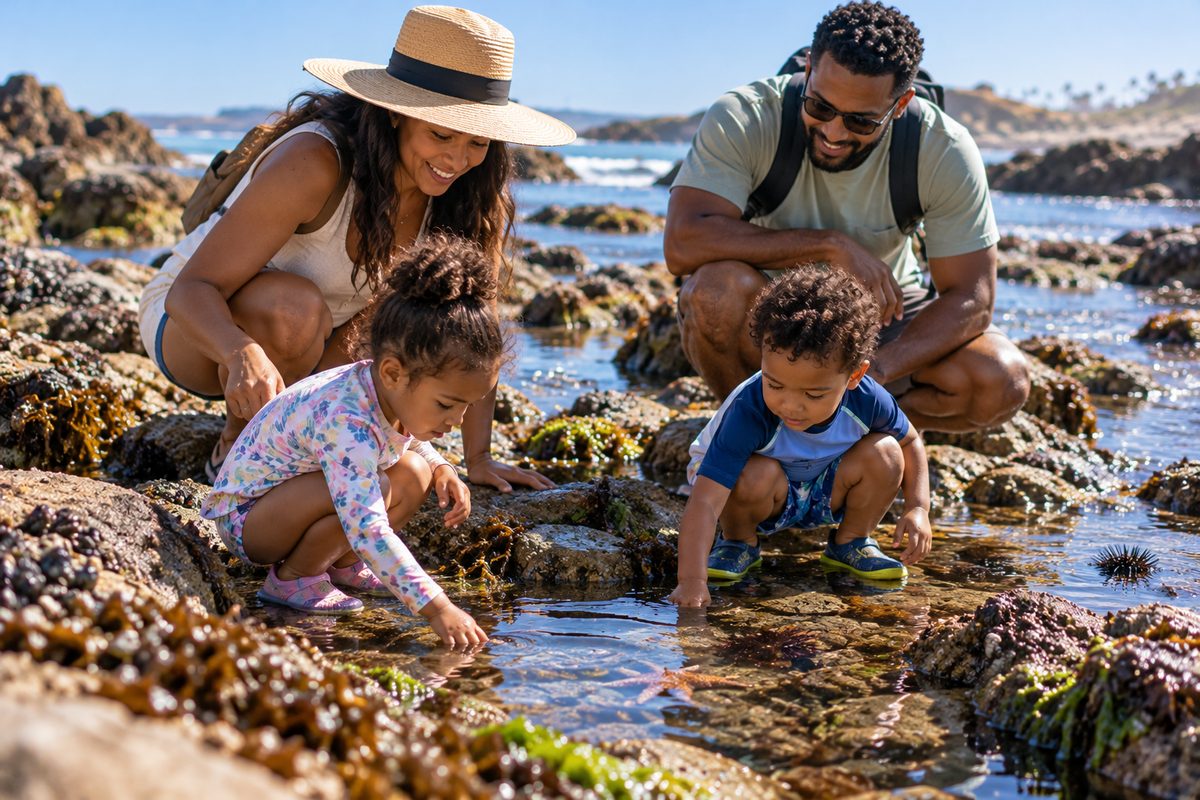
Choosing the right clothes for toddler tide pool trips can make the difference between a curious little explorer and a cold, sandy child who wants to leave five minutes after you arrive. Tide pooling at White Point Beach is not quite the same as a regular beach day.
You’re dressing for wet rocks, crouching, splashing, breeze, mud, sand and a toddler who may decide that sitting in shallow water sounds like the best idea ever. That doesn’t mean you need a complicated outfit plan.
The goal is simple: help your toddler move steadily, stay comfortable, recover quickly from messes and keep exploring without every damp cuff or sandy sock turning into a problem.
White Point and Royal Palms Beach are known for their coastal setting, with tide pools, picnic areas and a playground, so families often treat them like easy beach stops. For toddlers, though, the outfit needs to match the rocky shoreline more than the beach blanket.
Why Tide Pool Trips Need Different Clothes Than Regular Beach Days
A normal beach outfit is usually built for sand, sunshine and maybe a little splashing at the water’s edge. Tide pooling asks more from a toddler’s clothes. Your child may squat to look into a shallow pool, step from one uneven patch to another, lean over wet rocks, brush against seaweed or climb with both hands and knees.
That’s a lot of movement for a cute beach set that only works when a child stays dry.
Tide pools form when seawater remains in rocky areas as the ocean pulls back around low tide, which means the best exploring usually happens on surfaces that are damp, uneven and sometimes slippery. Your toddler’s clothes need to handle that setting without making movement harder. Bulky layers can throw off balance. Loose hems can drag through water. Stiff pants can make crouching frustrating.
Think of the outfit as light protection, not decoration.
The best toddler tide pool clothes share a few qualities. They stretch enough for climbing and squatting, dry faster than heavy cotton, rinse clean without a fight and offer sun coverage without trapping too much heat. They also leave room for toddler opinions, because the best outfit in theory won’t help if your child refuses to wear it.
The Best Shoes for Toddlers on Wet Rocks
Footwear deserves the most attention because tide pooling involves walking, balancing and crouching. Toddlers don’t just stand and admire the view. They test surfaces, bend suddenly, reach toward interesting textures and often insist on walking by themselves right when the ground gets tricky.
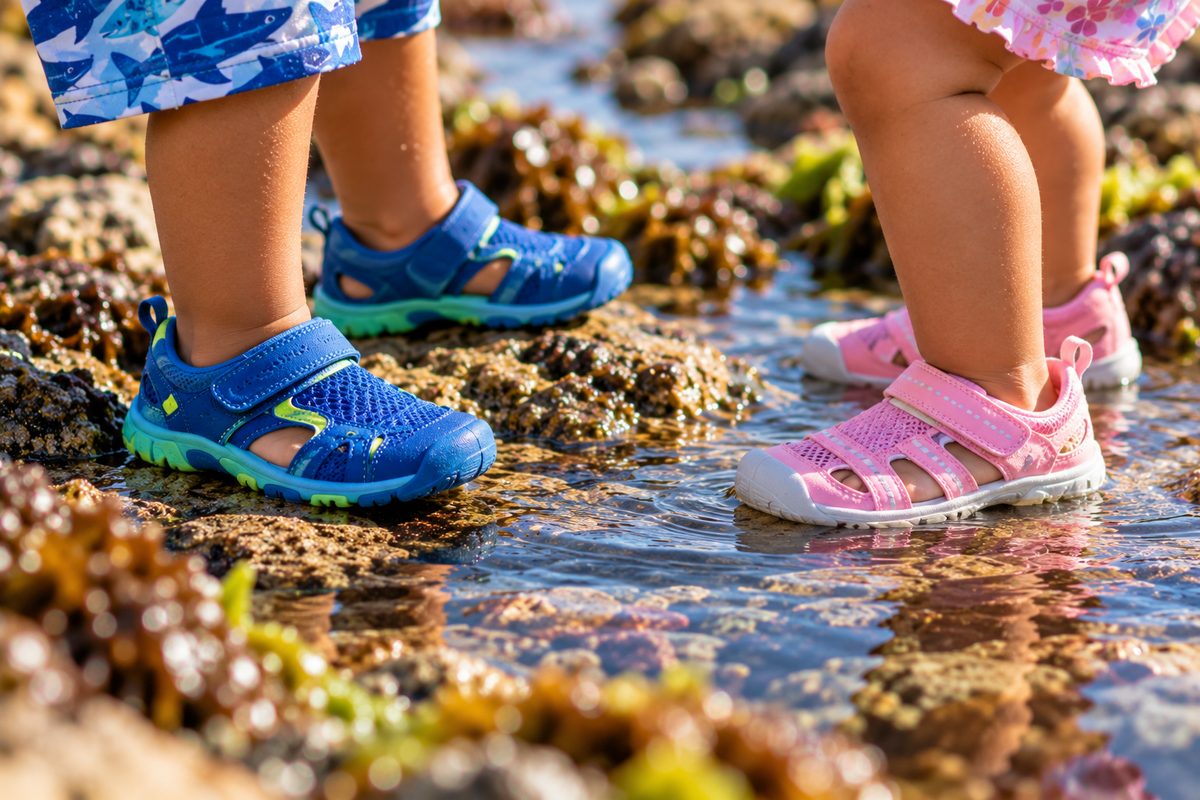
A good tide pool shoe should fit snugly, stay on when wet and provide traction on damp surfaces. Closed-toe water shoes, sturdy water-friendly sneakers or secure adventure sandals with protected toes can all work, depending on your child’s age, balance and how much water contact you expect.
The shoe should feel boring in the best possible way.
You don’t want your toddler thinking about rubbing straps, trapped pebbles or a heel that slips off every third step. You want them focused on looking, pointing and moving carefully. A shoe that fits close to the foot helps your child feel the ground without sliding around inside it.
Avoid flimsy flip-flops. They make toddlers work too hard to keep the shoe on, and they offer little protection when small toes meet rocks. Oversized rain boots can be just as frustrating because they may fill with water, drag at the calf and make squatting clumsy.
Bare feet may sound natural, but wet rocks, rough shells and hidden edges can turn that choice into a fast retreat. Sandals can work only when they’re secure.
If the sandal has a firm sole, a snug heel strap and decent toe protection, it may be fine for a cautious child who won’t be stepping into much water. If it slides, flops or leaves toes fully exposed, save it for lunch or the playground after the tide pools.
A Simple Formula for Clothes for Toddler Tide Pool Trips
Here’s the easiest way to think about clothes for toddler tide pool trips: stable shoes first, flexible clothes second, backup warmth third.
That order keeps the outfit focused on what your child will actually do. A toddler who can walk steadily and squat comfortably is already set up for a better outing. A toddler with a dry layer waiting nearby is also easier to reset when the wind picks up, or wet clothes become a sensory battle.
For many families, the best starting outfit looks like this:
- Closed-toe water shoes or secure water-friendly sneakers
- Flexible shorts, leggings or joggers that can get damp
- A lightweight top with good sun coverage
- A zip hoodie, fleece or wind layer for cool mornings
- A hat that stays on better than it photographs
- Dry socks and a full change of clothes for afterward
That outfit can shift by season, tide time and child temperament, but the logic stays the same. Dress for movement first, then weather, then cleanup.
What Toddlers Should Wear for Comfort and Sun Protection
Comfort matters because toddlers notice small irritations loudly. A twisted waistband, a sticky, wet sleeve or a scratchy tag can ruin the whole outing. Tide pooling already asks them to manage new textures, bright light, wind and careful walking, so clothing should remove friction rather than add to it.
Start with flexible bottoms. Lightweight joggers, leggings, quick-dry pants or soft shorts all work when they let your toddler bend deeply at the knees. Pants offer more coverage from the sun, breeze and rough surfaces, but shorts may be better on a warm day if your child hates damp fabric clinging to their legs.
The right choice is the one your child can move into.
For tops, think coverage without bulk. A lightweight long-sleeve shirt or rash guard can protect shoulders and arms while still allowing movement. The American Academy of Pediatrics recommends sun protection that includes shade, hats, sunglasses and sunscreen, so clothing can do some of the work before you even open the sunscreen tube.
A hat helps too, as long as it stays on. Bucket hats, caps with neck flaps or soft-brimmed sun hats tend to work better than stiff hats that fly off in coastal wind. If your toddler hates hats, bring one anyway and keep expectations flexible. Some children will wear a hat for ten minutes, reject it, then ask for it again when the sun hits their face.
How to Dress for Cool Mornings and Ocean Breezes
White Point Beach outings often revolve around low tide, not the warmest part of the day. That can mean a morning visit when the air still feels cool or a breezy coastal window that looks sunny in photos but feels chilly once pants cuffs are wet.
Layering solves more problems than one heavy outfit.
For a cool-morning low tide, start with a flexible base layer and add a light fleece or hoodie that can be removed once your child warms up. A wind-resistant outer layer can help if your toddler tends to get cranky when cold air hits damp sleeves. Keep the layer thin enough that your child can still bend, climb and sit without feeling bundled like a marshmallow.
For sunny but breezy weather, a long-sleeve rash guard or lightweight sun shirt with shorts or leggings often works well. Add a hoodie for the walk-in, the snack break or the ride back to your hotel or rental. The trick is keeping warmth available without turning the tide pool area into a closet change.
For splashy exploration, expect more water contact than planned. Some toddlers will carefully dip one finger. Others will sit down in a shallow pool with the confidence of someone who packed their own laundry bag.
Plan for the second child, even if you hope for the first.
Clothes for Toddler Tide Pool Trips by Weather and Mood
A toddler who is still unsteady on their feet needs the most secure footwear and the least complicated clothing. Choose snug closed-toe shoes, soft pants that don’t drag and a top that allows full arm movement. Skip anything stiff, oversized or slippery. You may also want fewer accessories because every hat, strap and loose layer becomes one more thing to manage while you’re trying to maintain balance.
A child who wants independence on slippery ground needs shoes that stay put and clothes that won’t trip them up. This is where oversized rain boots, long dresses, loose coverups and dangling hoodie strings can make the day harder. Dress them so you can say yes to small moments of independence while still keeping close hands nearby.
A toddler who hates wet clothes needs a different kind of strategy. Choose quick-dry fabrics, avoid heavy cotton pants and bring a change that’s easy to put on in the car. If your child melts down when socks feel damp, pack more than one spare pair. Wet socks can look like a tiny problem and feel like a disaster to a toddler.
A family coming straight from a hotel or vacation rental may want the lowest-fuss setup. Dress your toddler before leaving, keep backup clothes in a small bag and leave the bigger travel gear out of the tide pool zone. If you’re traveling and trying not to pack every bulky item from home, BabyQuip can help with baby and toddler gear rentals for longer trips, so you can save your packing energy for the smaller items that matter for local outings.
If grandparents are joining, you can also rent mobility gear to make the day more comfortable, from parking transitions and picnic areas to playground time and the return to your lodging. BabyQuip offers clean, safety-checked wheelchairs and walking aids, delivered to hotels, vacation rentals, residences or airports.
What to Pack as Backup Clothes
Backup clothes are not a sign that you overpacked. They’re how you protect the end of the outing.
The most common post-tide-pool problems are damp cuffs, sandy socks, muddy knees, wet sleeves and a toddler who suddenly cannot tolerate any of it. A dry outfit waiting in the car can turn that moment from a full reset into a quick change. It also gives you more freedom during the outing because you won’t spend every minute trying to keep your child perfectly dry.
Keep the backup set simple:
- Dry shirt
- Dry bottoms
- Underwear or diaper supplies
- Socks
- Shoes for the ride home or lunch stop
- Warm layer
- Towel
- Wet bag or plastic bag for damp clothes
You don’t need to carry the full backup outfit onto the rocks. In most cases, it can stay in the car or stroller unless the walk back is long or the weather is cold. Keep a towel and a warm layer within easy reach, rather than the full change, especially if you plan to sit for a snack before leaving.
If your outing continues to lunch or a playground, dry clothes become even more useful. A toddler who tolerated wet leggings at the beach may not tolerate them in a restaurant seat. If you’re planning a short outing, the two-hour White Point tide pool itinerary can help you picture where a snack break, change of clothes and exit might fit without stretching the day too far.
What Not to Put on a Toddler for Tide Pooling
Some clothes look perfect in the driveway and fail fast at the tide pools.
Long dresses and loose skirts can get caught under the knees when toddlers squat. Wide-leg pants can soak up water at the hem. Stiff denim can make climbing and crouching uncomfortable. Heavy sweatpants may feel cozy at first, but they can become cold and heavy once wet. Flip-flops and backless slides can turn every step into a negotiation.
Rain boots are a maybe, not an automatic yes. They can work on a damp path or for puddle play, but oversized boots can wobble on uneven rocks and fill with water during splashy exploring. If you bring them, make sure your child can walk and squat in them easily before the outing.
Also, be careful with brand-new shoes.
Tide pools are not the best place to discover that a seam rubs, a strap pinches or a sole gets slick when wet. Try shoes on before the trip. Let your toddler walk in them around the house or yard. A few minutes of testing can save you from carrying a barefoot child and two rejected shoes back to the car.
Clothing Helps Toddlers Explore More Respectfully
The right outfit doesn’t just help your toddler stay comfortable. It also helps you guide behavior.
A child with stable shoes can slow down and step carefully. A child who isn’t cold can listen better. A child whose pants allow squatting can crouch to look instead of grabbing for balance. That matters in tide pool habitats, where careful feet and gentle hands protect both the child and the small living things around them.
NOAA’s Monterey Bay National Marine Sanctuary encourages tide pool visitors to step carefully, observe quietly, touch lightly and leave animals, algae, rocks and shells where they are. For toddlers, that guidance needs to become simple and physical. Shoes help with the “step carefully” part. Comfortable clothes help with patience.
You can say, “Let’s bend our knees and look first,” and your child’s outfit should make that possible.
If you want more help with the hands-on part of the outing, BabyQuip’s guide to what toddlers can touch at tide pools is a better place to go for more depth. For this article, the clothing takeaway is simple: dress your toddler so that exploring feels doable.
How to Handle Wet, Sandy and Cranky Moments
Even with the best outfit, your toddler may get wet, sandy or suddenly done. That’s normal. The goal is not to prevent every mess. It’s to make recovery easy.
When your toddler sits in shallow water, pause before reacting. If the weather is warm and you have dry clothes ready, it may not be a crisis. If the wind is cold, wrap them in a towel or add a warm layer before the chill catches up. Children often seem fine while they’re moving, then fall apart on the walk back once the damp fabric cools.
Sandy socks need quick action because they can bother toddlers more than wet pants. Take them off, shake out shoes if you can and decide whether the clean pair is for continuing or for the car. If you only have one dry pair, save it for after the outing unless your child truly can’t continue.
For muddy knees and wet cuffs, lower your standards in the moment. Tide pooling is a hands-and-knees kind of adventure for many toddlers. Clothes that can go straight into the wash are better than clothes that make you say “be careful” every thirty seconds.
A snack can help, too, but snack strategy deserves its own lane. If hunger is usually the start of your toddler’s outdoor unraveling, pair this outfit plan with ideas from tide pool snacks that hold up in wind, sand and real toddler hands.
How to Keep the Outfit Low-Fuss for Travel Days
Traveling families have a special challenge: you’re dressing for a specific outing from a suitcase, not a full closet. That can make every clothing choice feel more loaded.
Start by choosing pieces that can do more than one job. A rash guard can work for tide pools and pool time. Flexible joggers can be worn on the plane, at the beach and during a playground stop. Water-friendly sneakers may be useful for several outdoor days, not just White Point Beach. The more jobs each item can handle, the less you need to pack.
Keep one tide-pool-ready outfit separate from nicer restaurant or photo clothes. That way, you won’t talk yourself into dressing your toddler in something impractical because it happens to be clean and cute. The rocky shoreline will not care how sweet the outfit looked in the hotel mirror.
For the bigger trip plan, use the main guide to tide pools with toddlers in Los Angeles to connect clothing choices with timing, snacks, parking and what to do afterward. This article is focused on what goes on your toddler’s body, but the outfit will work better when the rest of the outing is realistic, too.

FAQs About Toddler Tide Pool Clothes and Shoes
Should Toddlers Wear Water Shoes for Tide Pools?
Yes, water shoes are often a good choice for tide pools when they have closed toes, a snug fit and a sole with traction. Look for shoes that stay secure when wet and don’t rub around the heel or ankle. Thin, loose water shoes that slide around inside can be almost as frustrating as flimsy sandals.
Are Sandals Okay for Tide Pooling?
Sandals can be okay if they’re secure, supportive and water-friendly. Choose a pair with a heel strap, a stable sole and enough toe protection for uneven ground. Skip backless sandals, flip-flops and anything your child has to grip with their toes to keep on.
Should Toddlers Wear Pants or Shorts?
Either can work. Pants are better for cooler mornings, breezy conditions or toddlers who kneel often. Shorts may be better on warm days or for kids who hate wet fabric on their legs. The best choice is flexible, comfortable and easy to wash.
What Should My Toddler Wear If It Is Cold But Sunny?
Dress in light layers. Start with a flexible base outfit, then add a hoodie, fleece or wind layer that can come off if the day warms up. Keep a dry layer ready for after the tide pools because cold often becomes a bigger problem once clothes are damp.
Do I Need a Change of Clothes After Tide Pooling?
Yes, bring a full change of clothes, even for a short visit. Tide pooling can leave toddlers with wet cuffs, sandy socks and muddy knees faster than expected. A dry outfit also makes the transition from lunch, the car ride or a nap much easier.
Are Bare Feet Safe for Toddler Tide Pool Trips?
Bare feet are not a good choice for most toddler tide-pool trips. Wet rocks can be slippery, and rough surfaces can bother or scrape small feet. Secure shoes help toddlers walk more steadily and make it easier for you to guide them through the outing.
Dress for the Child You’re Actually Bringing
The best tide-pool outfit is not the fanciest or the one that looks most like a beach photo. It’s the one that helps your toddler move, crouch, splash, recover and keep going.
If your child is cautious, dress for stability and warmth. If your child is sensory-seeking, dress for water and backup changes. If your child hates wet clothes, prioritize quick-dry fabrics and dry socks. If your child is still finding their balance, start with the shoes and build the rest of the outfit around steady movement.
That’s the heart of choosing clothes for toddler tide pool trips. Dress for wet rocks instead of a normal beach day, bring one more dry layer than you think you’ll need and let the outfit make the outing easier for everyone.