

Key Takeaways
Keep your tide pool plan calm:
- Check the right low tide: Choose a daylight low tide with a lower height for clearer tide pools.
- Arrive before the low point: Allow 30 to 60 minutes for parking, sunscreen, shoes and toddler transitions.
- Fit the family rhythm: Choose a tide window that works with naps, meals, travel and energy.
Learning how to read a tide chart can turn a White Point Beach tide pool trip from a hopeful guess into a much calmer family plan. You don’t need to be a surfer, boater or lifelong coast kid to use one well. You just need to know what the chart is telling you, what matters for tide pools and how to turn that information into a realistic arrival time with a toddler.
White Point Beach is not the kind of outing where any sunny beach hour works equally well. The best parts of the rocky intertidal area show up when the ocean has pulled back enough for shallow pools, wet rocks and small pockets of sea life to become easier to see.
Why Tide Charts Matter for White Point Beach
White Point Beach, often discussed alongside Royal Palms Beach, is known for rocky shoreline exploring rather than a simple sand-and-bucket beach day. Los Angeles County notes that White Point/Royal Palms offers tidepool and rocky shoreline exploration, along with restrooms, a children’s play area on the bluff, and a rocky shore where swimming is not recommended.
For families with toddlers, that distinction matters. You’re not only asking, “Will the weather be nice?” You’re asking, “Will the tide pools actually be visible when we arrive?”
A tide chart gives you that missing piece. It shows when the ocean is expected to be higher or lower throughout the day, so you can avoid arriving when the best exploring areas are underwater. Since tidepools form in rocky intertidal areas that are submerged at high tide and exposed at low tide, visiting during a lower low tide gives your toddler a much better chance to look, point, crouch and notice.
That doesn’t mean the lowest minute is the only moment that counts. It means your outing should be built around the low tide window, not around a random beach-time habit like showing up at noon because that’s when beach days usually start.
If you’re planning the whole White Point outing from scratch, start with the broader guide to tide pools with toddlers in Los Angeles. Then use this article to make the tide timing part feel simple.
What a Tide Chart Actually Shows
A tide chart is a daily schedule of predicted ocean water levels. NOAA explains tides as the regular rise and fall of the sea surface, with high tide occurring when the water reaches its highest point and low tide when it reaches its lowest point.
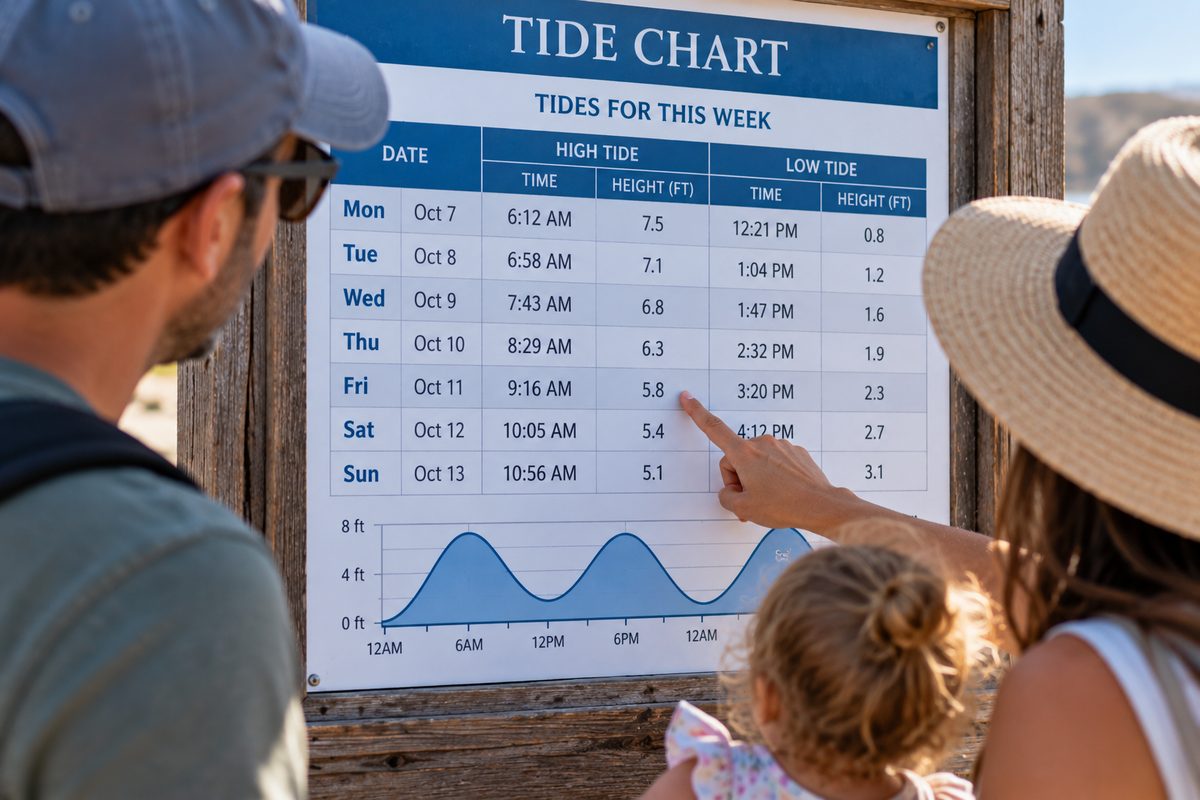
Most tide charts show three pieces of information you care about for a toddler tide pool trip:
- the date
- the time of each high tide and low tide
- the height of each tide, usually in feet
The time tells you when the water is expected to reach its highest or lowest point. The height indicates how high or low the water is expected to be relative to the chart’s reference level.
That last part is where many families get tripped up. A chart may say “low tide,” but one low tide can still be too high for easy tide pool viewing, while another can expose much more of the rocky area. For tide pooling, the height number matters almost as much as the time.
For White Point Beach, families can use nearby Los Angeles tide predictions from NOAA as a planning reference. The NOAA annual tide table for the Los Angeles tide station shows predicted tide times and heights in feet, reported relative to Mean Lower Low Water, often shortened to MLLW.
You don’t need to memorize what MLLW means. For planning, think of it as the baseline used by that chart. A low tide listed near 0 feet is low compared with that baseline. A negative number indicates the water is predicted to fall below that baseline, potentially making rocky tide-pool areas more exposed.
How to Read a Tide Chart Without Overthinking It
Start with the date you want to visit. Make sure you are looking at the right day, location and time zone. Tide times shift from day to day, so yesterday’s low tide does not tell you much about tomorrow’s family outing.
Next, look for the low tide time during daylight. Tide pools may technically be low in the dark, but that does not make for a toddler-friendly outing. You want a low tide that overlaps with a time when your family can arrive, walk in slowly and explore while everyone can see well.
Then look at the height number beside that low tide. A lower number usually indicates more exposed rocks and better tide-pool visibility. Many tide-pooling guides recommend planning visits around the lowest daytime low tides and looking for values near or below 1 foot, with especially good conditions often occurring during negative (below 0) low tides.
Here is the simple version:
- Find your date.
- Find the daylight low tide.
- Check the height.
- Plan to arrive before the lowest point.
- Leave yourself enough time for toddler transitions.
That’s enough to make a much better plan than guessing.
How to Read a Tide Chart for a Morning Low Tide
Imagine the chart shows low tide at 9:15 AM, with a height of nearly 0 feet. That’s a promising family window because the tide should be low when many toddlers are still relatively fresh.
You would not aim to pull into the parking area at 9:15. By then, you still need shoes, sunscreen, bathroom time, snacks, stroller decisions and the slow toddler walk toward the rocks. Instead, you might plan to arrive around 8:15 or 8:30 so the family can settle in before the lowest point.
That gives you a gentler rhythm: breakfast, drive, park, get ready, walk in and explore as the tide is still favorable. You can enjoy a short visit, take a snack break if needed and head out before everyone is hungry or tired.
If the morning timing looks good but you’re unsure how it fits with naps, the guide to the best time of day for White Point Beach tide pools can help you weigh tide timing against toddler energy.

How to Spot the Best Low Tide Window
The best low-tide window is not always the lowest tide listed on the chart. It is the best overlap between water level, daylight and your family’s ability to arrive without rushing.
For tide pooling at White Point Beach, the sweet spot is usually the period before and around low tide. California State Parks and other tidepooling resources recommend checking a tide chart and beginning your visit as the tide is going out, so you have longer to explore before the water rises again.
That outgoing-tide idea is helpful with toddlers. When you arrive before the lowest point, the beach becomes more accessible rather than less. You get time to move slowly, stop for small discoveries and adjust if your child needs a few minutes to warm up.
A practical window might look like this: arrive about 30 to 60 minutes before the listed low tide, explore through the low point if everyone is doing well, then begin wrapping up as the tide starts coming back in or your toddler’s attention begins to fade.
That does not mean you need a full two-hour tide pool session. A 35-minute exploration at the right tide can feel more successful than a long visit when the pools are hard to reach.
What the Tide Height Number Means for Tide Pooling
The tide height number tells you how much water the chart expects at that point in the tide cycle. For families, the difference between a modest low tide and a very low tide can change the whole feel of the outing.
A higher low tide may leave many pools covered or harder to see. You may still enjoy the coastal setting, but the tide pooling part can feel less rewarding for a toddler who needs close, easy-to-spot details.
A lower low tide usually exposes more rock, more shallow pools and more little places to observe. For a young child, that can mean less waiting, less guessing and more “Look, right there!” moments.
A negative low tide, sometimes called a minus tide, can be especially exciting because the ocean is predicted to drop below the chart’s usual low-water reference. You still need to move carefully on wet rock, but a negative daylight low tide is often the kind of chart detail that tells families, “This is a better day to try.”
A modest low tide is not automatically grounds for cancellation. It just changes expectations. You might plan a shorter visit, focus on looking rather than covering much ground and keep a backup idea ready, like lunch or a playground stop.
When to Arrive Before Low Tide With a Toddler
The tide chart gives you the ocean’s timing. Your toddler gives you the real schedule.
For most families, arriving 30 to 60 minutes before the listed low tide works better than arriving right at low tide. That extra time absorbs the ordinary delays that come with traveling with little kids: parking, unloading, bathroom stops, sunscreen, shoe changes, snack requests and the slow transition from car seat to walking.
If the low tide is at 9:15 AM, arriving at 8:30 may feel early on paper. In real family time, it can feel just right. You may spend 10 minutes getting organized, 10 minutes moving toward the rocks, and another few minutes helping your toddler understand where to step and what to look at.
With grandparents, younger siblings or a child who wants to do everything “by myself,” use the longer side of that range. You’re not wasting the window by arriving early. You’re making the window usable.
This is also where arrival logistics matter. If you want help thinking through unloading, stroller usefulness and the walk-in, the White Point Beach parking and stroller tips article picks up that part of the plan.
Common Tide Chart Mistakes Families Make
The most common mistake is checking the weather but not the tide. A sunny day can still be a disappointing tide pool day if the ocean is covering the rocky areas during your visit.
Another mistake is assuming “low tide” always means “great tide pooling.” Low tide is the right category, but the height number tells you whether that low tide is especially promising, just okay or probably limited.
Families also run into trouble when they choose noon because it feels like normal beach timing. Noon might work if the tide chart supports it, but it is not automatically better for White Point tide pooling. The ocean schedule wins.
Location matters too. A generic tide chart can get you in the general neighborhood, but you want a tide reference that makes sense for the White Point and San Pedro area. If you use an app, confirm the selected station or beach before you build your outing around it.
The last mistake is treating the exact low tide minute like an appointment. Low tide at 9:15 does not mean the tide pools appear at 9:15 and disappear at 9:16. Think in terms of a window, with the best exploring usually before and around the listed low point.
How to Use Tide Timing With Naps, Meals, and Travel Time
A tide chart should guide your decision, but it should not make the whole day feel rigid. Toddlers do better when the ocean plan fits the family rhythm.
If the best low tide is early morning, treat it like a breakfast-then-tide-pools outing. Pack the car the night before if you can, keep breakfast simple and aim to arrive before the low point instead of squeezing the beach between errands.
If the best low tide is late morning, think about hunger before you leave the car. A small snack before walking toward the rocks can keep the best tide window from turning into the hungriest part of the morning.
If the best low tide is late afternoon, look at your child honestly. Some toddlers rally after a nap and love an afternoon adventure. Others are already heading toward dinner-time sensitivity and may not handle slippery rocks, wind or transitions well.
If the low tide falls right during nap time, you have a choice. You can skip that day, try a short visit before or after the best window with lower expectations or save White Point for a date when the tide and your child’s energy line up better. That is not a failed plan. That is good family planning.
For families ready to turn a good tide window into a simple outing, the two-hour White Point tide pool itinerary can help you decide when to arrive, when to explore, when to snack and when to leave.
A Simple Sample Interpretation
Let’s say you open a tide chart and see this:
Low tide: 8:48 AM. Height: 0.2 feet (example only; always confirm current predictions for your date before you go).
For a toddler family, that looks like a strong option. The tide is low, the height is close to the reference baseline, and the timing gives you a morning outing before the day gets away from you. You might arrive around 8:00, use the first 15 to 20 minutes for parking and getting ready, then spend the best part of the window exploring.
Now imagine another day:
Low tide: 2:10 PM. Height: 1.4 feet (example only; specific values will vary by date and conditions, so check a current tide chart for your trip).
That is still a low tide, but it may not expose as much of the intertidal area. It may also collide with nap recovery, afternoon heat, wind or a toddler who is already running low on patience. You could still visit, but frame it as a coastal walk with possible tide-pool peeks rather than the main tide-pool outing of the trip.
One more:
Low tide: 5:35 PM. Height: -0.4 feet (example only; negative tides can provide especially good tidepool access, but you should always verify the latest tide predictions for the day you plan to visit).
That height looks exciting, but the timing depends on your family. If your toddler naps well and does fine before dinner, this could be a memorable late-day adventure. If your child melts down at 5 PM, the better answer may be to admire the chart and pick another date.
The chart gives you information. You still get to choose the plan that fits your child.
How BabyQuip Can Make a Timed Outing Easier
When you’re traveling with a toddler, the hard part is rarely just knowing what time to arrive. It is getting everyone out the door with enough gear, enough rest and enough patience to use that good tide window.
BabyQuip helps traveling families rent baby gear at their destination, including strollers, cribs, high chairs, car seats, toys and more. For a White Point Beach morning, that can mean your toddler sleeps well the night before, your stroller setup works for the rest of the trip, and your family does not have to haul every bulky item from home.
If grandparents are joining, plan accordingly. Families can rent mobility gear through BabyQuip before the day begins. Clean, safety-checked wheelchairs or walking aids can be delivered to a hotel, vacation rental, residence or airport, so everyone can enjoy the outing at a comfortable pace.
Keep the tide chart as the main planning tool. Let the gear support the plan, not complicate it.

FAQs About Reading Tide Charts for White Point Beach
What Tide Is Best for Tide Pools at White Point Beach?
A lower low tide during daylight is usually best for tide pools at White Point Beach. Look for a low tide with a lower height number, then plan to arrive before the listed low point so your family has time to get settled.
How Early Should I Arrive Before Low Tide?
Plan to arrive about 30 to 60 minutes before the listed low tide when visiting with a toddler. Use the shorter end if your family is quick and familiar with the area. Use the longer end if you need time for parking, restrooms, sunscreen, shoes or a slow walk.
Is the Exact Low Tide Time the Only Good Time to Go?
No. The exact low tide time is the lowest predicted point, but the useful visit window usually includes time before and around it. For families, arriving before low tide often works better than arriving exactly at low tide.
What Does Tide Height Mean?
Tide height tells you how high or low the water is predicted to be compared with the chart’s reference level. For tide pooling, a lower height usually means more exposed rocks and pools. A negative height means the water is predicted to drop below that reference level.
Can I Still See Tide Pools if the Tide Is Not Very Low?
Sometimes, yes. A modest low tide may still allow some exploring, but expectations should change. You may see fewer exposed pools, have less room to move and spend more time observing from easy spots rather than exploring widely.
Do I Need a Special App or Website to Read a Tide Chart?
No. A tide app can be convenient, but you can also use NOAA tide tables or another reliable tide source. The main thing is to check the right date, choose a location that makes sense for White Point Beach, find the daylight low tide and note the tide height.
Making the Tide Chart Feel Simple
You don’t need to know everything about tides to plan a good White Point Beach tide pool visit. You only need to know when low tide happens, how low it is expected to be and whether that window fits your toddler’s day.
Start with the chart. Choose a daylight low tide with a lower height number. Arrive before the lowest point so shoes, sunscreen, parking and toddler pacing don’t eat the whole window. Keep the visit short enough to end well.
That is the real skill behind how to read a tide chart for White Point Beach. You’re not trying to become a coastal expert. You’re giving your family the best chance to show up when the rocks, the pools, and the toddler mood can work together.