

Los Angeles Natural History Museum Exhibits can feel like a dream outing with a tiny kid, and they can also feel like a sprint through echoing halls while you negotiate a snack treaty. We built this guide for the sweet spot: a calm, curiosity-filled visit at the natural history museum when your child is under 3 and your schedule is real life.
If you’re visiting from out of town, renting the right baby gear will make this museum day smoother. A local baby gear rental service like BabyQuip can provide items like a sturdy stroller, a soft carrier and acar seat, which will change your whole flow. When your hands are free, you’ll notice more, and your child will too.
When nature and culture share one roof, a toddler gets a buffet of sights, textures and stories, and you get a day that feels bigger than a playground. Even a short visit can reset a cranky morning into something bright.
Know before you go
- Hours and admissions change, so start with Plan Your Visit before you leave home
- Parking details live on Parking and Directions
- If you qualify, free windows are listed on Free Hours and Admission
- Strollers, elevators and family care lounges are covered on Accessibility
- A quick route is easier with the Museum Map
NHM notes children ages 2 and under get in free, and parking is $20 flat in the garage. If you live in Los Angeles County, free admission from 3 to 5 PM Monday through Friday can help you test-drive the museum without a big commitment.
On the same page, NHM lists 9:30 AM to 5 PM daily hours and notes it is closed on the first Tuesday of every month except January, so a quick check will prevent a painful surprise.
The history museum of Los Angeles, which many locals grew up with, sits at Exposition Park, and it still plays that same role for families. Online searches sometimes shorten the full name to the Natural History Museum of Los Angeles, but the museum of Los Angeles County is better known as the Natural History Museum of Los Angeles County, or NHM.
The reason the building feels endless is the collection. NHMLAC says the museum houses over 35 million and that large collection includes 35 million specimens and artifacts from natural and cultural worlds.
They describe that scale as the largest natural history collection focused on natural and cultural history in the western United States, and the museum has also said it houses over 35 million specimens. Those vast collections of objects and specimens feed research and collections, and that’s why the galleries feel alive.
What counts as “the best” exhibit for kids under 3?
With infants and toddlers, the “best” part of a natural history museum isn’t the most famous artifact or the biggest exhibition. The best stop is the one your child can understand in a glance, explore safely and leave without tears, and you still get real history and science along the way.
To choose fast, we use a toddler 3S test. When a space checks these boxes, you’ll get more smiles and fewer power struggles, even on a busy day at the museum.
See-it-fast: your child spots the point in under ten seconds, like a giant dinosaur, a moving lizard or a sparkling gem case
Safe-to-touch: There are hands-on activities or clear boundaries, so you’re not saying “no” every five seconds
Stroll-and-stop: the paths fit a stroller, there’s a place to pause, and exits are easy if you need a quick reset
When a space passes the 3S test, it becomes a toddler win. When it fails, you don’t need to push. A gentle pivot will keep your day fun, and your child learns that the museum is a place where you listen.
A 90-Minute Plan for Los Angeles Natural History Museum Exhibits With a Toddler
You can spend all day at the museum, but the happiest trips with kids under 3 land around 60 to 90 minutes. That window keeps attention high and meltdowns low, then you leave while things still feel good.
Start with a big “wow” that requires zero instructions. Then move to one hands-on zone where touching is welcome. Add one quiet, slower gallery for balance. Finish outdoors or near an exit so leaving feels easy.
Here’s a simple loop that works even on busy weekends, even when l.a traffic gets spicy after an exposition event in the neighborhood. Arriving near opening or after lunch will help you dodge school groups.
- Otis Booth Pavilion fin whale “hello”
- Discovery Center for digging and Bugtopia
- Dinosaur Hall for giant bones and the Dino Lab window
- Nature Gardens to cool down and end strong
You can stop after any step, and it will still feel like a full outing.
If you arrive at nap’s edge, flip the order. Begin outside at Nature Gardens, then head inside for a shorter indoor loop. Fresh air buys you time, and the first gallery will land better.
The 5 best NHM picks for kids under 3
These are the easiest wins at NHM for toddlers: one hands-on indoor hub, one outdoor garden reset, one dinosaur gallery, one city nature lab and one calm bonus gallery you can swap based on mood. Each one supports visitors of all ages, but for kids under 3 they shine because the payoff is instant and you can exit fast when you need to.
On the way to the first stop, we like a 30-second “whale hello” in the entry pavilion. It’s not a full exhibit session; it’s a quick spark that sets the tone.
Los Angeles Natural History Museum Exhibits: Otis Booth Pavilion for the fastest “wow”
Walk in through the north entrance, and you’ll hit the north foyer, where a fin whale skeleton hangs above you. The scale lands instantly, even for infants.
This is a perfect first stop because it’s bright, open and quick. You get a headline moment without waiting for your toddler to read a label, and you can use it to inspire wonder right away. Snap one photo, then pocket your phone and stay present.
Try this with your child: point, whisper “whale,” then count “one, two, three” as you look from head to tail. Copy the tail sweep with your arm, then let your toddler copy you. That tiny ritual creates a shared memory, and it anchors the day.
If you want a little science without a lecture, the fin whale is listed as an endangered species under the Endangered Species Act. Reading one sentence on endangered species while your toddler stares up gives you that parent win without slowing the pace.
The Ralph M. Parsons Foundation Discovery Center
The Discovery Center is the best hands-on zone at NHM for kids under 3 because it invites touch and movement. The museum calls out Bugtopia, the Moveable Museum and the Paleo Playzone, and you can feel how the room is designed for short attention bursts.
Start with the Paleo Playzone. Your toddler can dig in a pit, then you can talk about how paleontology works at the simplest level: you unearth a clue, you look closely, you decide what it might be.
Keep your own expectations small. You’re not “finishing” the expo, you’re letting your child repeat one satisfying action five times. That repetition builds confidence and makes the museum feel safe, and it keeps you from rushing.
Bugtopia gives you an easy on-ramp to insect zoo energy without a long wait. Look for one big bug, one tiny bug and one shiny bug, then move on. If your child is into counting, count legs once and call it good.
If your child is sensitive, watch the sound level here. The room can get loud, and the echo can bounce. A quick break at the edge of the room will bring everything back down.
Dinosaur Hall, plus the behind-the-scenes Dino Lab
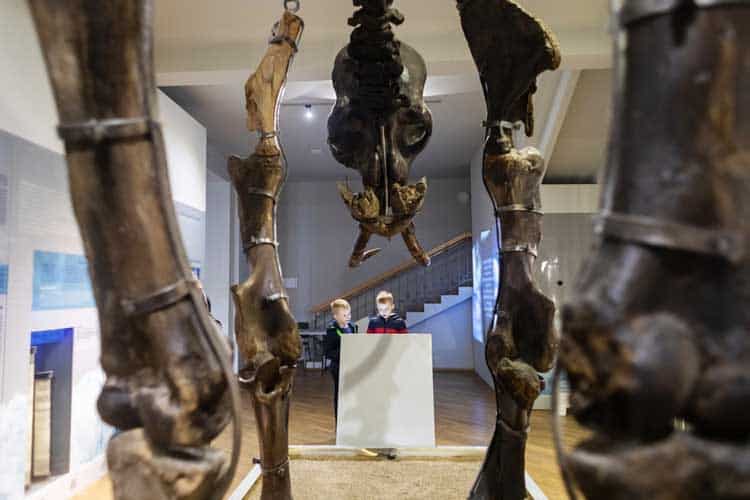
Dinosaur Hall is where many families aim first, but toddlers do better when you arrive after a warm-up. Once your child has settled, the big bones stop feeling intimidating and start feeling like a story, and that dinosaur hall visit becomes smoother.
NHM frames this as a permanent exhibits area filled with real fossil material, including a famous plesiosaur specimen and a mezzanine view that feels immersive without being crowded. If your stroller feels bulky, park it and switch to a carrier for ten minutes.
Toddlers love a simple script. Use three words: “big,” “small,” and “baby.” Point to the largest dinosaur, then find the smallest visible dinosaur, then ask where the baby is. The long-necked sauropod shapes can captivate even a wiggly toddler, and you just ran a whole language lesson while your child giggled.
The best part for many adults is the Dinosaur Lab. It is pure behind-the-scenes magic. You can watch fossil preparators chipping away rock to reveal bones, and the work changes as new specimen batches rotate through.
If your toddler starts to spin up, head to the mezzanine for a reset. The view shifts, the crowd thins and the experience turns more immersive without adding new rules. When the body calms down, curiosity returns.
Nature Lab for L.A.’s wild side
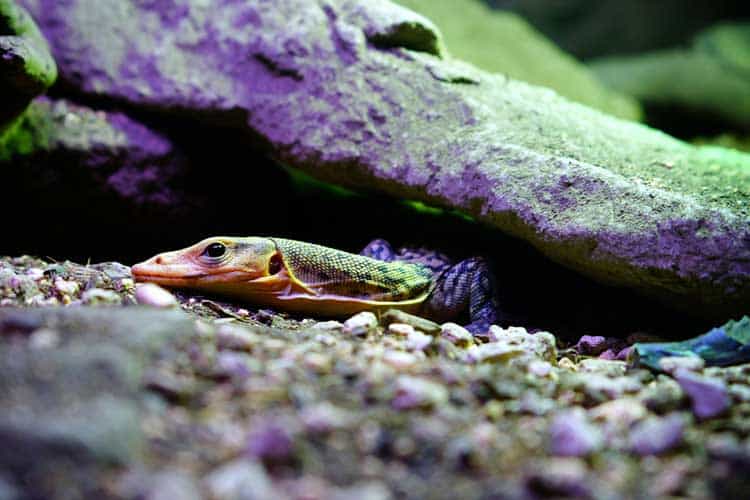
Nature Lab connects the natural world to the city your child lives in. NHM describes Los Angeles as a hotspot of biodiversity, then backs it up with live animals and tools that let you explore like a scientist.
This space works well for toddlers because the “reward” is immediate. You look into a habitat, you spot movement, you point, you smile. A reptile or a small mammal becomes an instant conversation even if your child only says “wow.”
If your timing lines up, Meet a Live Animal adds a short educator-led moment in the Nature Lab. These sessions are 15 to 30 minutes, and you might see snakes, cockroaches or opossums up close.
Kids who are nervous still do well here because you can stand back and keep a wide sightline. When they lean in, you lean in too, and that “get up close” moment happens on their schedule. You stay in control without saying no all day.
This loop pairs nature gardens and nature lab in a way that keeps energy balanced: inside for animals, outside for movement, then back inside if you want one more gallery. When your child gets older, you can connect the same animals to museum work in herpetology and mineralogy, and those words will already feel familiar.
Nature Gardens as a sensory reset
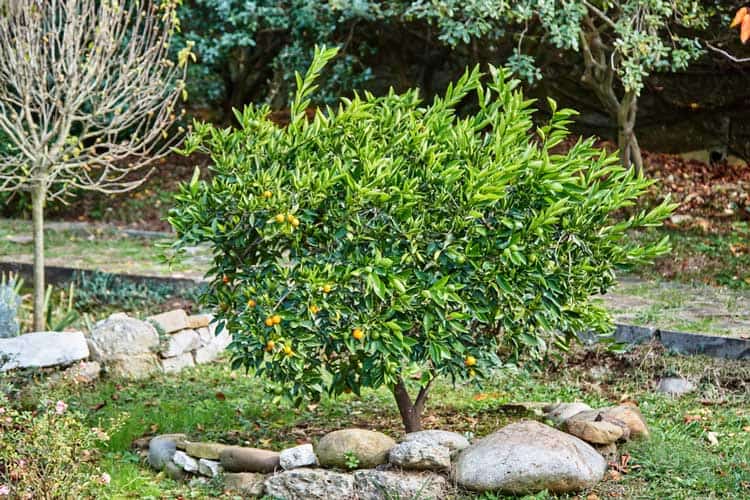
Nature Gardens are your secret weapon. They sit right outside the main building, and they turn museum energy into park energy, which is gold for kids under 3. When you need a reset, this is the fastest one.
NHM notes the gardens cover 3.5 acres and that the project planted 600 species of native and nonnative plants, and you’ll feel that variety when butterflies and birds keep stealing attention. For kids under 3, this is where you slow down.
Let your toddler walk, then sit on a bench and snack. Point at a lizard, then watch it disappear, then clap. Add one simple job: “find a leaf bigger than your hand.” That rhythm is why nature gardens work for families.
If you’re with a grandparent, this stop helps everyone. Shade, fresh air and space to move make the rest of your visit smoother, and it gives adults a chance to talk while the toddler explores.
Two copy-and-go itineraries for kids under 3
Both itineraries assume you start with a stroller and a snack. If you’re carrying an infant, swap the order and you’ll still win.
60-minute “no regrets” loop: start at Discovery Center for hands-on play, then take a straight walk to nature gardens for fresh air. If you have five calm minutes left, pop into Dinosaur Hall for one big dinosaur, then leave on a high note.
90-minute “grandparent-friendly” loop: start with the whale hello, then head to Discovery Center, then Dinosaur Hall, then Nature Lab. Finish outside in nature gardens where everyone can sit, snack and talk about what you saw.
The Rotunda and the architecture pause
If you have ten calm minutes, step into the rotunda. The space sits inside a Beaux-Arts building, and it feels like a pause button. It’s a good spot to regroup when a child has hit their limit.
Stand in the center, look up, then spin slowly once. Do it with your toddler in a carrier if you like. That gentle motion can dazzle without overstimulating.
Dioramas and the “quiet animal” trick
Dioramas are underrated for toddlers because they don’t demand much. You can stand back, hold your child and talk softly about one animal, and the calm tone will carry you through the next gallery.
NHM notes that diorama halls can work for visitors of all ages because you can take them at your own pace. When your child is tiny, you don’t need a checklist. Pick one scene and treat it like a storybook page.
Look for a mammal you can name in one word. Then ask your child to find its eyes. That game works with a mountain lion, a bear or a deer.
Age of Mammals, when you need a calmer dinosaur alternative
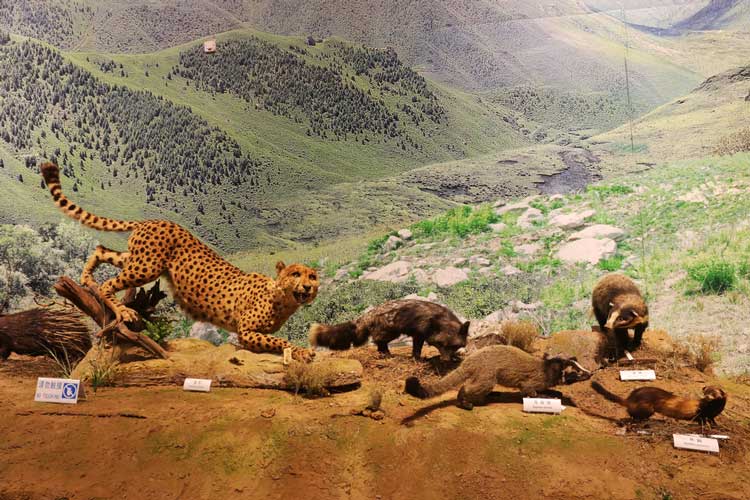
Age of Mammals can be a better fit than dinosaurs on days when your toddler is already keyed up. The hall mixes fossils with scenes of life long before the city looked the way it does now, and it helps you talk about past and present without a timeline.
One smart move: pair this with the fin whale stop. You can say, “This is a mammal too,” then point to your child and say, “You’re a mammal.” Toddlers love being included.
Becoming Los Angeles for a short burst of cultural history
Becoming Los Angeles is the best choice when you want local history without dragging your toddler through text-heavy panels. The gallery gives you fascinating objects you can point at, then you step away before attention fades. The story lands even better when you frame it as the place your family lives, now and across the greater Los Angeles region.
Keep this short. Aim for one artifact, one map and one “old photo” moment, then move on. You get cultural history in a toddler-sized bite.
Gems, minerals and crystals without the meltdown
Some toddlers light up when they see shine. If yours does, swing through the Gem and Mineral Hall for minerals and crystals that feel like treasure, then keep walking before your child wants to grab the glass.
If a ticketed exhibit is running, NHMLAC announced a winter run for Unearthed: Raw Beauty, which is built around mineral specimens in their natural form. It’s a good showcase of the beauty of minerals, and it lets you say gem with a straight face while your toddler just sees sparkle.
Check the listing before you promise it. A closure can happen when galleries rotate, and special exhibitions sometimes require separate tickets.
What to skip or save for later with kids under 3
Some rooms are amazing, but they ask more from a toddler than a toddler can give. Saving them for a later trip will make your first visit feel calm.
- Long text-heavy galleries where you can’t point to an object every few steps
- Dark immersive rooms that make exits feel confusing
- Ticketed special exhibitions when you’re unsure about nap timing
- The spider pavilion if your child is already wary of spiders, since fear will hijack the whole day
Spider Pavilion and why timing matters
Families ask about the spider pavilion all the time because it’s famous for orb weavers and webs. The museum calls it a seasonal exhibition that typically runs from September through November each year, so check the NHM website for current dates before you plan around it.
If it’s open when you visit, it can be amazing for toddlers who are curious and unbothered by creepy-crawlies. If your child is nervous, skip it and enjoy Nature Gardens instead.
A separate day idea: tar pits and the Ice Age
If your toddler becomes obsessed with fossils, la brea tar pits can be a separate day. The La Brea Tar Pits History page explains that this is an active research site and that millions of samples have been recovered, many tied to the ice age.
This detour works best when your child can handle a longer stroller ride and you can keep hands clean. Tar gets everywhere.
How to make each exhibit work for kids under 3
The museum has big rooms and long sightlines. That can feel freeing or stressful, depending on your kid. A few small tactics will make every stop easier, and they’ll keep hands-on activities fun instead of chaotic.
- Two snacks that don’t crumble, plus a water bottle
- A spare shirt for your toddler and a wipe pack for hands
- A small toy for the stroller, saved for transitions
- One comfort item for the final ten minutes, when patience runs out
- Check your stroller’s status. If it’s not comfortable for a full day, consider renting a more robust travel stroller through BabyQuip for maximum comfort and maneuverability.
Pick a “home base” phrase. We like, “We look, then we rest.” Say it as you enter each space, then follow through with a short sit on a bench or a ledge.
Use the “two no rule.” If your child says no twice, pivot. That rule will save you from the spiral where everyone is frustrated and nobody learns anything.
Let your toddler lead, then narrate. You’re not teaching a lecture, you’re turning their pointing into language.
Save the gift shop for last. That move protects your rhythm and your budget.
A quick practice run helps too. If you’re nervous about a big museum day, a museum in Newhall or any small local museum can be a low-stakes warm-up for stroller flow and snack timing.
Five toddler-friendly mini games that teach history and science
A museum day lands better when your child has a job. These games take under a minute to explain.
- The “find a circle” game in the rotunda, then you move on
- “Touch, then tell” at the fossil dig, where you touch sand and tell one word
- “Copy the dinosaur” where you stomp once, then whisper once
- “Color hunt” in the gem cases, where you name one color at a time
- “Listen for birds” in the nature gardens, then you look for the sound
- “world of cats” hunt in dioramas, where you look for any cat shape and whisper “meow”
- “40 fossils” spotting game, where you count any fossil image or bone you pass
You can run the same game across rooms, and your child will feel mastery.
Questions parents and grandparents ask before they go
How long should we plan to stay with a child under 3?
Plan for 60 to 90 minutes. Your child will stay engaged, and leaving on a high note will make the next visit easier.
Is the museum stroller-friendly?
Yes. The museum also publishes stroller and accessibility details, including elevators and family care lounges, on its accessibility page.
Are there areas that feel better for a first visit?
Start with the fin whale in the Otis Booth Pavilion, then head to the Discovery Center. Those two stops give you movement, wonder and a quick win.
What if our toddler is scared of dinosaurs?
Skip Dinosaur Hall at first and try the Age of Mammals or the Dinosaur Diorama halls. Once your child is calm, re-enter the dinosaur space from the mezzanine, where crowds feel lighter.
Do we need to worry about food and breaks?
Snacks will solve most problems. Aim for a quick snack before Discovery Center, then use Nature Gardens for a longer break.
Can we see live animals?
Yes. Nature Lab features live animals, and Meet a Live Animal sessions add a short educator-led moment that many toddlers love.
What else is nearby if the day ends early?
Exposition Park has open space, and you can also save a second outing for the tar pits on another day if your child wants more prehistoric stories.
Los Angeles Natural History Museum Exhibits work best when you treat the day like a gentle loop, not a checklist. Pick one hands-on area, one big “wow” and one calm space, then let your toddler’s curiosity set the pace. When you leave while everyone still feels good, you’ll want to come back, and those Los Angeles Natural History Museum Exhibits will keep growing with your child.