

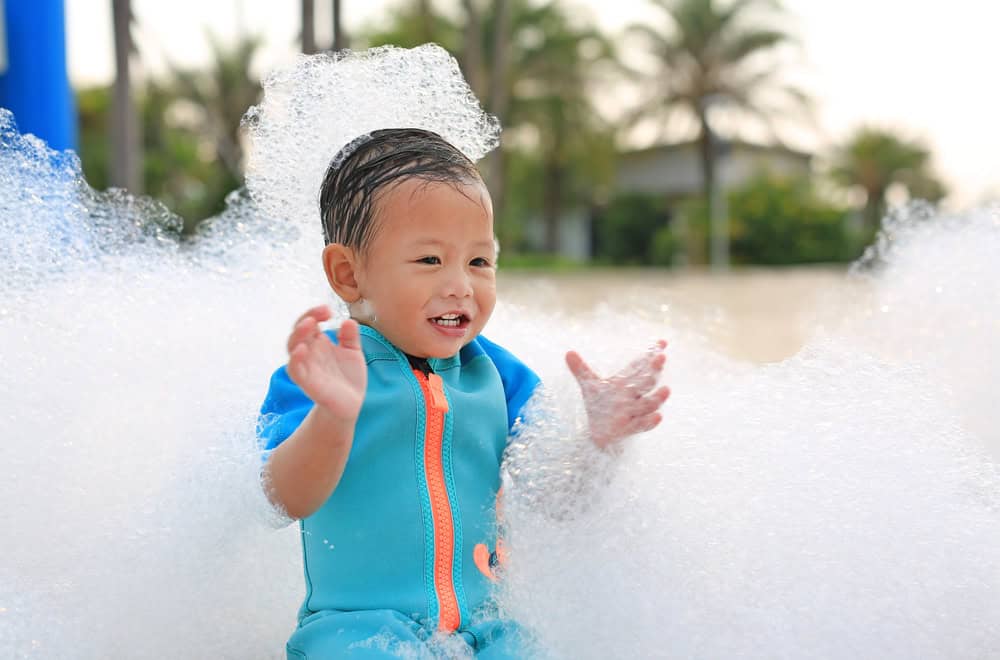
Wisconsin Dells Waterparks can be a blast with a baby, but comfort decides whether the outing feels fun or frustrating. If your little one gets cold quickly, melts down during transitions, or never settles after pool time, the answer is usually not to push through. It is to plan a shorter, warmer and more baby-friendly waterpark rhythm from the start.
That mindset helps this trip feel lighter right away. You are not trying to squeeze every minute out of the admission process. You are trying to give your baby a good experience and give yourself a day that still feels worth it.
If you are still building the big-picture plan, start with Wisconsin Dells with Kids. This article stays narrow on purpose. It is about warmth, timing and recovery for babies and younger toddlers during waterpark time.
Why Wisconsin Dells Waterparks Can Feel Cold Fast For Babies
Babies do not regulate body temperature as well as older kids and adults, which is one reason pool time should stay brief and closely watched. That matters at water parks because the cold feeling usually does not come from a single thing. It builds from water, wet skin, air movement and repeated transitions in and out of the pool.
Indoor settings do not erase that problem. A wet baby can be easily chilled, and the same basic reality shows up after splash pads, shallow play pools and indoor water features.
Warmth planning never replaces hands-on supervision. The American Academy of Pediatrics notes that babies can drown in as little as 1 or 2 inches of water, so every comfort decision still has to happen inside an arm’s reach setup.
That is why many parents feel confused at first.
They expected outdoor water to be tricky, while indoor water was expected to be easy. Then their baby starts fussing after ten or fifteen minutes or seems fine in the water but cries during the walk back to the chair, the locker area or the room. The issue often is not whether the park is “good for babies.” It is whether the visit is built around a baby’s limited comfort window.
You will usually get a better result from a gentle cycle of splash, warm-up, and reset than from a single long stretch in the water.
Start With The Right Definition Of Success

With babies, success at a waterpark rarely looks like a half-day marathon. It looks like a short, happy session, a calm exit and a baby who still naps, eats and settles afterward.
That shift can save the day before you even pack the pool bag.
Your baby does not care how much the day passes. Your baby cares whether the water feels manageable, whether your arms are warm afterward and whether the next transition feels too abrupt. When you plan around that instead of around maximum value, you make better choices all day.
Sometimes that means twenty good minutes.
Sometimes it means two short splash sessions with a warm break in between. Sometimes it means you get dressed, make it to the water, stay for a few minutes and call it a win anyway. For families with babies, that is not “leaving early.” That is reading the room.
How To Time Waterpark Visits For Younger Kids
The best time for a baby waterpark visit is usually when your child is fed, rested and not already overstimulated. That sounds obvious, but it changes the whole tone of the outing.
For many families, morning works best. Your baby has more patience, you have more control over the pace, and you are less likely to squeeze water time in after a long meal, a missed nap or a busy outing earlier in the day.
Try to avoid the fantasy version of the day where you do everything in one stretch. A baby who has already spent an hour in the car, checked into lodging, waited through lunch and then arrives at a loud pool deck is not starting from zero. They are already using energy.
A simple framework helps:
-
Aim for your first splash window after a feed and a little reset time, not in the hungriest or sleepiest part of the day.
-
Treat the first session as a test, not a commitment.
-
Plan a warm-up break before you think you need one.
-
Leave enough margin to get fully dry and calm before the next nap.
If your child is very young, a short first session is often the smartest move. Cleveland Clinic notes that even babies older than 6 months do better with brief pool sessions of about 30 minutes or fewer, and many babies will want less than that once you factor in getting in, getting out and warming back up.
A Wisconsin Dells Waterparks Routine That Actually Works
Think in loops, not blocks.
You arrive in dry layers. You pick one gentle area instead of bouncing around. You do a short splash. Then you wrap, hold, sit somewhere calmer and decide whether your baby looks recharged or done. That kind of rhythm usually works better than drifting from feature to feature until your child crashes.
If you are still deciding which kinds of spaces feel manageable for little kids, our guide to The Best Toddler Areas at Wisconsin Dells Waterparks goes deeper on what to look for without turning the day into a giant attraction checklist.
What To Pack To Keep Babies Warm Before And After Swimming

Warmth is mostly won in the transitions.
A baby who gets out of the water and stays wet while you dig through a bag, wait for a changing table or walk a long hallway will often unravel faster than a baby who never got very cold in the pool itself. Pack so you can shift from wet to warm in minutes.
Bring:
-
a hooded towel that you can grab one-handed
-
one full dry change of clothes for the first session, and another backup set
-
warm layers that go on quickly, including socks
-
easy-on shoes or booties for wet deck to room transitions
-
a parent layer for holding a wet baby without getting chilled yourself
-
a dry diaper setup and a separate swim diaper setup
-
a wet bag for suits, towels and anything damp
The diaper piece matters because slow changes make everything colder. If you want the full prep side of that question, read Swim Diaper Rules at Wisconsin Dells Waterparks. Here, the goal is simple: remove friction so your baby dries and stays warm fast.
One small trick helps more than people expect. Keep the after-swim outfit grouped in its own pouch or packing cube, in the order you will use it. That way, you are not pawing through snacks, sunscreen and backup wipes while your baby sits wrapped and shivering.
Warm-Up Breaks Matter More Than Extra Splash Time
Many babies can handle water in short stretches just fine. What they struggle with is the cumulative effect of getting wet, cooling off, warming slightly and then getting wet again before they fully recover.
That is why planned breaks work better than heroic ones.
A warm-up break does not need to be elaborate. It might mean wrapping your baby in a towel and holding them against your dry shirt. It might mean changing into dry clothes and taking a stroller walk through a warmer hallway. If you are staying nearby, it might mean returning to the room for twenty or thirty quiet minutes.
Those room returns can change the whole trip. If quick recovery and reliable naps are central to your plan, our guide to The Best Nap-Friendly Lodging in Wisconsin Dells can help you think through what kind of stay actually supports that rhythm.
You do not need to wait for obvious misery before taking a break. In fact, the best breaks usually happen while your baby still seems mostly okay.
Signs Your Baby Needs A Break
Babies are not subtle for very long, but the earliest signals are easy to dismiss when everyone is trying to have fun. Cleveland Clinic advises watching for cool, moist skin; chattering teeth; shivering; fussiness; or pale, bluish skin. Those are signs to stop and warm up, not to try another attraction.
Some babies show it more quietly. They stop engaging. They cling harder. They rub their face into your shoulder and seem unable to settle. Others get loud fast and go from fine to furious in a minute.
Look for patterns like:
-
less interest in splashing or reaching for the water
-
a stiff or tucked posture against your chest
-
lips or skin looking paler than usual
-
escalating fussiness during clothing changes
-
a baby who will not relax even after being wrapped up
If your child seems genuinely cold, unusually sleepy or hard to rouse, do not wait around to see if it passes. The CDC notes that in babies, signs of hypothermia include bright red, cold skin and very low energy. The Red Cross also advises removing wet clothes, drying the person and helping them into dry clothing and blankets while you gradually warm them.
Most families will not get anywhere near that point. Still, it helps to know that shivering and persistent cold are not small things to ignore.
Indoor Waterparks Can Still Feel Chilly
This is the part many first-time visitors underestimate.
Indoor air may be warm enough for adults in swimsuits, but babies experience the space differently. They are smaller, they are often carried while wet, and they do not generate much body heat when moving around on their own. Add a drafty walkway, a cool changing area or a pause while siblings finish one more turn, and the temperature drop feels much bigger.
That is why indoor should not automatically translate to all set. Use indoor waterparks as a convenience, not as proof that you can stay longer. They are helpful because weather matters less, and warm-up breaks are often easier to manage. They are not magic. You still need dry clothes ready, a quick exit plan and the willingness to cut the session short if your baby starts to lose steam.
How Long Babies Usually Enjoy Waterpark Play
There is no magic number that fits every baby. Age, water temperature, mood, nap timing and sensory tolerance all matter. Still, many parents are happier when they expect less.
A 7-month-old may enjoy a few minutes of held splashing, a pause, then one more brief return before the outing is done. A 1-year-old may alternate between play and warm snuggles and give you a little longer, especially in a calmer, shallow area. A toddler who loves water may stay interested longer than either of them, but interested does not always mean comfortable.
Your baby’s best session is the one that ends before recovery gets hard.
That is also why the toddler-area article belongs in the mix. Water temperature, spray intensity, noise and layout can all affect how long a child stays comfortable, but this piece is not where we should compare spaces in depth. Here, the main point is that no waterpark feature can override a baby’s physical limit.
Build Waterpark Time Around The Nap, Not Against It
A tired baby gets colder faster, fusses faster and recovers slower. That does not mean you must center the whole trip around sleep. It does mean you should stop asking a waterpark day to coexist with a badly timed nap window.
When possible, choose one:
-
A short morning water session followed by a nap
-
A nap first, then a very brief late session if your baby tends to wake happy
-
No water time that day because the schedule already feels tight
The middle option only works if you truly keep it brief. A quick afternoon dip that slides into late dinner, skipped wind-down time, and bedtime chaos is usually not worth it.
There is a quieter benefit here, too. When your baby knows sleep is coming soon, you do not need to squeeze every splash into one outing. You can let the day stay small.
When A Short Session Is The Right Call

Sometimes parents need permission more than tactics.
If your baby starts cold, looks overwhelmed by the noise, cries through the towel change or settles the moment you leave the pool deck, you do not need to salvage the session. You already got the answer. A short visit was the right visit.
That is still true on a big trip. It is still true if older siblings stay longer with another adult. It is still true if you pack carefully and hope for more. Babies do not ruin the plan when they need a shorter version. They reveal the version that actually fits.
This is one reason BabyQuip can make the whole trip easier. When larger essentials are already handled through BabyQuip, you can focus your packing space and mental energy on the swim-day items that really matter. And after a sensory-heavy outing, familiar sleep gear, a stroller for the walk back, or a dependable crib for nap recovery can help the whole day land more softly.
Frequently Asked Questions
Are Indoor Waterparks Too Cold For Babies?
They can be. Indoor settings remove outdoor weather from the equation, but they do not remove the basic problem of wet skin, cooler water and repeated transitions. Watch your baby more than the thermostat.
How Long Can Babies Stay In The Water?
Brief sessions are the safest starting point. Cleveland Clinic recommends keeping pool time brief for babies older than 6 months, and many babies will need warm-up breaks well before that upper limit.
What Should Babies Wear Before And After Waterpark Play?
Dry layers that go on fast usually matter more than anything fancy. Think: a hooded towel, a dry diaper, a warm outfit, socks and an easy handoff into arms, a stroller or room time.
How Can I Keep My Baby Warm Between Splash Sessions?
Move quickly from wet to dry. Wrap first, change next, then hold or head somewhere calmer and warmer. If you are on-site, a room break often works better than trying to extend the outing on the pool deck.
Should I Bring Extra Towels And Dry Clothes?
Yes. Pack more than you think you need. One damp towel or one failed outfit change can make the second half of the outing much harder.
Is It Worth Taking A Baby To Wisconsin Dells Waterparks At All?
Yes, if you define the day correctly. Wisconsin Dells Waterparks can work beautifully for babies when you treat the visit as a short comfort-first outing, not as a marathon. A warm baby, a calm reset and an easy nap afterward are more than enough.