

Key Takeaways
Before you reserve, confirm these:
- Start with the person: Ask what support they want and already use.
- Verify the exact item: Confirm fit, dimensions and how it will be handled.
- Plan the handoff: Know who will receive, use and return the equipment.
Coordinating the bigger trip? Plan mobility support for a loved one.
When a parent, grandparent or other loved one is counting on a visit or trip, the goal is usually simple: help them take part in the day without making mobility the center of every plan. If you are renting mobility equipment for a loved one, start with the person, not the product. A few thoughtful questions about what they already use, where they want support and who will handle the equipment can make the reservation feel like part of the plan rather than another problem to manage.
Those answers do more than narrow a product search. They help you protect the parts of the day that matter to your loved one, whether that means joining dinner, moving through a hotel, attending a family event or having a bathroom setup that works for the visit. From there, you can compare the actual rental listing with the trip, visit or temporary setup you are arranging.
What Does Your Loved One Want Help With?
Before anyone opens a rental listing, ask your loved one how they picture the day going. Where do they expect to want support, and what would they like to keep doing on their own? A long outing, a hotel corridor, a family event and a bathroom setup can create very different needs, even within the same trip.
That person-first approach has support beyond travel planning. The National Institute on Aging recommends asking an older adult directly what help they need and trying to respect their wishes when arranging support. A device that looks convenient to the organizer may still feel unnecessary, unfamiliar or impractical to the person expected to use it, so their preferences belong near the beginning of the decision.
The conversation does not need to sound clinical. Questions like “What part of the day are you most concerned about?” or “What do you already use comfortably?” can open the door. You might also ask whether they would prefer help walking, a place to sit for longer distances or support in the bathroom. Their answers give the family a better starting point than age, diagnosis or a relative’s best guess.
Are You Choosing Equipment, or Arranging What They Already Use?
Planning gets simpler when you know whether you are arranging something familiar or trying to decide what kind of mobility aid a person should use. If your loved one already uses a walker, rollator, wheelchair or another aid, learn the details of that setup first. It can serve as a practical reference for the rental without assuming every model will feel or function the same way.
If you are not sure what type of aid is appropriate, the question moves beyond travel logistics. MedlinePlus notes that a health care provider or physical therapist may help choose a mobility aid and that some aids require proper fitting. Rather than asking a rental listing to answer that bigger question, start with individualized guidance about the type of support your loved one should use, then use the rental search to match that plan.
That distinction keeps the rental search focused on the job it can actually do. When you are matching an established need, you can compare listings against a familiar setup. When the equipment category itself is still an open clinical or functional question, individualized guidance should come first, and the rental search can follow once that direction is clear.
Where Will the Equipment Have to Work?
Picture the day from the front door onward. A rental may work well in one setting and feel awkward in another, so think through the places your loved one will actually move through: the home or lodging, vehicle, bathroom, event space and any longer outing where support may be useful.
The useful constraints are often surprisingly ordinary. A step at the entrance, a narrow room doorway, limited trunk space or nowhere convenient to store the equipment can change the plan. If bathroom equipment is involved, the shower or tub layout matters too. These are easier questions to solve while you are comparing options than after the equipment arrives.
If a hotel or vacation rental will be part of the trip, the deeper handoff and property-access questions belong in mobility equipment delivery to a hotel or Airbnb. That planning becomes more useful when the lodging will receive the equipment or when access instructions could affect delivery.
Who Will Use, Push, Fold, Lift, or Charge It?
Your loved one may be the person using the equipment, but the rest of the family can shape whether the setup feels manageable. Someone may be pushing a transport chair, lifting a folded device into a trunk, moving equipment between rooms or making sure powered equipment is charged. Thinking about those jobs ahead of time helps you choose around the people who will actually handle them.
If the lift, fold, controls or storage routine feels like too much for the person expected to manage it, pause there rather than assuming they will figure it out on arrival. More product detail, a different setup or appropriate help may make the day easier for everyone involved. The practical plan should work for the person using the equipment and for the family members helping with it.
What Exactly Are You Reserving?
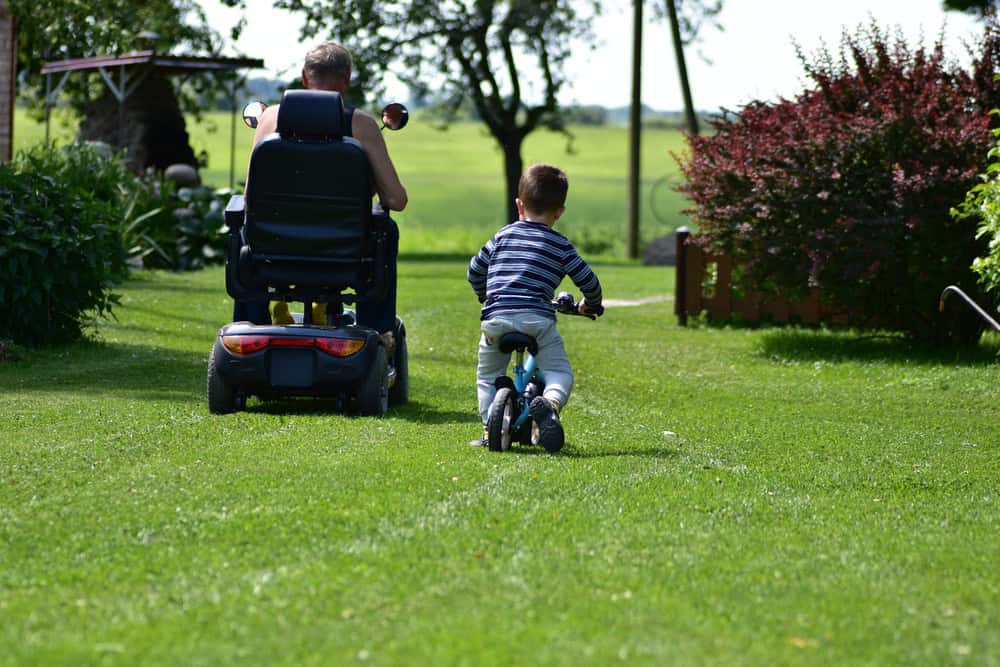
Rear view of grandfather on electric mobility scooter and young boy on balance bike riding together on green grassy path, symbolizing freedom, connection, and joyful countryside moments.
Once you know what your loved one is comfortable using, the next question is whether the listing actually matches that plan. Category names alone rarely tell you every detail that matters. Depending on the equipment, you may need dimensions, weight capacity, folding or transport requirements, battery information and a clear list of included parts or accessories.
Specific questions make the answers easier to use. “What is the folded size?” gives you something concrete to compare with a vehicle or storage space, while “Is it travel-friendly?” leaves room for interpretation. The same goes for powered equipment: asking whether the listing includes the charger is more useful than assuming every rental comes with the same accessories.
You do not need to turn the reservation into a technical inspection. Stay focused on the handful of details that could change your loved one’s experience or the family’s ability to handle the equipment in the room, vehicle or day you have planned.
What Should You Ask About Trust, Cleaning, and Safety Checks?
When you are arranging equipment for somebody else, trust comes more easily from details than from broad reassurance. You should be able to understand what happens before the item reaches the customer, what information is available about the specific rental and who to contact if something looks different from what you expected.
BabyQuip’s current mobility-rental information says Quality Providers have passed background checks, receive cleaning training, rentals are backed by insurance and gear is monitored for recalls and unsafe items. Those checkpoints can help you understand the process behind the rental, while the specific listing still deserves a closer look when a feature or item detail matters to your loved one.
BabyQuip’s current rental FAQ also directs customers to their Quality Provider for gear, delivery and pickup questions. Keep that contact information with the reservation so the person using the equipment does not have to become the family’s point person for every logistical question.
BabyQuip Insight
A good caregiver plan works quietly in the background. When the item details, contact information and handoff plan are written down, your loved one is less likely to become the person everyone turns to for logistics. That leaves more room for them to simply be part of the trip, visit or gathering.
How Will Delivery and Pickup Actually Work?
Think of delivery as the moment the plan changes hands. Someone needs to be available, the Quality Provider needs the right phone number and the property may have access instructions that are obvious to the family but not to the person arriving with the equipment. If your loved one will not be the delivery contact, sorting out that handoff in advance can keep them out of an unnecessary coordination loop.
BabyQuip currently says the local Quality Provider coordinates delivery and pickup for mobility rentals, and its FAQ identifies Quality Providers as the first contact for gear, delivery and pickup questions. Because the exact arrangement can vary by reservation, use the details for your destination and dates rather than expecting another customer’s handoff to look the same as yours.
Pickup is part of that same handoff, just at the other end of the visit. Decide who will be responsible for the equipment, where it will be collected and whether checkout, departure or an event schedule makes the timing tight. A little clarity here is especially useful when several relatives are sharing responsibility.
How Far Ahead Should You Arrange the Rental?
Families often want one simple booking rule, but mobility rentals do not fit neatly into an “always book seven days ahead” answer. Availability can vary by destination, dates, product and local Quality Provider, and a specific item or feature may matter much more for one loved one than for another.
A more useful approach is to check once the destination and dates are stable enough to search, then work through anything that could block the plan. If your loved one needs a particular equipment category, dimensions, feature or delivery arrangement, resolving that earlier gives you more room to respond if the available listing does not match what you need.
There may also be a bigger decision sitting behind the timing question: whether a familiar device should travel with you or whether renting at the destination makes more sense. Keep that as its own choice. Once the family knows which path it prefers, the booking timeline becomes much easier to think through.
If your family is weighing that choice, the full tradeoff is covered in renting mobility equipment at your destination versus bringing your own. Once that decision is settled, you can return to timing with a much clearer plan.
What Happens If the Plan Changes?
Travel plans have a way of moving. Arrival times shift, addresses change and the relative who was going to handle the reservation may suddenly be doing something else. Before booking, make sure the family knows how an update would be handled and who should take the lead if the person using the equipment is not managing the order.
BabyQuip’s current FAQ says customers can view or change reservations through their account, with some changes requiring Quality Provider approval. It also recommends contacting the Quality Provider directly for last-minute or urgent updates. Because the exact policy and outcome depend on the reservation, review the current terms and keep the relevant contact information easy to find rather than assuming every change can be accommodated.
For a caregiver, that preparation can be very simple: keep the reservation details, Quality Provider contact and a backup family contact together. If someone else needs to step in, they can pick up the plan without asking your loved one to reconstruct it from a string of text messages.
Keep a Simple Caregiver Booking Note
After working through these questions, you do not need a complicated planning system. One short caregiver note can hold the details that would be hardest to reconstruct later and give everyone helping with the visit the same reference point.
A short note can keep the family coordinated without making the rental the main event. Once those questions are settled, explore BabyQuip mobility rentals using the actual destination and dates. For example, if your visit takes you to Atlanta or Chicago, you can search specifically for local Quality Providers who can help you secure the right mobility equipment for your trip.