
The Los Angeles Natural History Museum stroller rules can decide whether your day at NHM feels smooth or feels like you are negotiating every doorway with a stroller. We wrote this insider’s guide for parents and grandparents who want a calm entry, clear museum rules and a plan that still leaves room for wonder.
A well-timed visit to the Natural History Museum starts before you leave the driveway, because you will move faster once you know where your stroller can go and where it must be parked.
You will see a few odd search phrases online, so let’s clear them up fast. People type “natural history museum of los”, “history museum of Los Angeles” and “museum of Los Angeles county”, and they still mean the Natural History Museum of Los Angeles County in Los Angeles County.
NHM is part of the Natural History Museums of Los Angeles County, and the natural history museum is located at 900 Exposition Blvd in Exposition Park near the California Science Center and the Exposition Park Rose Garden. When you plan your visit well, you can roll through the main museum, pause for a restroom break and still fit in a butterfly moment.
If you are searching while packing, you will also see phrases like “natural history museums”, “Los Angeles county”, “california science center”, “exposition park”, “exposition park rose garden”, “la brea tar pits” and “best of Los Angeles”. Those searches point to the same day of logistics.
Quick answers parents want before you leave the house
Strollers are welcome throughout the museum, with one big exception: you cannot take a stroller inside the Butterfly Pavilion or the Spider Pavilion. That rule comes straight from NHM’s accessibility guidance.
Wheelchairs are available on a first-come basis and Guest Relations checks them out when you leave a valid ID, which helps when a grandparent wants a wheelchair option for part of the day.
If you are aiming for free admission, plan around L.A. County’s weekday 3-5 PM window and expect to confirm eligibility at check-in. NHM details those options on Free Hours and Admission.
Driving and parking stays simple when you know the two main lots. NHM calls out pricing, hours and the Blue Structure on Parking and Directions.
Where strollers go, where they stop
NHM works well for a stroller-based museum visit because galleries are wide, floors are smooth and wayfinding is clear. The place still has pressure points, so you win by planning for those pinch moments.
A stroller rolls easily through permanent halls, including Dinosaur Hall, Becoming Los Angeles and the Gem and Mineral Hall. You will also see families pushing through Nature Lab and stopping to watch live insects.
Timed experiences tighten the space, then stroller access changes. The Butterfly Pavilion and the Spider Pavilion require you to park your stroller outside the entry and walk in with hands free.
This is also where “special exhibition” planning matters. If you stack too many timed entries, your stroller becomes a clock.
Los Angeles Natural History Museum stroller rules for the Butterfly Pavilion and Spider Pavilion
Strollers are not permitted inside the Butterfly Pavilion or the Spider Pavilion, so pack like you will carry your child for 30 minutes. NHM runs the Butterfly Pavilion on timed entries and notes that tickets are for 30-minute time slots.
The Spider Pavilion is also timed seasonally and set up as an open-air walk-through, which means you will want a simple plan for stroller parking before your reservation time. NHM explains how the space works on its Spider Pavilion page.
A carrier solves most problems here. If you do not use a carrier, bring a small blanket so an infant can sit on your lap while you watch a butterfly drift past.

Choose the stroller that fits NHM, not the one you already own
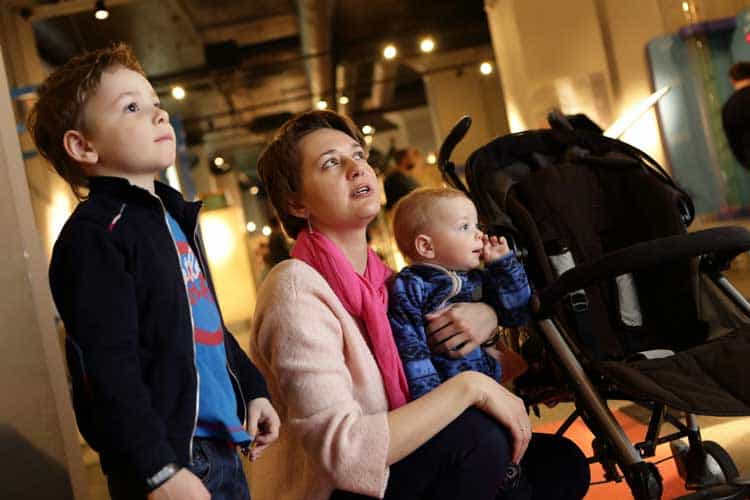
A double stroller can still fit through the main museum entrance, but you’ll spend the day making tight, tiring turns through the crowds. A narrow stroller will move faster, and you will stop less often.
If you are bringing a double stroller, keep it as slim as you can. You will share tight corners with school groups, you will pause at elevator doors, and you will weave through the museum store area near the Grand Foyer.
If you determine your current stroller is too large for an easy day at NHM, consider using a baby gear rental service like BabyQuip. BabyQuip makes it easy to find exactly what you need for your museum visit. We offer a wide selection of approved strollers to fit every family’s needs and itinerary, whether you’re navigating crowded exhibits or strolling the museum gardens afterward. We also offer same-day delivery!
You can choose from:
- Lightweight single strollers for quick, easy movement through busy spaces.
- Smaller-footprint double strollers that accommodate two children without the bulk.
- Compact travel systems that fold in seconds for public transportation or rideshares.
- Premium comfort models with added storage and padding for longer museum days.
With a variety of well-maintained, safety-approved equipment available, families can select the stroller that best matches their visit’s pace and comfort goals, saving space, effort, and energy throughout the day.
Stroller comfort matters too. A toddler who naps well in the stroller will stay regulated, which keeps your dino hunting fun instead of frantic.
If you like to pre-game your route, people also search “gem and mineral hall”, “becoming Los Angeles”, “nature lab” and “north american mammal” before they arrive. That is useful context, then the map still runs the show.
What to pack in the stroller basket so you are ready for the pavilions
Pack for the moment you must step away from the stroller.
- Water and wipes in an easy pocket
- A carrier or toddler leash you can grab fast
- One snack that is not crumbly
- A small hand towel for sticky fingers after a Neighborhood Grill stop
Keep valuables on your body. You will park the stroller outside at least one ticketed experience.
If you do not own a suitable carrier, or if you are traveling and need other items like a travel crib or car seat, a baby gear rental service like BabyQuip can deliver clean, safety-checked gear right to your hotel or rental home in the Los Angeles area.
Arrival plans that save real time
Your arrival plan does most of the emotional labor of the day. If you arrive flustered, your group starts on hard mode, especially with kids.
NHM shares current hours, closure days and entry notes on Plan Your Visit. The museum is closed on the first Tuesday of every month (except January) and also closed on Independence Day, Thanksgiving, Christmas and New Year’s Day. Check the website for the most current updates the morning you go, since the museum hosts events that affect traffic around Exposition Park.
Driving and parking: NHM Car Park and the Blue Structure
NHM Car Park is a flat-rate lot, and it sits closest to the Commons side, so unloading a stroller feels easy. If you search “nhm car park” while en route, the museum’s parking page will match what you see on the ground.
If that lot fills, the Blue Structure offers additional parking. The museum also lists before and after 5 PM rates for that structure, so you can decide quickly without guesswork.
Taking transit: Metro E Line (Expo Line) and stroller-friendly arrival
Taking the Metro E Line (formerly the Expo Line) can remove parking stress, and then you trade it for a predictable walk from the station. The closest stations to NHM are the Expo Park/USC and Expo/Vermont stations. If you search “Metro E Line” or “Expo Line” before you go, you will find the same stations NHM calls out for visiting, plus the TAP card perk that lowers your check-in total.
Show your TAP card at check-in, and you receive a $2 discount on admission. That savings helps when you are also paying for a separate ticket add-on like the Butterfly Pavilion.
Picking the best entrance with a stroller
NHM keeps two museum entrances open most days: the Commons Plaza Entrance and the North Entrance. That choice shapes your first two minutes, so it pays to decide before you park.
If you are parking in the NHM Car Park, you will follow signs to the green ticket booth at the east end of the lot, then proceed to the Commons Plaza Entrance. That path stays smooth with a stroller and a wheelchair.
If you are coming from a different Exposition Park lot, entering through the Commons Plaza Entrance often feels simpler. The North Entrance can feel calmer when large groups are arriving on the Commons side.
Ask museum staff which line moves faster before you commit, then you avoid weaving through crowds twice.
Tickets and entry tips that keep the line short
Tickets go fastest when you treat entry like airport security in miniature. Have your phone ready, keep bags organized and know what you are buying before you reach the front.
NHM recommends buying tickets online in advance for entry and for special ticketed experiences. That guidance and current pricing live on Plan Your Visit.
Purchasing your tickets without accidentally double-booking your day
General admission covers the main museum, then you add timed experiences as needed. Families run into trouble when they book a pavilion time that conflicts with naps, meals or transit timing.
Pick one timed activity, then build the rest of your day around it. If you book both the butterfly and spider pavilion in one visit, you will spend more time parking the stroller than exploring.
When purchasing your tickets, remember that pavilion entry and other add-ons are separate. If you are using free admission, you still pay for those add-ons.
Free admission and museum for free timing
LA County residents receive free admission Monday through Friday from 3-5 pm. NHM lets you reserve those tickets online or get them at the ticketing desk.
If you are traveling with grandparents, that time window pairs well with a late nap. You arrive with a calmer crowd, and you still have enough time for Dinosaur Hall and a quick museum store stop.
If you are plotting a nap window, search “dinosaur hall,” and you will see how often families build their whole route around that room.
If you are not local, aim for discounted admission. A TAP card discount works well when you take the Metro E Line (Expo Line), and it keeps costs down for visitors of all ages.
Moving through the main museum with a stroller and a stroller-wary toddler
A good stroller plan is a loop, not a zigzag. A loop reduces backtracking, so you spend less time turning around in crowds.
NHM offers a digital map and printable options on its website. The map makes it easier to find elevator routes, restrooms and the paths that are easiest for a wheelchair accessible approach.
A stroller-friendly loop that still hits the highlights
Start where excitement is highest, then shift to quieter rooms as energy dips.
Dinosaur Hall gives you the big fossil moments and the rex grin that kids remember. After that, head toward Gem and Mineral Hall for sparkle and slower pacing.
When attention drops, Nature Lab helps because kids can watch live insects and move their bodies without breaking museum rules. Becoming Los Angeles works as a grown-up reset that still keeps kids engaged with visuals and diorama storytelling.
If you are thinking about a second stop, step outside to the rose garden. Five minutes of fresh air fixes a lot.
Accessibility details that help strollers and wheelchairs alike
NHM treats stroller access and wheelchair access similarly across most exhibits. The biggest exceptions are the pavilions, where stroller entry is restricted.
All exhibits are accessible for wheelchairs and strollers, with the exception of strollers inside the Butterfly and Spider Pavilion. That line comes from the museum’s Accessibility page, and it is the core rule to remember.
Wheelchairs are available to borrow on a first-come basis when you leave a valid ID with Guest Relations. That is the easiest way to keep a grandparent included without overcommitting the whole day.
Service animals are allowed under the Americans with Disabilities Act and must stay leashed and under control, per NHM. Bring what your service animals need, then let the staff guide you through entry.
Restroom strategy that prevents the worst kind of toddler announcement
Start with a restroom break right after you enter, even if nobody asks. You reset everyone’s patience, and you avoid the first panic sprint.
Wheelchair accessible and all-gender restrooms are available throughout the museum once the inside of the museum is open. Family Care Lounges are available on Level 1 near the Welcome Center and on Level 2 in the Bird Hall.
Build one more restroom stop into your loop. That single decision turns “we need to go now” into “we can wait two minutes”.
Food breaks that keep your stroller plan intact
Hunger makes toddlers faster and louder, which means your museum visit gets harder. A planned snack makes the whole day easier.
NHM lists dining locations, hours and the kitchen-closing time for Neighborhood Grill on Shopping and Dining. The page also notes grab n’ go items and drinks remain available until closing.
Commons Cafe opens early and runs from 7 AM to 5 PM, which helps if you arrive before the main museum opens. That information sits on the same shopping and dining page.
Using the Neighborhood Grill without losing your parking spot
Eat before your timed pavilion if you can. You will enter calmer, and you will avoid a hangry sprint to your reservation time.
Pick a table, park the stroller beside you and keep your carrier accessible. The moment you finish, do a quick wipe-down and refill water, then re-enter the galleries.
Stroller parking habits that save you from the mid-visit scramble
You will park the stroller outside the pavilions, and you may also park it for short moments when you need your hands free. A few habits keep it simple.
- Place a bright ribbon on the handle so you can spot it fast
- Fold the stroller only if the staff asks, then keep the fold simple
- Do not block doorways or exhibit exits, even for a “one-second” photo
This is where a compact stroller shines. It parks neatly, and it folds quickly when the staff asks.
Tips for visiting with toddlers and grandparents in the same group
If you searched “tips for visiting” in the Los Angeles area, or as people search for “Los Angeles area”, you already know the core trick: rhythm beats ambition. When you move at one speed, someone feels left behind.
Aim for a pattern: one big gallery, one short break, one hands-on space, then a reset outside. That pattern keeps you exploring throughout the museum without pushing anyone past their limit.
Ask your toddler one question per room. “What do you see?” works, then grandparents can add stories and the room feels shared.
When you want a calm close, plan your last ten minutes around the museum store. If you open with shopping, you will spend the next two hours saying no.
FAQ: quick answers people ask at the main entrance
Are strollers allowed in the Museum of Natural History?
At NHM, strollers are allowed in exhibits, then strollers are not allowed inside the Butterfly Pavilion or the Spider Pavilion, per museum rules.
Is the museum wheelchair accessible?
Yes. The museum’s accessibility notes describe wheelchair access, where wheelchairs are available and how to check them out.
Do we need a separate ticket for the pavilions?
Yes. Pavilion entry requires general admission and a separate ticket.
Can we pair this with other Los Angeles stops?
Yes. Exposition Park places you near the California Science Center, and you can plan a separate day for La Brea Tar Pits, another site connected to the Natural History Museums of Los Angeles County.
For comparison travel planning, some families also look up “American Museum” or “American Museum of Natural History” when comparing stroller logistics at big museums. That is helpful context, yet your best plan is still based on NHM’s own rules.
Los Angeles Natural History Museum stroller rules get simple once you commit to three choices: your parking plan, your timed ticket plan and your stroller parking plan for the pavilions. Walk in with those decisions made, then your museum visit feels like the best of Los Angeles, especially with kids.