
A day at the LA Natural History Museum can feel like a mini expedition: you’re juggling naps, snacks, strollers and the hope that your toddler will actually care about a dinosaur. Lunch decides whether the afternoon turns into a happy second act or a cranky speed run to the car, so we built this guide for parents and grandparents who want a plan that works with small bellies and big feelings.
You’ll get a simple decision path, a few dependable lunch zones near the museum and the little details that keep you moving without losing your place in line. Along the way we’ll also weave in a bit of museum context, because when you understand how this history museum of Los Angeles is laid out you can pick food and timing that match your child.
A 30-second plan for lunch near the LA Natural History Museum
Start with one question: do you want to stay on campus in Exposition park, or do you want a quick change of scenery? Staying close wins when your stroller is loaded and you’re protecting nap time. Leaving wins when you want more variety, more seating and a reset before you step back into the museum.
This filter keeps you from overthinking lunch while you’re standing next to a fossil with a hungry toddler tugging your sleeve.
- Speed: you can order, pay and sit within 10 minutes
- Seating: there’s space for a stroller or a simple high chair plan
- Noise: the room can handle toddler volume
- Food shape: your child can eat it with hands or a spoon
- Exit plan: you can leave quickly if a meltdown starts
A tiny mental map around the LA Natural History Museum
The museum sits at 900 Exposition Blvd on Exposition Blvd, and if you type exposition blvd into your maps app you’ll see how many kid-friendly stops cluster nearby.
Exposition Park stays walkable, which is the whole point when you’re pushing a stroller. You’re close to lawns, the Rose Garden and the California Science Center with the Metro E Line stop nearby. Plenty of locals still call it the expo line. Now pick a lunch lane and keep the day moving.
Lane 1: Eat inside NHM and keep your momentum
Eating on-site works when your toddler is already having a good day and you want to preserve that rhythm. You also dodge the “we left and now we can’t get back into it” problem, which is common when a young child shifts environments mid-day.
Neighborhood Grill inside NHM
NHM lists the Neighborhood Grill on its Shopping and Dining page and describes a “family-friendly selection” that fits a museum day. When you want a sit-down pause without leaving the building, this is the cleanest move.
Order one reliable toddler item first, then add the adult meal. That sequence produces a calmer table, and you’ll feel the difference fast. Before you sit down, decide what you’ll do right after lunch, because toddlers eat quickly then want to explore again.
Grab-and-go lunches and the commons wing
If your child is in the “snack, sip, roam” stage, grab-and-go beats a formal meal. NHM’s Discovery Guide points families to quick drinks and bites from South LA Cafe and notes the Commons Marketplace for easy stocking up when you want speed.
That’s where NHM Commons shines. People will text it as commons when they’re making plans, and the indoor-outdoor layout gives toddlers breathing room while adults get a real break. Choose foods that survive a stroller cup holder: fruit, yogurt, a roll and anything that doesn’t demand a knife.
Snack boundaries that protect the collection
A museum can feel like a playground to a toddler, but it exists to protect a collection of artifacts and specimens. NHM’s Museum Visit social story spells out where food belongs, and following that boundary produces a smoother visit for your family and for everyone sharing the exhibit space.
Picnics work with toddlers because you control the food, the timing and the mess. Exposition Park’s FAQ says Picnicking is also allowed in the park and notes that most tables sit south of the Rose Garden and north of the California Science Center, which gives you a reliable lunch target even on busy weekends.
A good picnic stays simple. Pack food that holds its shape and doesn’t need perfect temperature, and keep one “emergency” snack in a separate pocket so you can hand it over while you’re still walking.
- Wipes and a small trash bag
- Water for adults and water for kids
- A snack that never fails for your child
- A soft fruit option that doesn’t explode
- Sunscreen and a hat
Nature Gardens for post-lunch movement
NHM invites you to explore the gardens on its Nature Gardens map, and when families talk about the outdoor loop, they’ll often shorten it to nature gardens in quick notes. After lunch, that movement helps toddlers regulate, and the local habitat becomes a living highlight instead of another indoor rule-set.
If you want to turn the walk into hands-on discovery, play a tiny game: spot a bird, find a flower, count bees. You’re still in a museum setting, just outside, and your child gets a break from indoor demands.
Lane 3: Leave the campus for more variety, then return
Sometimes you want options beyond a café line. You might also want a louder room where toddler noise feels normal, and a little distance can reset everyone’s mood. Two nearby zones do that well: Mercado La Paloma and USC Village.
Mercado La Paloma’s Directions & Parking page lists 3655 S Grand Ave in Los Angeles, and it works as a short hop from Exposition Park when you want more food variety. Inside you’ll find counter-service stalls and shared seating, and that setup plays well with a stroller.
Holbox, one of the best-known counters inside the hall, describes itself as a casual order-at-the-counter service in a food hall setting. Counter service produces a predictable lunch: you order, you sit, you eat and you leave without negotiating a long wait.
Reduce decision points and the whole room becomes easier. One adult orders while the other walks the child, and when you’re solo you can park the stroller where you can see it from the line. Choose forgiving foods: a bowl, a taco, a plain side, sauces on the side.
USC Village for easy walking after lunch
USC Village is a good pick when you want a clean walk after you eat, and the dining directory helps you confirm what’s open that week. Tenant lists change in LA, so checking the morning of your visit keeps you from promising a favorite spot that has moved on.
Lunch plus a short walk sets you up for a calmer return to the natural history museum. The movement helps digestion and mood, and it gives your toddler a new “scene” before you head back into an exhibit.
Tie lunch to what your toddler will remember
Toddlers don’t experience a museum as a lecture. They experience it as sensory highlights, and NHM leans into that with dinosaurs, Los Angeles stories, gems and minerals, mammals and more, which you can preview through the page where you Discover exhibitions on dinosaurs before you arrive.
Your child might lock onto one specimen, laugh at a roaring dinosaur and then sprint mentally to the next thing, so lunch needs to be flexible enough to match that rhythm.
Lunch works better when you link it to one or two highlights your child can anticipate. Try this rhythm: one big wow moment before lunch, then lunch, then outside air, then one calm highlight, then you leave while it’s still fun.
Simple scripts help. “We’re going to see a dinosaur, then we’re going to eat.” “We’re going to look at a crystal, then we’re going to have lunch.” That predictability keeps the day from feeling random and it turns the visit into a story your toddler can retell.
Kids love the big stuff, but the museum’s behind-the-scenes work makes those moments possible. NHM’s research pages show a wide range, from Vertebrate Paleontology to a Marine Biodiversity Center that curates marine invertebrates, and knowing those labels can make your child’s questions easier to answer.
On the mammal side, NHM’s Mammalogy program notes collections that include terrestrial and marine mammals. You don’t need to teach your toddler those words, but naming the moment helps: “This is paleontology. These are fossils.” That’s how a museum of natural history day becomes hands-on learning instead of passive wandering.
Minerals, crystals and an exhibit that feels like a treasure cave
If your toddler is drawn to shiny objects, plan lunch around the current mineral exhibition. Unearthed: Raw Beauty features large mineral specimens shown in their natural form, and the gem and crystal visuals can feel immersive for kids and adults.
A short visit here after lunch often lands better than a long deep dive. You get the highlight, you get the photo and you leave before the energy drops.
Timing: lunch earlier than you think
A toddler who eats at noon at home often needs food at 11:15 in a museum because the environment drains their battery. If you arrive at opening, plan lunch about 90 minutes after you get inside. If you arrive late morning, lunch before you enter will produce a smoother visit. If you have a nap window, treat lunch as your buffer.
The 10-person line rule saves afternoons. When a café line hits 10 people, your wait time jumps and your toddler will feel it. Switch lanes right then: picnic, grab-and-go or head to Mercado La Paloma.
A few notes for grandparents visiting with toddlers
Grandparents often become the calm center of a museum day, and that calm sets the tone for the child. Keep one small snack in a pocket, not buried in a bag, so you can respond fast when a grandchild hits the wall.
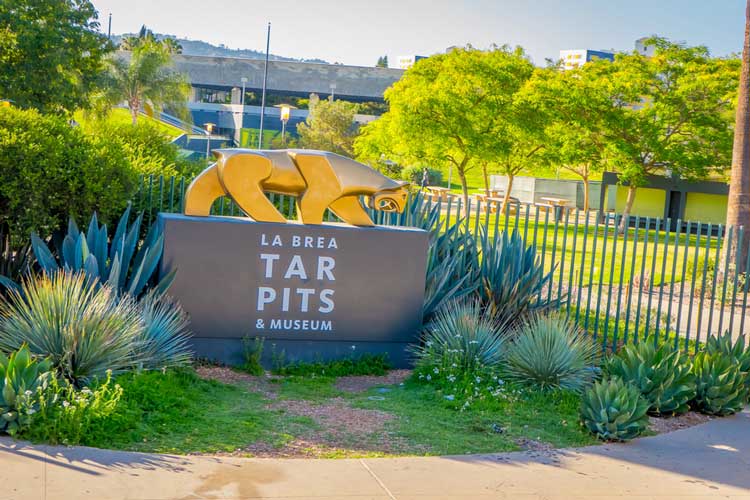
If you’re planning a longer weekend, a quick stop at the La Brea Tar Pits adds an ice age chapter and a chance to talk about the Pleistocene in the simplest way possible: “These animals lived a long time ago, and we can still find their fossils.”
Pressure makes the day harder. A museum visit in Los Angeles is about shared discovery, a bit of culture and letting a toddler explore at their pace, not completing every exhibition.
A low-stress gear plan for lunch
A stroller turns lunch from juggling into flow, and the right seat helps when your toddler is too small for a standard chair. If you’re traveling or you don’t want to pack bulky items, BabyQuip lets families rent gear like a travel stroller, booster seat or pack and play delivered to where you stay, and that keeps your day lighter.
NHM’s mission statement talks about wonder, discovery and “natural and cultural worlds” plus a responsibility for our natural and cultural worlds. If you’ve ever searched their site for la or lac, you’ve probably landed on online presents pages.
Those episodes can also be found by searching “diversity of Los Angeles” or “Los Angeles and its people”, and one good starting point is their NHM Online Presents L.A. on Wheels page, which helps you plan a home follow-up.
FAQ: toddler lunch logistics near NHM
Can we bring snacks into the museum?
Snacks keep toddlers regulated, and food belongs in appropriate eating areas. The Museum Visit social story walks families through those expectations so you can care for your child while respecting the museum.
Where can we find a reliable outdoor place to eat?
Exposition Park confirms that picnicking is allowed and points you to tables near the Rose Garden and the California Science Center on its FAQ page.
Is NHM a good choice for a quick lunch without leaving?
Yes. NHM lists on-site dining on its Shopping and Dining page, and checking it the morning of your visit keeps the plan accurate.
What if we want to make a bigger weekend of socal museums?
NHMLAC connects the natural history museum of Los Angeles County with other sites, and together they protect and share more than 35 million specimens and artifacts across the largest natural and cultural history collection in the western United States. That includes La Brea Tar Pits and Museum in Hancock Park, and you’ll hear angelenos talk about these places like they’re part of the same family.
If you’re mixing it up beyond Exposition Park, you might also pair the day with the Los Angeles County Museum of Art (LACMA), then swing by the tar pits for a prehistoric contrast. Lunch strategies travel well between socal museums because toddlers still need the same rhythm.
Are there free or reduced admission options?
NHM outlines free hours and admission programs, including options for Los Angeles County residents and other groups, on its free hours and admission page. Checking it before you go can change your plan. If you’re skimming on your phone, searching Los Angeles county on that page will get you to the right section quickly.
When does the socal museums free-for-all happen?
SoCal Museums posts the annual date and participating locations for the Museums Free-for-All event on its Museums Free-for-All page, and it’s a great reason to explore LA with little kids.
What lunch plan works best with a stroller nap?
Stay on campus and keep lunch short. Grab food, eat, then use the Nature Gardens loop as your decompression walk before you head back into an exhibit.
How do we keep the afternoon from falling apart?
Eat earlier than you think, aim for one post-lunch highlight, then leave while your toddler is still happy. That choice will produce a better memory than squeezing in one more gallery.
A museum day in Los Angeles works when lunch matches your child’s energy, not your wish list. When you plan your break near the LA Natural History Museum, you protect the fun part of the visit: a dinosaur, a fossil, a quick taste of discovery and a moment of culture you’ll talk about later.