


If you are searching for toddler stops inside Millennium Park, you probably do not need a bigger sightseeing checklist. You need to know where your child will actually light up, where that interest will fade fast and what kind of outing still feels good when naps, snacks and stroller tolerance are part of the equation.
Millennium Park works best with toddlers when you stop judging the visit by adult standards. The win is not “we saw everything.” The win is one or two great stops, one easy reset and an exit that happens before your child decides the whole park is now offensive.
That is also why Millennium Park fits so well into a broader Chicago with toddlers weekend. It can be a headline attraction, a gentle morning outing or a flexible block of time between hotel rest and lunch. The park is open daily from 6 AM to 11 PM, which gives families room to aim for the window their child handles best.
What Makes the Toddler Stop Inside Millennium Park Worth Your Time
Toddlers do not care that a place is famous. They care that something moves, reflects, splashes, echoes, opens up or gives them a little control. Inside Millennium Park, the best stops tend to share the same traits: a fast visual reward, space to change pace and a low penalty if your child is done in eight minutes.
That is why some of the park’s most famous features are not always the strongest toddler stops. A landmark that feels thrilling to adults can be a five-minute curiosity to a two-year-old. Meanwhile, a lawn, a paved promenade or an interactive fountain can buy you much more real engagement.
A good family visit is often shorter than parents expect.
In practice, success may look like 45 good minutes, one snack, and a stroller ride out instead of a full tour. Millennium Park’s official programming calendar includes concerts, films, workouts and seasonal events, and the park hosts family activities throughout the year. That can add energy or crowd pressure depending on your timing, which is one more reason to choose stops by toddler payoff, not by prestige.
The other useful filter is recovery. A stop earns its place when it gives your child something to do and gives you a clear next move. That might mean a nearby restroom, a stroller transition, a quiet path or a smooth handoff to the next article you actually need, whether that is our guide to a stroller-friendly Millennium Park route from the Loop or a faster plan for bathrooms near Millennium Park.
Best First Stop for Curious but Cautious Toddlers
For the toddler who needs a minute before they commit, start with the Lurie Garden. It sits in the southeast corner of Millennium Park and feels softer than the park’s headline landmarks. You get paths, layered plantings, city views and enough visual interest to make a cautious child curious without asking them to perform in a crowd.
This stop usually holds a toddler for about 10 to 20 minutes. That may not sound long, but for a child who arrives unsure, those minutes matter. They can get out of the stroller, walk at their own speed and point at grasses, flowers, bugs or moving leaves instead of being rushed toward a photo spot.
The shy toddler scenario is where Lurie Garden really earns its keep. If your child tends to cling at the start of an outing, this is where you let them thaw. You are not demanding a grin, a pose or a big reaction. You are giving them a gentle first yes.
Parents should watch for one thing here: do not oversell it. Lurie Garden is not the place to insist on a long, meaningful garden walk. It is a reset space, a sensory downshift and a confidence builder. Once your toddler has settled, you can move toward something louder or wetter.
It also works for the infant-and-toddler pairing. One caregiver can stay in the calmer garden setting with the baby while the other lets the older child roam a short stretch, then you switch. That kind of split works better here than at a stop where everyone has to commit at once.
Best Stops for Movement and Open Space
If your toddler steps out of the stroller already looking for a mission, do not lead with the quietest part of the park. Lead with movement.
Crown Fountain Is the Big Payoff Stop
Crown Fountain is the clearest toddler win inside Millennium Park when the water is running. The pair of 50-foot towers, changing faces and a shallow reflecting pool give toddlers exactly what many of them want most: visual action and permission to move. The fountain’s water features operate between mid-spring and mid-fall, while the image displays remain on view year-round.
In warm weather, this is often a 20 to 45-minute stop. For some toddlers, it is the whole point of the visit. They watch the faces, wait for the water, run through the shallow pool and repeat the sequence until they are gloriously tired.
In cooler months, the equation changes. The towers are still interesting, but the stop becomes more of a look-and-go moment, closer to 5 to 10 minutes for most toddlers. That is where your seasonal expectations matter. If you are planning around the weather, our comparison of Millennium Park in winter vs. summer can help you decide which version of the park best suits your child’s current stage.
A few parent notes make this stop easier. Wet shoes turn a happy toddler into a heavy carrier. A child who hates surprise spray may prefer to watch from the edge first. A very crowded fountain can still be worth it, but the stay may be shortened because toddlers do not love waiting for a turn to be spontaneous.
The Great Lawn and Pavilion Area Help After Stroller Time

The space around the Jay Pritzker Pavilion and Great Lawn is less dramatic than Crown Fountain, but it often delivers better than adults expect. Millennium Park’s calendar includes concerts, films, workouts and seasonal events, so the area changes character throughout the year. On calmer stretches, though, it gives toddlers what sightseeing-heavy stops do not: room.
This is usually a 10 to 25-minute stop. After time strapped into a stroller, that can be exactly right. Your child can walk, point, pivot, sit for a snack or simply stop being managed so tightly.
For the active toddler who needs movement immediately, a good sequence is fountain first, lawn second. Splash, then roam. That order burns energy without suddenly asking your child to become still and appreciative.
The Pavilion area also helps when one caregiver needs shade, and the other wants to keep the toddler moving. You can treat it as a soft base camp. One adult sits with the baby, bag or snack stash, while the other does a loop at toddler speed.
Best Quick Win for Photos Without a Long Stay
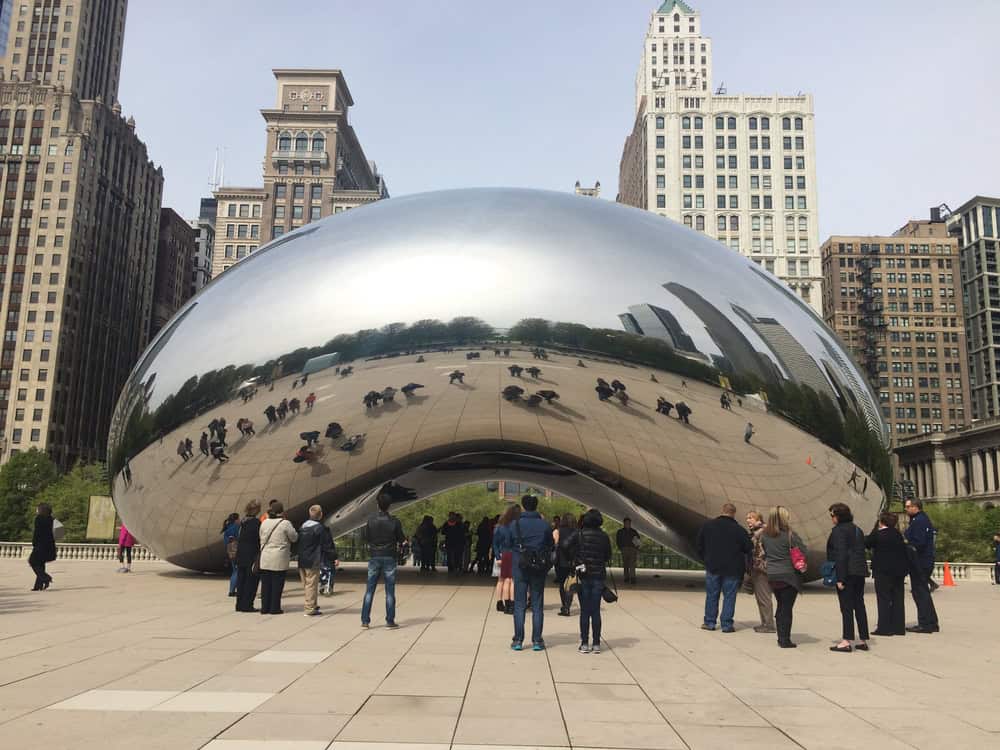
Cloud Gate is still worth doing with a toddler. It is just rarely the stop that holds them longest. That is the honest distinction many parents need.
For most toddlers, Cloud Gate is a 5 to 15-minute play-and-look stop. They like finding themselves in the reflection. They like walking under it. They like noticing how the city bends around them. After that, the magic can wear off quickly, especially if the adults are still trying to arrange the perfect family shot.
This is where parents often lose the plot. The goal is not to convince a toddler to care about the same photo you care about. The goal is to grab the delight while it is happening. Let your child move. Let them laugh at their warped reflection. Take the candid photo while they are already engaged instead of turning the moment into a negotiation.
If your toddler melts down when asked to pose, Cloud Gate should be treated as a quick visual win, not a destination to be maximized. Walk up, circle it once, step underneath and move on while the mood is still good.
That approach also keeps adult expectations in check. Cloud Gate is one of the park’s iconic attractions, but for a toddler outing, it is often a stop on the bridge. The photo is a souvenir. The longer engagement usually happens somewhere else.
Best Calm or Reset Spot Inside the Park
The best reset spot is the one that lowers the volume without ending the outing. In Millennium Park, that is usually the Lurie Garden first and the quieter edges of the Pavilion area second.
A reset stop matters more than families think. Toddlers rarely go from delighted to disastrous with no warning. More often, they get wobbly. They stop following directions, reject the stroller, ask to be carried and then object to being carried. A calmer stop can buy you another 10 minutes of peace or help you exit without drama.
If your child is overwhelmed by noise, crowds or too many visual demands, return to Lurie Garden. The pace there is slower, the walking paths are easier to follow, and the setting feels less performative. You are no longer asking your toddler to compete with strangers for space.
If the issue is not overstimulation but simple depletion, use the Pavilion edge as a transition stop. Offer water, sit down for a bit, and decide whether you are going to do one more thing or call it. Millennium Park has restrooms on the east and west lower levels of the Jay Pritzker Pavilion, as well as additional options at McCormick Tribune Plaza. In practice, if your child is already doing the bathroom dance, go straight to our guide on where to find bathrooms fast near Millennium Park.
This is also a good point to mention BabyQuip in the most practical way possible. A more comfortable stroller, a familiar toy for hotel downtime or a travel crib from BabyQuip can turn the rest of the day into a real reset instead of a long slide toward overtired. Park success often starts before you get to the park.
How To Order Toddler Stops Inside Millennium Park in One Good Hour
One hour is enough for a satisfying visit if you pick the order based on your child, not the map.
For the cautious toddler, start with Lurie Garden, move to Cloud Gate for the reflection payoff and then decide whether you have enough social energy left for Crown Fountain. If the answer is no, leave while the visit still feels successful.
For the active toddler, go straight to Crown Fountain, then shift to the Great Lawn or Pavilion area. If your child is still hungry for movement, this is the moment to use the bridge to Maggie Daley Park as a handoff. The BP Pedestrian Bridge uses a continuous five percent slope to remain barrier-free and accessible, and Maggie Daley Park features paved, stroller-friendly walkways. The Play Garden is designed for exploration and is a stronger next step than adding another passive stop inside Millennium Park.
For the toddler who hates photos, do Cloud Gate on the way by. Do not build the whole outing around it. One quick lap is enough before you move to something with more body-level reward.
For the family juggling an infant and a toddler, build around split responsibilities. Use Lurie Garden or the Pavilion edges as the base, then let one caregiver peel off with the older child for a focused burst of exploring. That usually goes better than trying to make both children want the same stop at the same time.
When to Leave the Park Before the Meltdown
The best family park days often end a little earlier than adult logic would suggest. If your toddler has already had one strong stop, one decent reset and one clean yes to the stroller or snack, you may be done. That is not quitting. That is good pacing.
Leave when the asks start stacking up frantically. Leave when every stop now requires persuasion. Leave when your child is no longer enjoying the place and is only reacting to it.
Millennium Park makes it tempting to add just one more thing, especially because there is always something else visible from where you stand. But “while we are here” is how a good toddler outing becomes a bad family memory. This article is not about squeezing value out of every corner. It is about protecting the part that worked.
If you have more energy left, your next step should solve a need, not create one. That may mean a more active handoff via the bridge to Maggie Daley Park, a fast restroom run or food. If hunger is rising, the smartest move is usually to make a direct pivot to our guide to quick meals near Millennium Park for families, not another landmark.
And if you are building a longer day, keep the rest of it light. Millennium Park is better as a clean win than as the first chapter of an overstuffed agenda.
FAQs About Visiting Millennium Park With Toddlers
What Can Toddlers Do at Millennium Park?
Toddlers can splash at Crown Fountain when the water features are on, walk the Great Lawn and promenade areas, look for themselves in Cloud Gate, explore quieter paths in Lurie Garden and cross toward Maggie Daley Park when they need bigger play. The park’s mix of public art, open space and family programming is what makes it work for young children, even if not every stop works for every toddler.
Is Millennium Park Fun for a 2-Year-Old?
Yes, if you define fun correctly. A two-year-old is not likely to care about the park’s prestige, but many two-year-olds do care about water, reflections, room to roam and short bursts of novelty. That makes Millennium Park a good fit when you pick one or two stops instead of trying to cover the whole campus.
How Long Should You Stay in Millennium Park With a Toddler?
For many families, 45 to 90 minutes is the sweet spot. In summer, Crown Fountain can stretch that longer. In colder weather, the visit may feel better as a shorter walk with one visual stop and one reset. If your toddler is thriving, keep going. If the mood starts to wobble, leave before you start paying for every extra minute.
Is Millennium Park Better Than Maggie Daley Park for Toddlers?
They do different jobs. Millennium Park is better for a mixed outing with visual wow moments, stroller access and flexible family pacing. Maggie Daley Park is better when your toddler needs active play with a clearer playground-style reward. Many families do best when they stop pretending those places compete and use them in sequence.
What Should Parents Skip if They Only Have an Hour?
Skip the idea that you need to “do” the whole park. If you only have an hour, do not spend it chasing every landmark. Pick the one stop your toddler is most likely to enjoy, add one backup and protect the exit. In real life, the best toddler stops inside Millennium Park are the ones that feel easy enough to enjoy, short enough to survive and flexible enough to leave while your child still thinks Millennium Park was a good idea.