

The best kidspace exhibits for infants are the ones that match how your child moves right now. A baby who is content in your lap, a crawler who wants the floor and a new walker who wants independence all need different kinds of play. That is what makes Kidspace so promising for families with very young kids, but it can also make the first visit hard to judge.
Kidspace is not one big toddler room. It is a children’s museum with indoor galleries, outdoor play, water features and bigger-kid energy spread across a campus with more than 40 hands-on exhibits. For babies and first walkers, the win is not seeing everything. The win is choosing the spaces where your child gets the most comfort, confidence and joy per minute.
That is the lens we’re using here.
Is Kidspace Good for Infants and Early Walkers?
Yes, Kidspace can be very good for infants, crawlers and early walkers when you plan the visit around the stage instead of age. A one-year-old who crawls quickly may need a different plan than a one-year-old who is just taking wobbly steps. A baby who loves textures and faces may be happiest in a calm, contained space, while an early walker may want a place to toddle, squat, point and recover without being rushed.
The strongest fit for the youngest visitors is the S. Mark Taper Foundation Early Childhood Learning Center, which Kidspace describes as exclusively for newborns, crawlers and early walkers from 10:00 AM to 2:00 PM. That window matters. If you are visiting with a baby or young toddler, this is not a casual “maybe we’ll stop by” area. It should shape your timing.
Kidspace also works because it gives families room to adjust. You can start small, test your child’s mood and decide whether to move toward water play, pretend play or bigger outdoor spaces. That flexibility is a gift when your child’s energy can change fast.
Still, family-friendly does not always mean infant-friendly.
An exhibit is a true fit for a baby or early walker when it provides a safe way for them to participate. That might mean sitting close to a caregiver, crawling through a tunnel, touching water with adult help or watching older siblings play from a calmer edge. If your child can only observe while you manage crowds, stairs, splashing or fast-moving kids, that exhibit may be better saved for later.
How to Choose the Right Exhibits for Your Child’s Stage
Before you choose where to go first, think less about your child’s birthday and more about their movement style. The CDC reminds families that development shows up in how children play, learn, speak, act and move, which is exactly why a museum plan should flex by stage.
A non-walker needs clean floor time, gentle sensory input and a place where an adult can sit close. A crawler needs room to move without constantly being scooped up. A new walker needs soft pauses, handholds, short distances and a chance to practice independence without being swallowed by older-kid play.
How Kidspace Exhibits for Infants Should Feel
The best Kidspace exhibits for infants should feel contained, sensory-rich and easy to exit. You should be able to sit beside your child, follow their lead and leave before the mood flips.
Look for four things before settling into an area:
Those questions keep the day realistic. They also help you avoid the most common mistake at Kidspace with very young kids: chasing the exhibits adults have heard about instead of following the child in front of you.
Play matters, but the kind of play matters too. The American Academy of Pediatrics notes that play builds motor competence, and Kidspace provides young children with plenty of opportunities to practice movement. Your job is to choose the movement challenge that feels just big enough.
Best Kidspace Exhibits for Infants
For infants, the Early Childhood Learning Center should be your priority. It is designed for the exact stage many museums struggle to serve: babies who are not ready for big climbing structures, fast foot traffic or open-ended outdoor chaos.
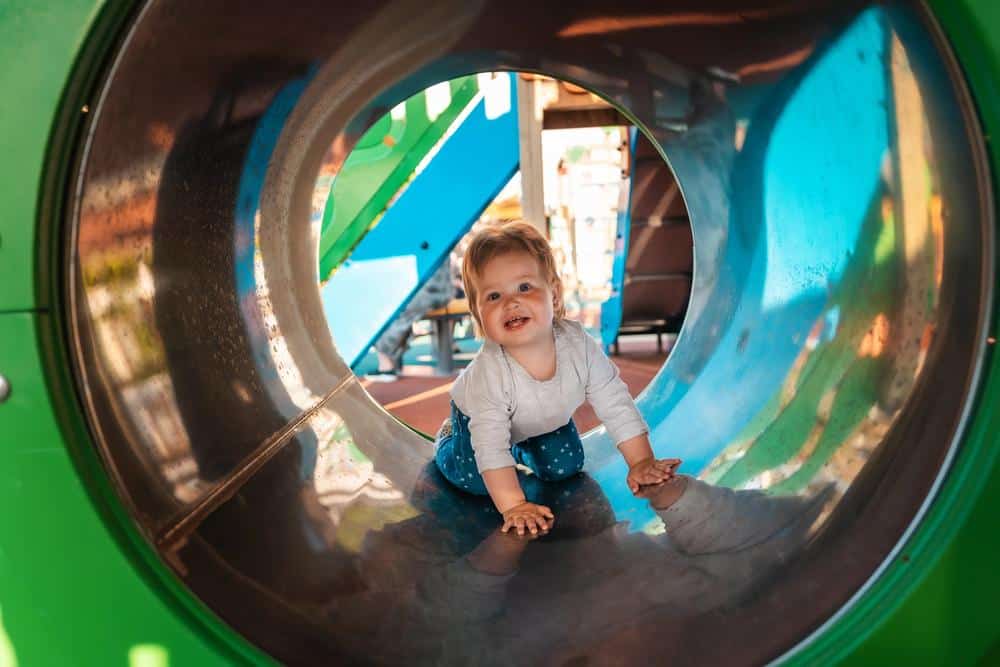
Inside, crawlers and early walkers can explore features like tunnels, a stream-themed climbing structure, leaf-shaped pads and other nature-inspired elements, while babies can take in textures, shapes, sounds and a raincloud fixture. Kidspace frames the room as a place for sensory and developmental adventures, which is the right expectation to bring with you. This is not about completing an activity. It is about giving your child time to notice, touch, shift, reach, pause and try again.
For non-walkers, the best approach is simple: sit down and stay a while. Let your baby study a toy, turn toward another child, push up from the floor or lean into your lap when they need a reset. The space also gives adults a rare museum moment in which sitting beside the child is the activity, not a break from it.
This is the best dedicated space for infants at Kidspace.
It is also the place where shoes come off. Kidspace asks visitors to wear socks, leave shoes at the shoe wall in the Early Childhood Learning Center, and enjoy snacks and drinks outside the play area. That small detail can make or break the visit if you arrive without socks or plan to snack your way through the baby space.
For a younger baby who is not crawling yet, you may not need many other exhibit goals. After the Early Childhood Learning Center, you can take a stroller walk, find a shaded spot to pause, or let older siblings choose a nearby stop while the baby watches. That still counts as a good visit.
Babies do not need a full campus tour to have a full experience.
Best Kidspace Exhibits for Crawlers
Crawlers sit in a funny middle stage. They are too mobile to be happy in arms the whole time, but not steady enough for every toddler area. At Kidspace, they usually do best when you balance floor-friendly play with one or two sensory stops.
The Early Childhood Learning Center is still the best base for crawlers, especially early in the day. Tunnels, low-climbing opportunities, and soft places to land give crawlers what they want most: movement within manageable boundaries. It also lets adults spot from close range without constantly saying “careful.”
Once your crawler has had that protected time, Arroyo Pequeño can be a strong next step if you are prepared for wet play. Kidspace describes Arroyo Pequeño as a place with gentle, rocky streams where children can splash, reshape the flow of water, and engage with animal sculptures inspired by the local ecosystem. For a crawler, this can be wonderful, but only if you treat it as hands-on adult play.
You may be crouched beside your child, holding them at the edge, keeping hands out of mouths and deciding when “just a little water” has become a full clothing change. That does not make the exhibit a bad fit. It just means the adult workload is higher.
Winding Willow Lake can also work for crawlers who enjoy sand-like textures, pretend fishing and watching action from a seated position. Kidspace describes it as a blue-sand play area with a boat and toy fish, which gives curious crawlers plenty to look at and touch. The best version is slow and supervised: sit nearby, let your child explore the texture and move on when the sensory play turns into fatigue.
For crawlers with older siblings, Muddy Boot Farm may be a better shared stop than a faster, more physical exhibit. The farm setup invites children to dig, sort, weigh and pretend around planting boxes and a farm stand, and Kidspace says children can prepare, sort, weigh and sell their harvest. A crawler may not “do” the full pretend-play loop, but they can watch, touch safe materials with help and stay near siblings in a space that feels more grounded than wild.
The key is not whether a crawler can use every feature. The key is whether they can join the moment without being carried through the whole thing.
Best Kidspace Exhibits for New Walkers
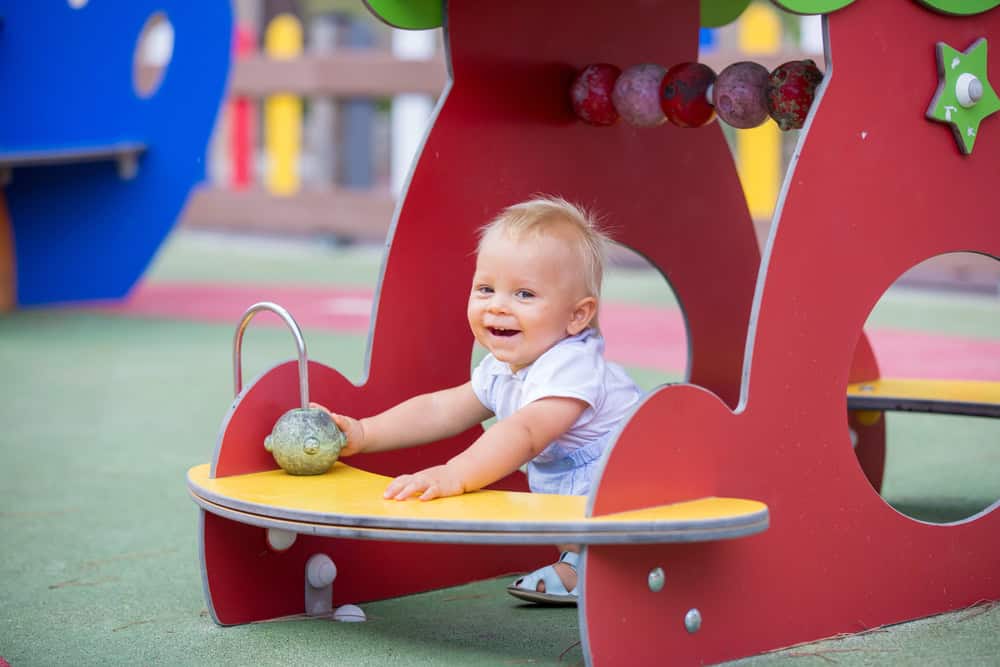
New walkers often look ready for more than they can comfortably handle. They want independence, but they still need short distances, quick recoveries and plenty of adult support. The best Kidspace exhibits for this stage give them movement without turning the whole visit into a chase.
Start with the Early Childhood Learning Center if your child still fits the early-walker stage and you arrive during the 10:00 AM to 2:00 PM window. It gives new walkers a confidence-building warm-up before the museum gets bigger. A child can toddle, squat, plop down, climb a little, retreat to you and try again.
After that, Arroyo Pequeño is often one of the best outdoor choices for new walkers who love sensory play. Water gives toddlers a reason to move slowly. They can step, stop, splash, reach and look. Because the streams are part of a naturalistic play area, the best adult role is close spotting rather than hovering from a bench.
This is also where your packing choices show up. If you brought a change of clothes, a towel and water-friendly footwear, Arroyo Pequeño can be a highlight. If you did not, treat it as a quick look and save deeper water play for another visit. For a more specific gear plan, the Kidspace with a toddler guide can help you decide what to put in the day bag before you go.
Trike Tracks can be exciting for some new walkers, but it is not necessarily a good fit for every child at this stage. Kidspace calls Trike Tracks a twisty mini-highway with individual and two-seater trikes. That sounds perfect for toddlers, but a very new walker may still need help climbing on, staying balanced or understanding the flow of other riders.
If your child is steady, curious and patient with adult help, try a short turn. If they are tired or easily frustrated, watch for a minute and move on. There is no need to turn one exhibit into a test of readiness.
Muddy Boot Farm is often a calmer choice for new walkers. Toddlers can stand at a play surface, carry an object, squat down, hand something to a grown-up or imitate older kids. Pretend play may still be emerging, but the physical rhythm fits: pick up, put down, toddle, repeat.
Winding Willow Lake can also be a lovely confidence stop. New walkers often enjoy stepping into a defined play area, holding a net or pointing at toy fish. Because the play is contained and visually clear, it can feel less overwhelming than the larger kinetic spaces.
Best Sensory Experiences for Very Young Kids
For infants and crawlers, sensory value does not mean more stimulation. It means better stimulation. Soft contrast, water sounds, textures, movement, light and caregiver voice can be enough.
The Early Childhood Learning Center offers the strongest sensory fit because it is designed for babies and early walkers. Your child can explore at floor level, take breaks in your lap and stay in a space where the main energy belongs to tiny explorers.
Arroyo Pequeño offers a different kind of sensory experience: water, rocks, animal sculptures and outdoor sound. This can be magical for a child who loves touch and motion, but it can be too much for a tired baby or hesitant crawler. Go when your child is fed, dry and curious.
Winding Willow Lake gives you texture without the same splash factor. If your child likes scooping, patting or simply sitting near other children, this can be a good middle ground. It feels more active than the baby space, but less intense than full water play.
When your child seems shy or overstimulated, choose repetition over novelty. Let them return to a familiar spot, watch from your arms or play with one object longer than you expected. Young children often settle into a museum once adults stop moving them from thing to thing.
Which Exhibits Are Best Early in the Visit?
Start with the age-specific space that has the narrowest window. For babies, crawlers and early walkers, that means the Early Childhood Learning Center. Since it operates from 10:00 AM to 2:00 PM, it belongs near the beginning of your visit rather than the end.
After that, choose based on energy.
If your child is calm and curious, add Winding Willow Lake or Muddy Boot Farm. If they are active and ready to test movement, try Arroyo Pequeño with full adult support. If they are just starting to walk and still fresh, a short Trike Tracks attempt may work better now than after lunch or near nap time.
Save wet play for the point in the visit when you can handle the aftermath. Some families prefer doing water near the end, so the clothing change naturally leads to departure. Others prefer doing it before a snack reset while everyone still has patience. Either can work.
What rarely works is accidental wet play with no plan.
If you are trying to fit Kidspace into a short morning or pre-nap window, the two-hour Kidspace plan for families can help you sequence a shorter visit. For a wider look at how the museum fits into an easy family trip, our guide to Pasadena with toddlers connects Kidspace with naps, meals and a simple day shape.
This exhibit-focused guide should help you decide what deserves your time once you are inside.
Best Options for Mixed-Age Siblings
Mixed-age visits are where Kidspace gets both easier and trickier. The older child sees more possibilities, while the baby or new walker still needs a smaller world.
The Early Childhood Learning Center is not the best shared sibling stop if the older child has outgrown it, but it is still worth protecting for the younger child. One adult can stay there while another takes the bigger sibling to a nearby exhibit. If only one adult is visiting, give the baby space for a clear amount of time first, then transition to a shared area.
Muddy Boot Farm is one of the better compromise choices because older toddlers can pretend and younger children can observe, touch and move at a slower pace. Winding Willow Lake can also work because it offers a clear activity for bigger kids and a manageable sensory experience for younger ones.
Arroyo Pequeño is the shared stop with the biggest payoff and the biggest adult workload. Older siblings may want to splash and move ahead, while a new walker needs a hand every few steps. Go in with a simple plan: everyone stays together, wet play lasts only as long as the youngest child can handle it, and dry clothes are not optional if you want the rest of the day to stay pleasant.
For sibling groups, “best” often means the exhibit where nobody has to wait too long to participate.
Common Mistakes Families Make With Very Young Kids at Kidspace
The first mistake is trying to do too much. Kidspace has enough to fill a long visit, but infants and early walkers usually do better with fewer stops and deeper play. Two or three well-chosen exhibits can be far more satisfying than a rushed loop through the whole campus.
The second mistake is skipping the babyspace window. If your child is a newborn, crawler or early walker, the Early Childhood Learning Center is the most developmentally aligned part of the museum. Build around it.
The third mistake is assuming every iconic exhibit is suitable for a one-year-old. A space can be excellent for children and still not be right for your child today. Fast movement, big climbing, heavy splash zones or complex group play can wait.
The fourth mistake is arriving unprepared for water. Kidspace encourages families planning water play to come prepared with appropriate footwear and a change of clothes for kids who may get wet. With infants and new walkers, you will likely want a fuller reset plan: dry clothes, socks, something to hold wet items and a realistic sense of when water play should end.
The fifth mistake is forgetting the grown-up workload. Babies and early walkers do not experience exhibits independently. You may be sitting on the floor, spotting at every step, carrying wet clothes, helping with transitions and deciding when to leave before your child can tell you clearly.
That is not a reason to avoid Kidspace. It is a reason to pick exhibits that make the work feel worthwhile.
How This Fits Into a Pasadena Family Day
A Kidspace visit with a baby or new walker works best when the rest of the day stays simple. After a morning of crawling, splashing, toddling and sensory play, your child may need a nap, a low-effort meal or a quiet reset more than another attraction.
If you are building a full weekend around Kidspace, the Pasadena itinerary for families can help you place the museum on the right day and keep the rest of the trip realistic. That matters because the youngest children rarely melt down from one activity. They melt down when the transitions, meals, naps and travel time pile up.
The weather can change the plan too. If the forecast looks uncertain, our guide to Pasadena rainy-day activities can help you decide whether to keep Kidspace in the plan, shorten the visit or swap in a lower-friction indoor outing.
The best family day is often the one that leaves room to change course.
How BabyQuip Can Make a Kidspace Visit Easier
A Kidspace visit with a baby often depends on what happens before and after the museum. If your child sleeps poorly at the hotel, misses a comfortable stroller or has no easy feeding setup, even the best exhibit plan can feel harder than it needs to.
BabyQuip helps traveling families rent clean, safe baby gear that can be delivered to hotels, vacation rentals and private homes. Independent Quality Providers rent, deliver and set up gear like cribs, strollers, high chairs, toys and feeding items, which can make a Pasadena stay feel less like camping with a baby.
This matters most for families flying in, grandparents hosting little ones or parents trying to keep naps intact after a busy morning. A full-size crib, stroller or small toy setup back at your lodging can make the Kidspace outing feel more manageable because the rest of the day has support too.
You do not need to bring everything from home to have the right setup when you arrive.
FAQs About Kidspace Exhibits for Infants
Is Kidspace Worth It for Babies?
Kidspace can be worth it for babies if you treat the visit as a short, stage-matched experience rather than a full museum mission. The Early Childhood Learning Center gives babies, crawlers and early walkers a space designed around their needs, and that alone can make the trip worthwhile for families already planning a Pasadena outing.
For a very young infant, keep expectations gentle. Floor time, sensory exploration, watching other children and a calm stroll may be enough.
Does Kidspace Have a Baby Area?
Yes. Kidspace has the S. Mark Taper Foundation Early Childhood Learning Center, a dedicated babyspace for newborns, crawlers and early walkers. Shoes stay at the shoe wall, and socks are required inside. Snacks and drinks should be enjoyed outside the play area.
What Are the Best Kidspace Exhibits for a One-Year-Old?
For many one-year-olds, start with the Early Childhood Learning Center. After that, choose based on mobility. Crawlers may enjoy protected movement and sensory play, while steady new walkers may be ready for Arroyo Pequeño, Winding Willow Lake or Muddy Boot Farm with close adult support.
Trike Tracks may work for some older or steadier one-year-olds, but it is not the best first stop for a child who is still finding balance.
Can Crawlers Enjoy Kidspace?
Yes, crawlers can enjoy Kidspace when you prioritize spaces that welcome and are realistic for crawling. The Early Childhood Learning Center is the best fit because it was designed for this stage.
Crawlers may also enjoy sensory stops like Winding Willow Lake or closely supervised water play at Arroyo Pequeño, especially if you are prepared to sit, spot and slow the pace.
Do I Need Socks for the Baby Area?
Yes. Kidspace asks visitors to wear socks and leave shoes at the shoe wall in the Early Childhood Learning Center. Pack socks for your child and for any adult who plans to enter the space.
This is one of those tiny packing details that feels minor until you are standing at the door without them.
Which Kidspace Exhibits Are Best for New Walkers?
The best exhibits for new walkers are the Early Childhood Learning Center, Arroyo Pequeño, Winding Willow Lake and Muddy Boot Farm. Each gives early walkers a chance to move, stop, touch and recover without needing to keep up with bigger kids the whole time.
Trike Tracks can be fun for a steady child, but it may require more adult help than expected.
Which Areas Should I Skip With an Infant?
Skip or shorten any area where your infant cannot comfortably participate, rest or stay close to you. Bigger climbing areas, fast-moving trike play and crowded splash zones may be better for another stage, especially if your baby is tired or your visit is close to nap time.
You do not have to avoid the rest of Kidspace. Just treat some areas as watch-from-the-edge stops rather than must-do exhibits.
Final Thoughts on Visiting Kidspace With the Youngest Kids
The best Kidspace day with an infant, crawler or new walker is usually smaller than adults imagine. Start with the Early Childhood Learning Center, choose one sensory or movement-based add-on and leave while the day still feels good. That rhythm gives your child room to enjoy the museum without being carried through it.
When you look at Kidspace through a developmental lens, the choices get clearer. The best kidspace exhibits for infants are not the biggest, loudest or most famous. They are the spaces where your child can safely notice, reach, move, rest and try again with you close by.