

Choosing the right Aquarium of the Pacific exhibits for toddlers can change the whole feel of your visit. Instead of wandering until your child melts down, you can head straight to the displays that match your child’s attention span, love of movement and need for quick, easy wins. That’s the real goal here.
You do not need to see everything at the Aquarium of the Pacific. You need to see the parts that feel immediate, lively and easy for your toddler to understand. The best stops are usually the ones with motion, clear animal shapes, strong contrast and room to point, name and react in the moment. That is also why many families end up revisiting a favorite viewing area rather than pushing through every gallery once.
If you want a broad-day plan around the aquarium and a beach stop, Long Beach with Toddlers: Aquarium Day + Beach Day Itinerary shows how the full outing can come together. This article stays narrower. It is here to help you choose the exhibits most likely to delight your toddler first.
What Toddlers Usually Enjoy Most at an Aquarium
Toddlers rarely care whether an exhibit is the most famous one in the building. They care whether something is happening right now.
That means moving animals usually beat still ones. Big windows often beat text panels. A short, exciting viewing moment often beats a worthy exhibit that asks for patience your child does not have yet.
Why Aquarium of the Pacific Exhibits for Toddlers Work Best When They Move
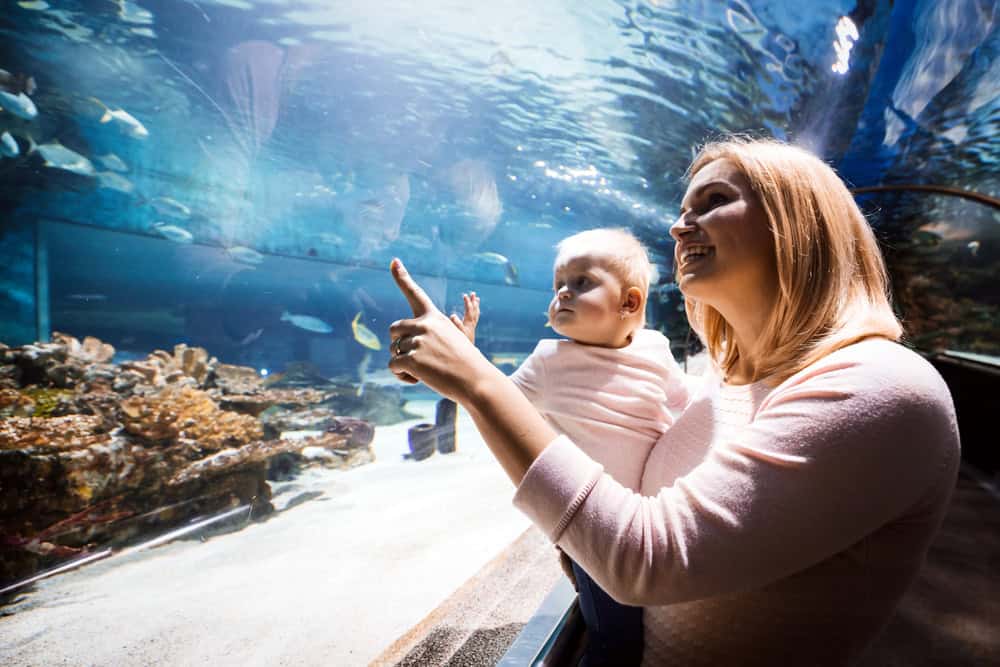
Young children learn through play, shared attention and repetition. Joint attention matters because it lets you and your child focus on the same animal simultaneously. That simple back and forth, “Look, fish,” “Penguin swimming,” “Blue jelly,” is a big part of why aquarium visits can feel so rich at this age.
Repetition matters too. Relationships and repetition help young children learn, which is one reason toddlers often want to watch the same sea otter dive four times instead of moving on to the next gallery. You are not doing the visit wrong by lingering. In many cases, you are hitting the developmental sweet spot.
So what usually works best?
Exhibits that give your child something obvious to notice right away. An otter rolling. A penguin darting through water. A shark gliding past. A jelly pulsing in a lit tank. These displays do not need much explanation to feel rewarding.
By contrast, exhibits built around subtle details, slower interpretation or abstract themes can be interesting to you and flat for your toddler. That does not make them bad exhibits. It just means they may not earn your family’s limited energy on this visit.
The Best Aquarium of the Pacific Exhibits for Toddlers to Prioritize First
If you are walking in with a toddler and want your best odds of early success, start with exhibits that offer immediate motion and an easy visual payoff.
The strongest toddler picks are usually the sea otters, penguins, Shark Lagoon and the jellyfish-related areas. After that, your next best choice depends on your child’s personality.
The Northern Pacific Gallery is a strong first stop because it combines animals toddlers can track easily with several shorter viewing opportunities. Sea otters are a standout here. They roll, float, dive and pop back up, which means your child does not have to wait long for something interesting to happen. Their movement is clear, even for younger toddlers who are still learning to visually scan a large exhibit.
The June Keyes Penguin Habitat is another top-tier choice. The Aquarium notes that the habitat includes a crawl-in space where penguins can walk and swim overhead. That kind of close, surprising movement is pure toddler gold. It feels immersive without demanding much explanation, and it tends to create those quick “wow” moments families remember.
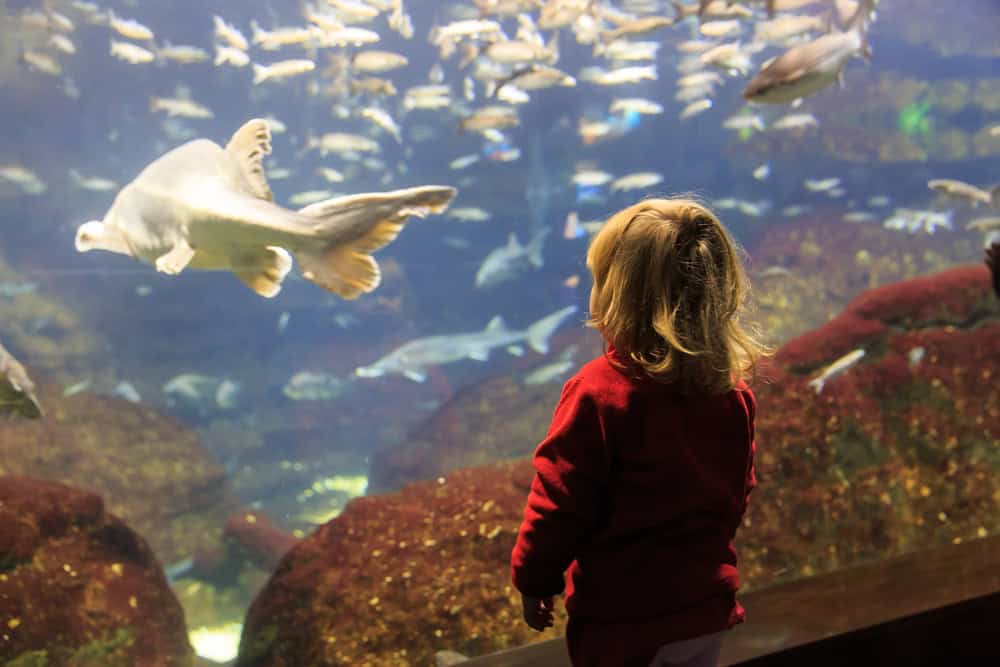
Then there is Shark Lagoon. For many toddlers, this is where the visit suddenly feels huge and exciting. The Aquarium describes it as a family-friendly area with touch pools and a splash zone, and its Shark and Ray Touch Pool includes bamboo sharks, epaulet sharks, fiddler rays and cownose rays. Even if your toddler is not ready to touch anything, the shallow pools and steady gliding motion can hold attention very well.
Do not overlook Jellies, either. This is one of those exhibits that can work beautifully for the right child because the movement is constant, the shapes are simple, and the lighting makes the animals easy to track. For toddlers who like calm visual repetition, jellies can be almost mesmerizing.
One more underrated stop is Harbor Terrace. This outdoor area includes the Moon Jelly Touch Lab and mudskipper exhibits, plus tables and seating for a break. That mix matters. A toddler can look, move, reset and then look again without the pressure of a tight indoor flow.
If your child loves birds and is not easily startled, Lorikeet Forest can be a hit too. The Aquarium notes that the birds may land on your hand, arm, shoulder or head, which some toddlers find magical. Others find it a little too unpredictable. Know your kid before making this a priority.
The Tropical Pacific Gallery is gorgeous and full of color, with the Aquarium’s largest habitat visible from multiple points. It can be rewarding for toddlers who love bright fish and large windows. Still, I would rank it just behind the otters, penguins and Shark Lagoon for most short toddler visits because it can feel more sprawling and less instantly readable.
Exhibits That Work Well for Quick Visits
If you have only an hour to ninety minutes before nap time, lunch or a fading mood, do not try to build a greatest-hits lap of the whole building. Pick a short chain of wins and let that be enough.
For many families, the best quick-visit sequence is sea otters, penguins and Shark Lagoon. That gives you three very different kinds of motion with a strong chance that at least one will really land. You get playful mammals, fast-moving birds and a dramatic shark-and-ray moment without asking your toddler to stay interested for too long in one place.
If your child startles easily, swap Shark Lagoon later in the visit and lean into sea otters, penguins and jellies first. That route feels gentler. It also gives you more chances to slow down and watch, rather than moving through louder or more stimulating spaces too early.
If your toddler is in a “touch and move” phase, Harbor Terrace and Shark Lagoon may deserve a bump up your list. Physical involvement can hold attention longer than passive viewing, especially for children who are happiest when they can alternate standing still with moving their bodies.
The biggest quick-visit mistake is assuming that more exhibits equal more value.
With toddlers, a short visit feels successful when the child stays regulated, connected and interested. That usually comes from a few good picks, not maximum coverage. If you want help turning those picks into a workable route, A Half-Day Aquarium of the Pacific Itinerary is the best next read.
Good Stops for Slower, Calmer Moments
Every toddler visit has a point when you need the day to soften a little.
Maybe your child just had a big reaction at Shark Lagoon. Maybe the building feels busier than expected. Maybe your toddler is rubbing their eyes, asking to be carried or losing interest in fast-moving exhibits. That is when calmer, slower stops become valuable.
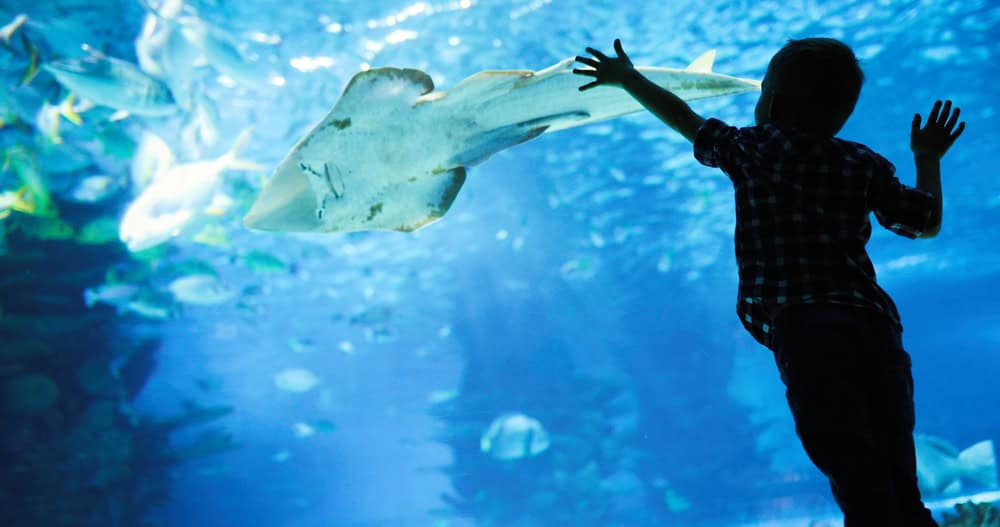
Jellies are excellent for this. The pulsing movement is repetitive and easy to watch, requiring little decision-making. Some toddlers settle right into it. Others do not love dimmer spaces, so use your child’s response as your guide. If the lighting feels like a miss, move on quickly and don’t treat it like a must-see.
Harbor Terrace is another great reset zone because it lets your child decompress outdoors while still staying in aquarium mode. The mudskippers are quirky and easy to point out. The Moon Jelly Touch Lab gives you a focused task without the pressure of covering a large gallery. The seating helps adults regroup, too, which matters more than most trip guides admit.
Sea otters can also provide a moment of calm, even when they are active. Why? Because the viewing rhythm is simple. Toddlers can track the same animal again and again without much of a cognitive load. It is playful, not busy.
Penguins sometimes fill this role as well, especially for children who like watching the same path repeated. A penguin diving, turning and reappearing gives you that satisfying loop toddlers tend to enjoy.
This is also where stroller flow matters. A visit often goes better when you treat the stroller as a reset tool rather than just transportation. If you want help thinking through that side of the day, Aquarium of the Pacific Parking and Stroller Tips pairs nicely with this exhibit guide.
What Parents Can Skip Without Feeling Guilty
You do not owe the building a complete walkthrough.
You also do not need to push through an exhibit just because it seems famous, educational or interesting to adults. If your toddler is drifting, fussing or asking to go back to the penguins, that tells you something useful.
In general, you can skip or move quickly through areas that ask for long stillness, a lot of reading or more abstract understanding. Exhibits centered on broader environmental concepts, layered multimedia, or subtle species differences may be rewarding later, but they often do not offer enough immediate payoff for toddlers.
The same goes for beautiful galleries where the animals are harder to spot. If you find yourself saying, “Wait, look over there, no, there,” more than once, you may be in an adult-interest zone. There is no prize for staying.
You can also skip revisiting a good exhibit from a new angle if the route is becoming cumbersome. The Tropical Pacific Gallery, for example, has multiple viewing points for its large reef habitat. That is wonderful when your child is energized. It is less wonderful when your child is fading, and you are trying to keep the day compact.
What should guide the decision is not prestige. It is a response.
If your toddler is engaged, stay. If your toddler is neutral, try one prompt. If your toddler has clearly moved on, trust that and go with them. The Aquarium features more than 100 exhibits, including 19 major habitats (as the Aquarium describes), so selectivity is not failure. It is smart planning.
Tips for Keeping the Visit Engaging
The easiest way to make the aquarium more engaging is to stop trying to “teach” the whole place.
Toddlers usually respond better when you narrate what they already see. Try short naming phrases. “Orange fish.” “Sleeping otter.” “Penguin swimming.” Naming games and simple observation work better at this age than long explanations.
Let repetition happen. If your child wants to return to the same viewing window, go back to it. That is often more rewarding than dragging them toward the next item on your mental checklist.
Watch for exhibit-to-exhibit friction. A toddler may love sea otters and then suddenly struggle in a darker or more crowded zone. That does not mean the day is ruined. It usually means the next stop should be easier, brighter or more open.
Keep the first half of the visit strong. Front-load your best bets while energy is highest. If you also want help deciding which arrival window tends to work best for naps, noise tolerance and crowd stress, The Best Time to Visit the Aquarium of the Pacific With a Toddler can help you pair the right exhibits with the right part of the day.
Think in clusters, not in a single sweep. One cluster might be otters and penguins. Another might be Shark Lagoon and Harbor Terrace. A third might be jellies, and one more quick look at a favorite exhibit. That approach feels much more toddler-friendly than a full linear pass.
Bring down the pressure on yourself, too. The Aquarium has a Visitor Guide App with an interactive map and current show information, which can help when you want to make a quick decision rather than wander.
And if you are traveling to Long Beach, lightening your gear load helps more than you might think. BabyQuip can make the broader trip easier with stroller rentals, sleep gear and toddler-friendly travel items, so the aquarium is not just one more outing where you are carrying too much.
FAQs
What are the best exhibits for toddlers at the Aquarium of the Pacific?
For most families, the best first picks are sea otters, the June Keyes Penguin Habitat, Shark Lagoon and the jellyfish-related areas. They offer the clearest motion, fastest visual payoff and easiest opportunities for pointing and naming.
Which parts of the aquarium hold a toddler’s attention best?
The parts with obvious movement usually win. Otters rolling, penguins swimming, and sharks gliding through shallow or high-visibility spaces tend to hold attention better than text-heavy or more abstract exhibits.
Should parents try to see the whole aquarium with a toddler?
Usually, no. A better strategy is to pick a few high-reward exhibits and let your child revisit a favorite if they want. A shorter visit with strong engagement often feels much better than a longer visit filled with dragging and negotiating.
Are some exhibits better for younger toddlers than others?
Yes. Younger toddlers often do best with simple, high-contrast viewing moments and exhibits where the animal is easy to spot right away. Sea otters, penguins and jellies are often easier to read than exhibits that require more searching or patience.
How do you keep a toddler engaged at the aquarium?
Keep your language short, follow your child’s interests and do not rush away from the first exhibit that really clicks. Use repetition, breaks and outdoor resets to your advantage. When interest fades, change the environment instead of trying harder in the same spot.
The best Aquarium of the Pacific exhibits for toddlers are not always the most prestigious or the most ambitious. They are the ones your child can understand instantly, enjoy deeply and revisit happily. If you build the visit around that idea, you will spend less time negotiating and more time watching your toddler light up at the glass. That is what turns Aquarium of the Pacific exhibits for toddlers into a trip your family actually enjoys.