

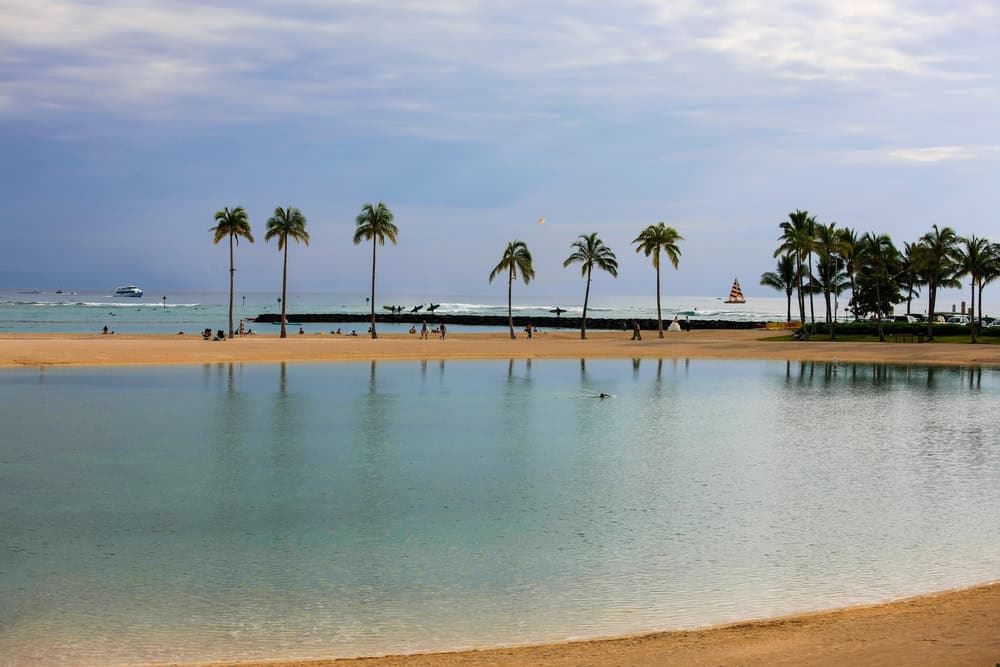
When parents search for calm ocean entry spots in Waikiki, they usually are not asking for the prettiest stretch of sand. They are asking a more practical question: where can a toddler stand at the edge, feel the water and decide whether the ocean is fun or a hard no? That difference matters.
A toddler-friendly entry point is less about a big “best beach” label and more about how the first few minutes feel. You want a spot where the water feels approachable, where you can retreat quickly, and where the day does not fall apart if your child gets a single cold splash to the chest and wants out. If you want the broader vacation framework around naps, backup plans and realistic Waikiki pacing, start with Waikiki With Babies and Toddlers.
Waikiki offers a few family-friendly options, but none are universally calm every hour of every day. The official guidance on picking a beach says to choose lifeguarded beaches and talk with lifeguards before entering the water. That is the right starting point for toddlers, too.
What Makes an Ocean Entry Spot Feel Toddler-Friendly in Waikiki
“Calm” is not one thing. For a parent with a tentative toddler, calm usually means small wave energy at the shoreline, a sandy start instead of an immediate drop or hard pull, room to hover within arm’s reach and a simple exit when the mood changes. It also means you can watch the waterline for a few minutes and understand what the next wave will probably do.

That last part is easy to miss. A beach can look gentle from the sidewalk and still feel busy at ankle height. If each incoming wave pushes hard against your toddler’s knees, or the water drains back fast enough to tug little feet sideways, the entry no longer feels calm, even if adults nearby are swimming happily.
You are also judging the beach from dry land, not just from the water.
The most workable ocean entry spots let you sit close enough to the edge that you don’t have to do a long, sandy march with a nervous child, wet towels and a backup outfit. You want visibility, an uncluttered path back to your setup and enough room that you do not feel pressure from surfers, bodyboarders or bigger kids moving fast around you. If you are still deciding where to base yourselves on the sand, the guide to shade and calm-water seating at Waikiki Beach will help you sort out your beach setup before you sort out your water entry.
Timing matters too. A manageable entry point at 8:15 AM can feel louder, tighter and far less patient by late morning. Families who want the easier part of the day usually do better with cooler hours and shorter sessions, which is exactly why a rhythm-based plan like a heat-safe Waikiki beach schedule pairs so well with this topic.
Best Calm Ocean Entry Spots in Waikiki for More Manageable Toddler Water Play
The best family choice is usually not the place that looks emptiest from a distance. It is the place where the shoreline gives your toddler the gentlest first conversation with the ocean.
Kūhiō Beach Is the Best First Try for Many Hesitant Toddlers
If your child is cautious, new to ocean water or likely to want several false starts before stepping in, Kūhiō Beach is often the strongest first option in Waikiki. The Go Hawaii page for Kūhiō Beach describes it as a calm swimming enclosure ideal for children and families, created by concrete walls that shape the area many visitors know as Kūhiō Ponds.
In practice, that enclosure changes the emotional feel of entry. The water often feels more contained, the wave action can feel less pushy at the shoreline, and parents can make smaller decisions. You are not deciding whether to “do the beach.” You are deciding whether your toddler wants to stand in a shallow wash, shuffle a few steps farther, or sit back down on the sand and try again in five minutes.
That smaller scale matters with toddlers. They do not need a long swim zone. They need a low-drama first encounter.
Kūhiō also works well because a parent can stage the whole experience in short loops. Walk to the edge. Let your toddler feel one wave. Step back. Reset. Try again. That pattern is harder on more exposed stretches, where each retreat feels like backing out of something larger and more chaotic.
Still, this is not autopilot calm. If the water is sloshing hard inside the enclosure, if the edge feels crowded or if your child is already clinging to you before toes hit water, treat that as useful information. The official guidance for Kūhiō Beach notes that visitors are urged not to jump or dive from structures like the Waikīkī Wall and to follow posted warnings and lifeguard instructions, which is another reminder that a family-friendly area still needs close judgment.
The Duke’s Beach and Hilton Side Can Work Well When You Want Family Water With More Space
The Duke’s and Hilton side is a strong second option, and for some families, it becomes the better match. The official Duke’s Beach page says it is popular with families and children thanks to a protective sea wall. It also notes the nearby manmade lagoon.
That combination is useful because it gives you flexibility. If the ocean edge feels workable, you can stay with ocean play. If your toddler recoils from the motion, you are already close to a calmer backup environment rather than needing a full reset somewhere else.
The entry here often feels a little less contained than Kūhiō, which can be good or bad depending on your child. Some toddlers dislike the more enclosed feel of a pond-like area and do better where the beach feels visually open. Others need the clearer boundary that Kūhiō provides. This is why two “family” sections can feel very different once you are actually crouched at the waterline holding one small hand.
The Duke’s side is also appealing to families who want a little more space near the entry zone. When you have space to set down sandals, dry off quickly and retreat without bumping into another setup, the whole interaction stays calmer.
Quieter Edges of Waikiki Are Not Always the Best First Ocean Entry
This is where many families second-guess themselves. They see a quieter stretch and assume quieter automatically means better for toddlers. Sometimes it does. Often it does not.

The official Waikīkī Beach overview describes Queen Surf Beach as home to quieter stretches on the Diamond Head side of Waikiki. That can make it pleasant for sand play, a breather from central Waikiki or a family that simply wants more elbow room. But quieter on shore is not the same as easier first entry for a hesitant toddler.
A calmer social atmosphere does not cancel out a shoreline that feels more open, a waterline with more push, or nearby activity that makes you less comfortable hovering in shin-deep water with a child who may bolt backward after one wave. Queen Surf and other quieter edges can be fine for older kids, confident toddlers or families prioritizing space over the most beginner-feeling entry. They are just not the first places many parents should try when the goal is cautious first ocean play.
The same goes for central stretches that are iconic but busy. A famous patch of Waikiki can still be the wrong choice for your child if the first few yards feel visually loud, crowded or hard to retreat from.
How to Use Calm Ocean Entry Spots in Waikiki Without Forcing the Moment
The best entry point still fails if you push the day.
For toddlers, the first minute often tells the truth. If your child wants to squat at the edge and pat the foam, that counts as a win. If they want to be carried in and then immediately lifted back out, that also tells you something. The goal is not to prove they “did the ocean.” The goal is to let them build confidence without turning the beach into a struggle.
Many families do better when they stop treating ocean entry like a milestone and start treating it like a test run. A short, happy five minutes beats a tense 25 minutes every time.
How to Judge Conditions Before Your Toddler Gets In
The state’s ocean safety guidance tells beachgoers to swim near a lifeguard, pay attention to warning signs, stay close to shore and watch wave action. With toddlers, that advice gets even more specific.
First, look for the lifeguard tower before you unpack too much. The lifeguarded beach list includes Waikiki Dukes, Waikiki Kuhio and Waikiki Queens, which gives families several monitored South Shore options. If you do not see a lifeguard on duty or you are too far from the tower to feel supported, move before your toddler gets into trouble. Then watch the shoreline for at least a few minutes.
You are not just checking whether the water looks pretty. You are checking whether each incoming wave arrives gently or knocks children backward, whether the water drains out forcefully enough to twist ankles, and whether other parents with small kids look relaxed or tense. The beach will usually tell you more in three minutes of observation than in ten minutes of online reading.
You also want to ask a simple parent question: if my child panics right now, how easy is it to get out?
A good toddler entry area gives you a straight retreat to dry sand and your setup. A worse one makes you pick your way through other people, boards or a steeper waterline while holding a wet, angry child. That difference alone can decide the day.
Wind matters more than many families expect. A choppy surface texture, blowing sand, salt spray in the face, and louder wave sounds can make a normally workable section feel harsh to a toddler who was already unsure. So can crowd pressure. If children are dashing in all directions and adults are constantly crossing your space, a technically “family” area may still feel wrong for your child that morning.
If conditions look off, do not negotiate with them. That does not mean your whole outing is ruined. It means you switch plans early, before everyone is tired and disappointed.
When to Skip Ocean Entry and Just Play on the Sand

Happy asian family playing sand and build sand castle at beach, Happy family activity concept.
A lot of good family beach mornings never include actual wading. That is not settling. That is good judgment.
Skip ocean entry if the first waves are stronger than you expected, if your toddler keeps lifting both feet to avoid the water, if you find yourself bracing hard for every wash at the shoreline, or if you cannot stop scanning the area because it feels too hectic. Those are not small signals. They are the day’s answer.
Sand play still gives your child what they often wanted in the first place: texture, freedom, digging, carrying, pouring and proximity to the ocean without the part that feels scary. In many cases, toddlers become more comfortable simply by watching the water from a few yards back, then approaching later on their own terms.
This is also where setup and timing support the decision. If your beach base is close to the waterline and you arrive during the easier part of the morning, switching from wading to sand play feels natural rather than a dramatic retreat. If you need help choosing that kind of setup, the best places to sit at Waikiki Beach for shade and calm water go deeper into where families tend to feel less exposed and more comfortable.
You can also set a simple rule before toes touch the water: if the first attempt does not feel easy, today becomes a sand day. That takes the pressure out of the decision and stops adults from talking themselves into “one more try” after the beach has already said no.
What to Bring for First-Time Toddler Ocean Play
The best first ocean session is light, fast and easy to abandon.
That means you do not need a mountain of gear. You need a few things that let you try the water, dry off fast and pivot without a production.
A rash guard or swim shirt that keeps your toddler comfortable when they move between wet and dry areas
A dry change of clothes and a towel within arm’s reach, not buried under the whole beach setup.
Water and a simple snack for the moment, right after you exit
Sand toys that still feel useful if the day turns into shoreline digging instead of wading
Footwear or a carry plan that gets you back across hot sand without drama
This is one place where BabyQuip can help without becoming the point of the day. If a delivered stroller, beach gear or toddler basics makes the walk-in and the exit smoother, great. But the calmer choice still comes from your judgment, not from bringing more stuff.
Parents often overpack because they are planning for every possible beach scenario at once. A better approach is to pack for the most likely version: a short trial, a quick reset and an easy pivot.
Safer Backup Plans Near Waikiki
The smartest families do not just pick a beach. They pick a beach plus a fallback. That backup might be the difference between a stressful morning and a genuinely pleasant one.
If the ocean looks rough, the shoreline feels too pushy, or your toddler wants nothing to do with the water, shift early to the best splash and lagoon alternatives near Waikiki Beach. You can also call the beach session early and switch to a stroller outing or another dry plan. Backup plans work because they preserve the fun part of the outing without making your child absorb the hard part.
A good pivot can be as simple as moving from ocean entry to a calmer lagoon-style setting, staying for sand only, or ending the beach portion before everyone is cooked. Families usually regret forcing ocean time far more than they regret leaving it early.
This is another reason cooler-hour planning matters. A shorter morning session leaves room for a second decision later. If you burn all your energy trying to salvage a bad water entry at midday, you lose the flexibility that makes Waikiki manageable with little kids.
FAQs About Calm Ocean Entry Spots in Waikiki
Where can toddlers safely wade in Waikiki?
The most workable places to start are lifeguarded family-use sections like Kūhiō Beach and the Duke’s Beach area, but no stretch is automatically safe in every condition. Use the day’s wave action, posted signs and lifeguard guidance to decide whether your toddler should actually enter the water.
For many first-timers, the question is less “where is it safe?” and more “where does the shoreline feel manageable right now?” That small shift leads to better calls.
Is Kūhiō Beach good for toddlers?
Often, yes. The protected swimming enclosure at Kūhiō gives many families a more approachable first ocean experience because the water can feel more contained and less forceful at the edge.
But “good for toddlers” does not mean “good today.” If the enclosure feels crowded, sloshy or overstimulating when you arrive, you still need to pivot.
Which part of Waikiki has calmer water?
Kūhiō Beach is widely known as the most protected family-swimming option, while the Duke’s side is also popular with families because of its protective sea wall. Those are usually the first places parents compare when they want gentler-feeling ocean access.
That said, calmer water is only one variable. Entry mechanics, visibility, space near the edge and your toddler’s mood all matter just as much.
Is Waikiki Beach safe for toddler ocean play?
Waikiki has lifeguarded sections and several family-used areas, but toddler ocean play still depends on the same-day conditions and very close adult supervision. The ocean does not become predictable just because a beach is popular.
A better question is whether the specific entry feels calm enough for your child at that moment. If the answer is not clearly yes, stay dry or switch plans.
What should I check before letting my toddler into the ocean in Waikiki?
Check for a lifeguard on duty, posted warnings, the pattern of waves at the shoreline, how easy your exit would be and whether your child looks curious or already overwhelmed. Watch the water for a few minutes before you commit.
You should also ask a lifeguard about current conditions. Local guidance exists for a reason, and toddlers give you very little margin for wishful thinking.
What if the water looks rough when we arrive?
Treat that as your answer and pivot early.
Choose sand play only, move to a calmer backup option or save water time for another morning. If you want help building those pivots into the day rather than improvising on the fly, pair this guide with the timing guide for families visiting Waikiki with a baby and the broader planning framework.
A toddler’s first ocean memories do not need to be dramatic to be successful. In fact, the best ones rarely are. You are looking for a brief stretch of water that feels approachable, a shoreline you can leave without friction and a morning that stays flexible when the ocean says “not today.” If you use that standard, you will make better decisions about calm ocean entry spots in Waikiki and give your child a gentler start with the sea.