

If you’re planning the Orange County Zoo route for strollers, you probably aren’t asking one simple question. You want to know where to start, what to front-load, when to let your toddler walk, where a stroller makes life easier and how to get back out before the whole outing falls apart. That is a different problem than “Is the zoo accessible?” and it deserves a different answer.
At the OC Zoo, stroller-friendly means more than paved walking. You care about turning radius, viewing angles, quick stops, snack timing and whether your child will still be happy by the last enclosure. Since the zoo focuses on rescued animals native to the Southwest rather than a giant all-day campus, the best visit usually comes from a smart sequence instead of wandering until somebody melts down.
That sequence starts with a simple idea: give your toddler the biggest payoff first, use the stroller hardest while energy is high and leave yourself an easy off-ramp once attention starts to slide.
What Makes a Zoo Route Work Better for Strollers
A strong stroller route is built around child behavior, not map perfection.
Parents usually imagine stroller ease as a surface issue. Are the paths paved? Can the wheels handle them? Will a double stroller fit? Those questions matter, but they are only the first layer. The route works when it aligns with how young kids actually move through a zoo visit: big excitement at the start, a strong urge to get out and walk, a snack dip, a short reset and then either renewed interest or a clear decline.
That is why the best route through the OC Zoo is rarely the one that covers every exhibit in a tidy, technical order. It is the one that gets you to the highest-interest animals while your child is fresh, uses your stroller as storage and stamina support rather than a rolling argument and keeps the last third of the outing flexible.
The zoo itself helps this approach. The animal collection includes black bear, mountain lion, bald eagle, kit fox, ocelot, beaver, porcupine, coyote and a barnyard with goats and sheep, which means you can front-load visually dramatic animals, then shift into shorter stops that work better once attention gets patchier. The newer large mammal habitat with mountain lions and jaguars is especially useful early in the visit because it feels big to adults and kids alike.
Think about your route in five parent-first goals:
-
See the “wow” animals before your toddler decides the stroller is a prison.
-
Use longer walking stretches while everyone is still cooperative.
-
Place your snack and diaper break before hunger becomes the story of the day.
-
Let the route shorten naturally if nap timing, heat or mood shifts.
-
Avoid looping back past exhibits your child has already mentally left behind.
That is the logic. Now let’s turn it into an actual plan.
The Best Orange County Zoo Route for Strollers
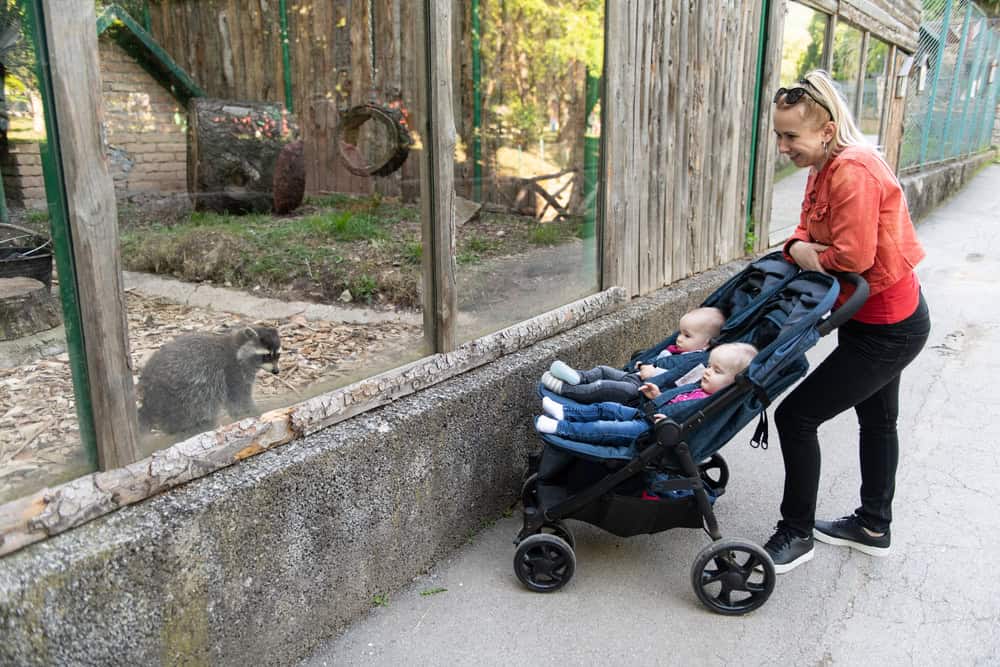
For most families, the best order is: big mammals first, quieter rescue-animal exhibits second, barnyard and kid-pleasing linger spots third, then a simple decision point about whether to continue or head out.
Start with your child riding, even if they insist on walking from the first minute. The first five to ten minutes are usually when parents lose momentum, letting a toddler zigzag before the day has really begun. Roll with purpose toward the exhibits that feel the biggest. At the OC Zoo, that usually means the black bear area and the large mammal habitat with the cats. You are buying two things here: excitement and focus.
This front-loaded start works well because toddlers tend to look their best before they walk their best. If you burn those early minutes on low-stakes wandering, you often end up reaching the strongest exhibits when your child is already negotiating, asking for snacks or trying to climb out and in every thirty seconds.
After the big mammal section, keep moving into the quieter rhythm of the zoo. This is the point for the eagle, owl, fox, coyote, beaver, ocelot and other shorter-viewing stops, depending on what catches your child’s eye that day. Do not try to force equal time at every enclosure. Small kids do not eat zoo food evenly. They lock in hard on one animal, glance at the next three, then fixate on a fence post or a lizard they found on the path. That is normal.
The stroller helps most during this middle stretch because it lets you move briskly between exhibits without having to debate every step. If your toddler wants to walk, this is a better time to let them than at the entrance. Interest has already been rewarded, the path has a little context now, and you can frame walking as a job. “You can walk to the next animal, then hop back in.” That works far better than giving away the whole route.
Your third phase is the barnyard and other child-centered stopping points. The zoo includes a barnyard with domestic goats and sheep, which makes a strong late-middle stop because it feels interactive and forgiving. If your toddler has gone from “show me everything” to “I only care if I can move,” this section often buys you a second wind.
It is also a good place to decide what kind of ending you want.
If your child is still engaged, continue through any remaining exhibits at a relaxed pace and let the stroller do less work. If your child is flattening out, treat the barnyard as your graceful finish and head out while the mood is still intact. A successful zoo day is not the one where you technically saw everything. It is the one where the last ten minutes did not erase the first ninety.
A Shortened Orange County Zoo Route for Strollers on Nap Days
When you are working with a tight nap schedule, shorten the route on purpose.
Go straight to the biggest mammals, choose one or two clusters of nearby exhibits that fit your child’s interests and then finish with the barnyard or another easy kid-focused stop before leaving. In practical terms, that often means a 45 to 75 minute visit instead of trying to stretch the zoo into a half-day event.
This is where many families overcomplicate the outing. They think a shorter route means a lesser experience. With toddlers, the opposite is often true. A shorter visit with great pacing feels fuller than a longer visit where everyone gets bogged down.
If you are still deciding on arrival windows, our guide to the best time to visit the Orange County Zoo with toddlers can help you pair this route with the part of the day your child handles best.
Where to Pause for Snacks, Rest and Diaper Changes
The best pause point is usually not when your toddler says they are hungry. It is ten to fifteen minutes earlier.
That sounds obvious, but zoo outings make adults optimistic. We tell ourselves we can get through one more enclosure, one more photo and one more path. Meanwhile, your child has already started the slide from “fine” to “absolutely not.” A stroller route works better when the break is built into the route instead of being treated as a response to trouble.
For most families, the smartest pause comes after the big early exhibits and before the final third of the visit. By then, you have taken advantage of fresh attention, covered the part of the route most worth protecting and reached the point where hunger, heat or diaper discomfort can derail momentum.
Keep the stop small unless your child truly needs a long reset. A quick drink, a familiar snack, and a diaper check often do more for the route than a drawn-out picnic. Long breaks can make it surprisingly hard to get toddlers moving again.
If you want a deeper food strategy, including whether a snack-only visit or picnic-based visit makes more sense, read our picnic and snack plan for the Orange County Zoo. This piece is about flow. That one is about fuel.
One more practical note: Irvine Regional Park can be closed to vehicle traffic after reaching capacity on busy weekends, often around midday. That is another reason to think about route and timing together. A smooth zoo visit starts before you reach the first exhibit.
What to Do When Your Toddler Wants to Walk
Your toddler will want to walk. The question is not whether that will happen. The question is: when does it help, and when does it wreck the route?
Walking helps when your child has already seen something exciting, the next stop is visible or close, and you can define the distance in a way they understand. “Walk to the bridge.” “Walk to the goats.” “Walk to the next animal and then ride.” These small jobs preserve autonomy without handing over the whole day.
Walking hurts when it begins at the entrance, right before a long transition or when you are trying to pass exhibits that are interesting to adults but not gripping enough to hold a toddler in place. That is how families end up carrying a child, pushing an empty stroller and feeling like the zoo is somehow uphill in every direction.
If you have a baby in the stroller and a toddler who wants to roam, use the stroller as a base camp rather than trying to make both children move identically. One adult can stay with the stroller while the other does a short rail visit with the toddler. Then switch. This works especially well for grandparents or multi-adult groups because it preserves the route without forcing everyone into the same tempo.
You do not need to “win” the walking debate. You need to time it.
A good rule is this: let your toddler walk during the middle third of the visit, not the first or last third. Early on, riding preserves momentum. Late in the outing, the exit is protected by riding. The middle is where walking feels like freedom without carrying too much cost.
Double Stroller, Umbrella Stroller or Full-Size Stroller?
The right stroller depends less on the zoo and more on what you need the stroller to do once you are inside.
A single stroller works best when you have one main rider and one adult who can flex. That setup gives you easy turns, quick parking and less hassle at railings. If you have one baby and one toddler, the single stroller can still work if your toddler is old enough to do short walking intervals without treating every path as an escape opportunity.
A double stroller is worth it when both kids will truly ride, not when parents are hoping they might. If one seat turns into a storage basket after fifteen minutes, the wider frame stops feeling helpful. Yet for siblings close in age or for adults who do not want to carry a suddenly exhausted toddler, the double can still be the least stressful choice.
Umbrella strollers are best for families who value quick folding, light pushing and easy loading in and out of the car over nap support and storage. They work nicely at a compact zoo if your child is older, your bag setup is minimal, and your day does not depend on a stroller nap.
Full-size strollers make more sense when your child still relaxes better in a more supportive seat, you need better shade coverage, or you are carrying the real zoo-day load of water, layers, wipes and backup snacks. They are also kinder when a visit blends into a larger park outing rather than ending the second you leave the gate.
If you flew into Orange County with a tiny travel stroller and already regret it, this is one of those moments where BabyQuip can earn its keep. Renting a stroller that fits the outing better can be easier than wrestling your whole weekend around the wrong setup.
For the broader gear decision across zoo mornings, playground stops and beach add-ons, our guide to stroller vs. baby carrier in Irvine will help you decide what should be the primary and what should be the backup.
When a Baby Carrier Still Helps
Even on a stroller-first outing, a carrier can save the day.
You may not need it for the whole zoo. You may not use it at all. Still, a small carrier can be useful in a few very specific moments: when your baby is tired of the seat but not ready for the car, when a toddler meltdown forces one adult to keep moving with the stroller while another peels off or when your child wants a close-up animal look without the full production of parking the stroller and reorganizing the group.
A carrier is also helpful if your toddler reaches that odd point where they do not want to ride or walk and mostly want to be attached to a parent while still seeing everything. That stage appears fast.
Do not overread this. You do not need to bring every mobility option you own. You just need to know that a stroller-only plan is strongest when it still has one small backup move.
Making the Route Work for Different Family Setups
The same route can feel very different depending on who is in your group.
With one toddler and one adult, keep the route tighter and use the stroller more assertively. You do not have enough free hands for much wandering. With two adults, you can afford more walking intervals, more rail visits and more recovery moments without losing the route.
With grandparents, slow the first third slightly and keep the group together at the high-interest exhibits. What makes multigenerational zoo visits feel chaotic is not usually the pace. It is fragmentation. One person wants a photo, one wants shade, one wants goats and one wants the restroom. The stroller route helps when it provides a shared sequence for everybody.
For longer park paths or extra time on your feet, it can help to rent essential baby gear {link to baby gear landing page} before the zoo day starts. BabyQuip offers clean, safety-checked strollers, wagons, carriers, and other comfort essentials with delivery right to your hotel, vacation rental, residence, or airport.
With a baby in the stroller and a toddler walking, avoid the temptation to pretend this will be a perfectly synchronized outing. It will not be. Use short roles, quick swaps and clear landmarks. One adult handles the stroller and supplies. One adult handles the walker. Then trade off when needed.
With siblings on different nap rhythms, protect the older child’s best window for animal viewing first. Babies are often more portable than toddlers, even when they are fussier minute to minute. The route tends to fall apart faster when the older child feels under rewarded from the start.
FAQs About the Orange County Zoo Route for Strollers
Is the Orange County Zoo stroller-friendly?
Yes, for most families it is. The OC Zoo is compact and built around walkable exhibits in Irvine Regional Park, making it a good stroller-friendly outing. Still, “stroller-friendly” does not mean passive. You will still make choices about when to ride, when to park briefly and when to let a toddler walk.
What is the best stroller route through the Orange County Zoo?
For most families, start with the biggest mammals, move into the quieter rescue-animal exhibits, pause for a snack or reset and finish with the barnyard or another kid-pleasing stop before deciding whether to continue or exit. That order protects attention and reduces unnecessary backtracking.
Can toddlers walk part of the zoo and ride part of it?
Yes, and that is often the best setup. Let toddlers ride at the start, walk during the middle third and ride again when you need a clean finish. That rhythm gives them some control without turning the whole outing into a negotiation.
Should you bring a full-size stroller or a travel stroller?
Bring the stroller that matches your child’s stamina and your storage needs. A travel stroller can work well for older toddlers and lighter packing. A full-size stroller usually works better if your child still rests in the seat, you need more shade, or you are carrying the real family load for the day.
How long should a stroller-based zoo visit take?
For most families, 90 minutes to two hours is the sweet spot. If you add a fuller snack stop or your child stays deeply engaged, you may be able to stretch longer. If you are protecting a nap window, a focused 45 to 75-minute route can still feel very worthwhile.
The best Orange County Zoo route for strollers is the one that respects how small kids move through a day: fast interest, short legs, quick mood swings and a real need for momentum. When you start with the strongest animals, use the stroller on purpose and give yourself a graceful early exit, the zoo feels easier for everybody.
If you are fitting the outing into a bigger weekend, our Irvine with toddlers guide and this two-day Irvine itinerary with naps built in can help you connect your Orange County Zoo route for strollers to the rest of the trip without overloading the day.