

Key Takeaways
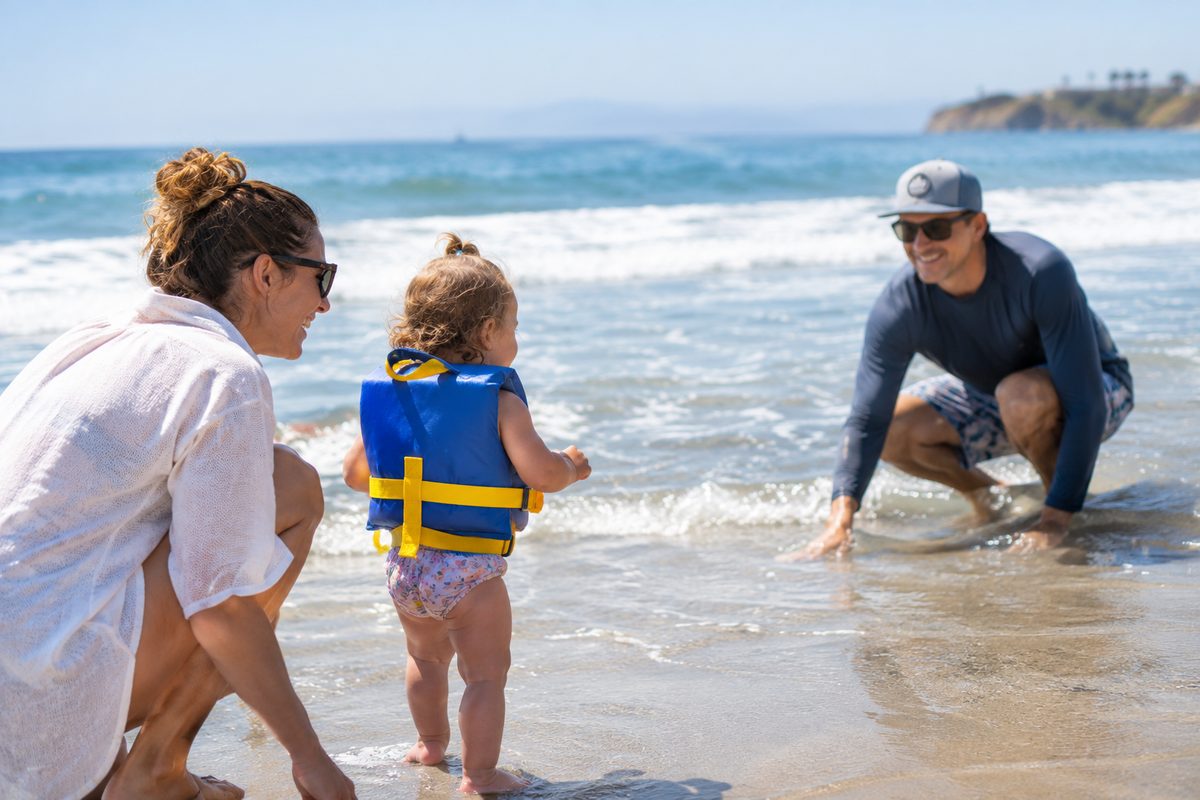
Ways to keep lagoon time calm and safe:
- Assign one water watcher: Name one adult out loud as the watcher so no one assumes someone else is looking.
- Stay within arm’s reach: Keep close enough to steady a slip or stop a sudden dash at any moment.
- Build in real breaks: Move away from water for snacks and rest and stop early once a toddler seems tired.
Planning for water safety at Seaside Lagoon starts with a simple truth: calmer water can make a family beach day feel easier, but it doesn’t make toddlers easier to supervise. Toddlers are quick. They wobble, dash, slip, copy older kids and change their minds mid-step. A lagoon setting can give parents a more manageable way to enjoy water play, yet the grown-up job stays active from the first sunscreen check to the final towel wrap.
Seaside Lagoon can be a great fit for families who want a water-focused Redondo Beach day without jumping straight into surf conditions. The City of Redondo Beach describes Seaside Lagoon as a fully enclosed saltwater lagoon with small water slides, picnic areas and seasonal operations.
That setup is the appeal.
It also creates the mental shortcut that this article is here to undo. Calm does not mean casual. Enclosed does not mean hands-off. Shallow-looking does not mean predictable for a toddler who is still learning what their own body can do in water.
Why Calm Water Still Shapes Water Safety at Seaside Lagoon
For parents and grandparents, lagoon water can feel like a deep exhale. You are not watching waves crash, timing surf breaks or bracing for a toddler to get knocked over by whitewater. You can often see the play area more clearly, and the whole experience may feel more contained than a wide-open beach.
That sense of manageability helps families have fun, especially when they are trying to build a Redondo Beach with toddlers plan that fits naps, snacks, strollers and short attention spans. The goal is not to make Seaside Lagoon sound scary. The goal is to keep the ease of the setting from turning into lowered attention.
Drowning prevention guidance keeps coming back to the same point because it matters most for little kids: the CDC says drowning is the leading cause of death for children ages 1 to 4 in the U.S. That fact belongs in your planning, not as a reason to panic, but as a reason to treat toddler water play as an active adult task.
A toddler does not need dramatic conditions to get into trouble. They can lose footing, inhale water, trip during a transition, follow a sibling into a deeper area or return to the edge after everyone thought water play was finished. In a calm-water setting, those small moments are exactly the ones adults can miss when supervision turns into a relaxed glance from nearby.
Think of water safety as the structure that lets the fun happen.
For toddlers, that structure means one adult knows they are on duty. That adult stays close enough to intervene right away. The child understands the boundary before entering the water, and the family has a plan for snacks, bathroom trips, sibling needs, photos and tired-child exits before those moments pull attention away.
The Water Safety Rules Parents Should Set Before Arrival
Rules work better when they are simple, repeated and practiced before excitement takes over. The car ride, stroller walk or sunscreen moment is the right time to set expectations because once toddlers see water, their listening skills may shrink fast.
Start with one core rule: you only go near the water with your grown-up.
That rule sounds basic, but it solves a lot. It covers the toddler who wants to run ahead, the sibling who says, “Come with me,” and the child who tries to return after a snack break. It also gives grandparents and visiting adults a shared phrase to repeat without turning every correction into a negotiation.
Next, make the boundary visible. Toddlers understand what they can see and touch better than abstract warnings, so point out the exact area where your child may play. You might say, “We stay between this towel and that spot,” or “Your feet stay where I can hold your hand.” If the boundary changes, say it again.
Keep the rules short enough to survive the day.
A few family-friendly water rules can do more than a long speech:
- Ask before entering or returning to the water.
- Stay where your adult can touch you.
- Walk near wet surfaces.
- Stop when your adult says stop.
- Leave the water for snacks, bathroom and rest breaks.
The wording can be cheerful. Toddlers do not need a fear-based talk to understand limits. They need repetition, proximity and an adult who acts the same way every time.
This is where preparation helps. If you already know your child resists transitions, pack the towel, dry shirt, snack and comfort item where you can grab them quickly. For families trying to trim the gear load, A Seaside Lagoon Packing List for Babies and Toddlers can help separate items that reduce friction from items that just make bags heavier.
How Close Adults Should Stay to Toddlers in the Water
The right distance is closer than many adults think.
The American Red Cross recommends close, constant attention for children in or near water, even when lifeguards are present, and the water appears shallow. It also recommends staying within arm’s reach of weak or inexperienced swimmers.
For toddlers, arm’s reach is the practical standard. Not a few steps away. Not “I can see them from the towel.” Not “Grandpa is nearby too.” Close enough to steady a slip, stop a sudden dash, guide a turn or lift the child immediately.
That closeness can feel like a lot when the setting looks easy. It may also feel less relaxing than the day you pictured. But active supervision is not separate from the outing; it is the way the outing works with a toddler.
A Practical Water Safety at Seaside Lagoon Reset
Before anyone enters the water, decide who is the water watcher. Say it out loud. “I’m watching Maya for the next 15 minutes.” “You’re watching both boys while I take the baby to the restroom.” “Grandma is playing with us, but I’m still the watcher.”
That spoken handoff prevents the group-supervision trap. In family settings, several adults can feel like someone else is watching the child. The Red Cross recommends designating a water watcher whose sole responsibility is supervising children during in-water activities until another person takes over.
The job should be boring in the best way. No scrolling. No long conversation. No hunting through the bag. No taking a string of photos while a toddler is moving through water.
Photos can wait for a planned pause. Snacks can happen away from the water. Conversations can resume when another adult is officially supervising. This doesn’t mean no one has fun. It means the fun has clean handoffs.
When One Adult Is Managing Two Children
One adult with two young children needs a narrower plan, even in calm water. The biggest risk is not that the adult cares less. It is that two children create two points of attention, and toddlers rarely coordinate their choices.
If one child is a baby or young toddler, that child gets the closest supervision. If the older child wants more range, the adult may need to shrink the play zone until both children can be watched and reached. This is the moment to choose the less exciting boundary and protect the rhythm of the day.
A child who suddenly becomes brave after watching older kids needs extra attention. That new confidence can arrive before the judgment, balance or listening skills catch up. You may see it as a joyful breakthrough, and it can be, but it is also a cue to move closer.
If two children have very different comfort levels, avoid using the brave child as the pace-setter. The hesitant toddler may cling, cry or freeze while the more confident sibling keeps pushing outward. The adult ends up managing emotions and movement simultaneously.
Give each child a lane. The cautious child gets permission to stay shallow, hold hands or take breaks. The bolder child gets a firm boundary and a clear return point. Fair does not mean identical near water.
Common Safety Mistakes Families Make at Lagoon-Style Attractions
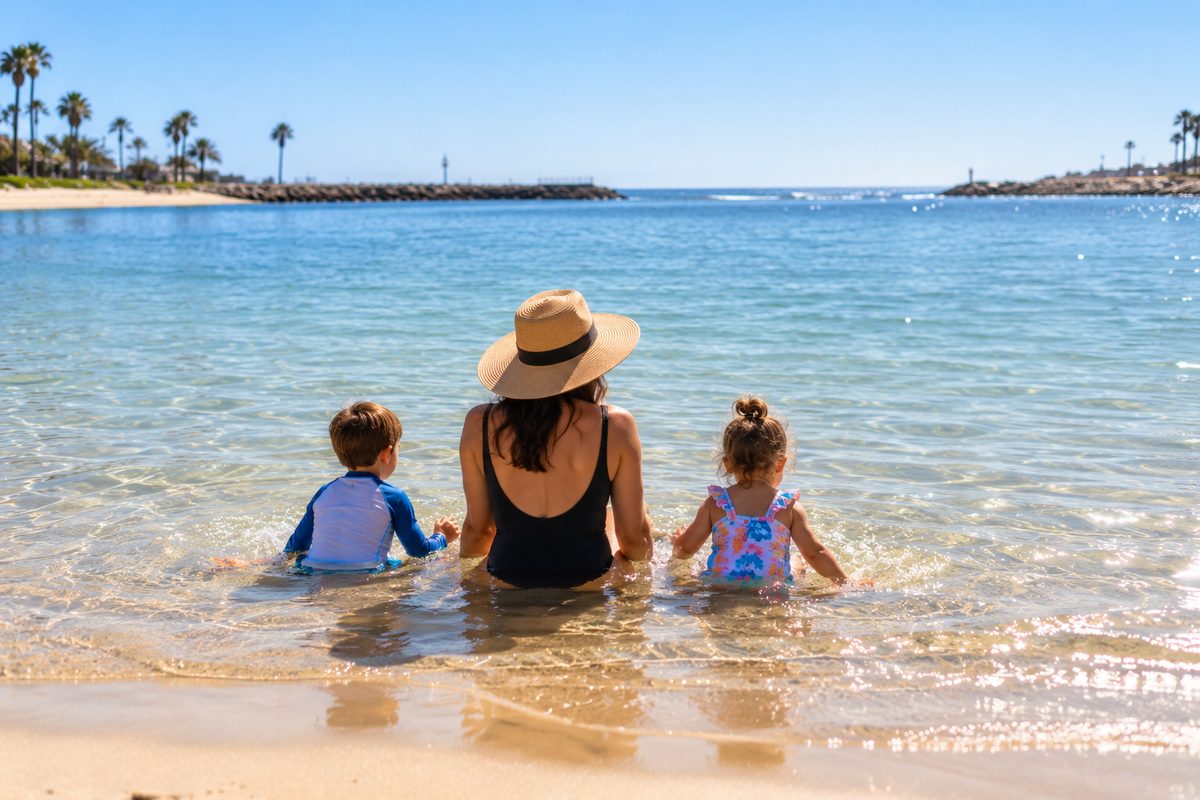
The most common mistake is vague watching from nearby. A parent may be close in distance but not close in attention. They are chatting, texting, unpacking, helping another child or looking for shoes. The toddler is technically in sight, but no adult is fully assigned.
Another mistake is treating lifeguards or facility staff as a replacement for caregiver attention. The Red Cross says adults should provide close supervision even when a lifeguard is present, no matter how well a child swims or how shallow the water is.
Floaties can create another false sense of security. The Red Cross advises families not to rely on water wings, swim rings, inflatable toys or other recreational items to replace adult supervision. If your child uses a flotation device, supervision should not move farther away.
A calmer setting can also make adults underestimate transitions. Many families focus on the time in the water, but toddlers can move toward water during arrival, snack breaks, bathroom trips, sunscreen reapplication and packing up. Those are the moments when adults feel between tasks.
Leaving the water may be the hardest transition of the whole visit.
A toddler who refuses to get out can pull attention toward negotiation and away from the environment. Keep the exit short, warm and predictable. “Water is done. Towel first, snack next.” Then move the child fully away from the edge before talking through big feelings.
Managing Breaks, Meltdowns and Overtired Kids Near Water
Toddlers often get less safe as they get more tired. They may run more, listen less, stumble more often and melt down harder when a boundary appears. Add sun, wet clothes, hunger and overstimulation, and a child who handled the first hour beautifully may struggle during the second round of play.
This is why a short, well-timed visit can beat an ambitious one. If you are still deciding when to go, The Best Time to Visit Seaside Lagoon can help you think through crowds, naps and lower-stress visit windows without turning the day into an all-day push.
Snack breaks need their own water-safety plan. Move away from the water before opening food, and decide whether water play will continue afterward. The second round, after snacks can feel casual because everyone has already “done” the main activity, but a tired toddler may be more impulsive than they were at the start.
Set up breaks as real resets, not half-breaks. Dry off a little. Offer water. Sit in shade if you can. Check whether your child is still coordinated, responsive and able to follow simple directions.
If the answer is no, water play is done for now.
A meltdown near water should move away from water first and get solved second. You can comfort, validate and talk once the physical risk is lower. That may feel clunky with a crying toddler in a towel, but it is easier than trying to reason with a wet child who is still close enough to bolt back.
This is where support gear can quietly make the day easier. Families staying nearby can use BabyQuip to have items like strollers, travel cribs, high chairs and other child gear delivered to hotels, vacation rentals or family homes, which can make nap recovery and post-water transitions less chaotic.
If grandparents are joining the lagoon day, mobility gear can help them enjoy the time on shore, too. With a clean, safety-checked wheelchair or walking aid from BabyQuip, getting from parking to the picnic area, restrooms and a shady spot to rest can feel easy, without adding bulky equipment to the trip.
What to Do When Siblings Have Different Water Confidence Levels
Siblings can make toddler water safety harder because the younger child often wants the older child’s freedom. They see jumping, splashing or wandering and assume the same rules apply to them. A toddler’s imitation can be sweet on dry land and risky in water.
Talk to the older child before the toddler enters. Give them a helper role that does not involve supervising. Older siblings can show walking feet, return to a marker or help announce snack time. They should not be responsible for keeping a younger child safe.
Grandparents and other relatives also need clear roles. A grandparent may be wonderful company, great at snacks and perfect for a stroller walk, yet still not be the primary water watcher. That is not a criticism. It is a planning choice.
You can say, “We’d love your help with towels and snacks. I’m going to stay in charge of watching her in the water.” Clear roles protect everyone from guessing.
When the older child wants more water time, and the toddler is done, split the plan if enough adults are available. One adult stays with the older child as the watcher. The other moves the toddler away from the water for dry clothes, snack or stroller time. If there are not enough adults, both children leave together.
That can disappoint someone. It can also save the day from sliding into divided attention.
How Footwear, Slips and Sun Fatigue Change the Day
Water safety at Seaside Lagoon is not only about swimming. It is also about all the small physical demands around water: walking on wet surfaces, climbing in and out, sitting down, standing up, carrying towels, changing clothes and handling the heat.
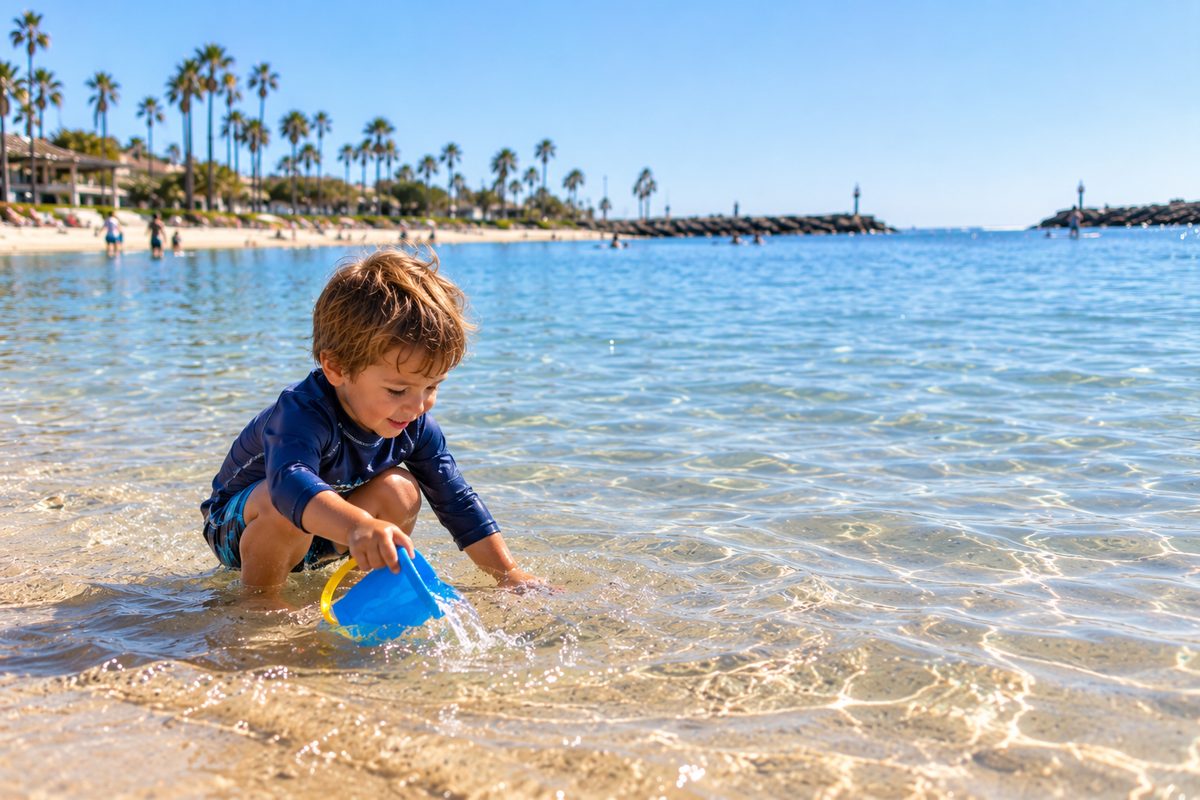
Toddlers fall often because they are still toddlers. Wet feet and excitement make that more likely. Choose shoes that stay on, dry reasonably well and give your child traction during transitions. If shoes become a battle, slow down the movement rather than chasing the schedule.
Sun fatigue can sneak up on families because the day feels fun until it doesn’t. A child may not announce, “I am overheated and done.” They may run away, refuse water, cry over a towel or insist they want more lagoon time while clearly losing coordination.
That is your cue to simplify. Dry clothes, shade, water, food and quiet movement can reset the day. A stroller walk, early meal or return to your lodging may do more for the family than another 30 minutes of water play.
The best plan leaves room to stop early.
If you want a full-day structure that builds in rest instead of treating it as a backup plan, A One-Day Redondo Beach Itinerary can help you pair water play with calmer meals, walks and decompression time.
What Not to Rely on for Toddler Water Safety
Some tools help. None of them replaces an attentive adult.
Do not rely on a general sense that “we’re all watching.” Shared supervision often becomes no supervision because every adult assumes the other adult has the clearest view.
Do not rely on flotation items as your main safety plan. The American Academy of Pediatrics recommends layers of protection, and close supervision becomes the active layer when children are playing in or around water.
Do not rely on a toddler’s swim confidence. A child can be comfortable in water without understanding depth, fatigue, boundaries or what to do after a slip. Swim lessons can help children build skills, but they do not make toddlers independent around water.
Do not rely on the first hour to predict the second. A child who listened beautifully at 10:30 may be hungry, sun-tired and impulsive by noon. That change does not mean the day went wrong. It means your plan needs to shift.
Do not rely on your own memory once the day gets busy. Use simple spoken handoffs. Put the towel and snack where you can reach them. Decide before arrival who will handle photos, who will handle the bag, and who will watch the water.
Building a Calm Water Day That Still Feels Fun
Good water safety does not have to turn the day into a lecture. In fact, the best version is usually quiet. The adults know the roles, the toddler knows the boundary, and the visit has enough breaks that no one has to force fun past its natural endpoint.
A calm water day might look like this: arrive with a short plan, set the boundary before entering, keep one adult within arm’s reach, pause for snacks away from the water and leave before your toddler is fully spent. That may sound simple, but simple is the point.
Families often get into trouble when they try to make a toddler outing look like an older-kid outing. More time, more freedom, and more stops do not always create more joy. Sometimes the best day is the one where everyone gets enough water, play, enough food, enough shade and enough room to exit gracefully.
For many families, Seaside Lagoon fits well into a broader Redondo Beach plan because the day does not depend solely on water. You can pair a shorter lagoon visit with a meal, a quiet walk or return to your vacation rental for real rest. That keeps water play as the highlight, not the thing everyone pushes through after the kids are already done.
FAQs About Toddler Water Safety at Seaside Lagoon
Is Seaside Lagoon Safe for Toddlers?
Seaside Lagoon can be a good toddler-friendly water stop when adults treat supervision as active, close and constant. Its enclosed lagoon setting may feel more manageable than open surf, but toddlers still need an assigned adult within immediate reach during water play.
Do Toddlers Need Constant Supervision at a Lagoon?
Yes. Toddlers need constant supervision in and around water, even when it looks calm or shallow. The adult watching should avoid distractions and stay close enough to respond right away.
Are Floaties Enough for Toddler Water Safety?
No. Floaties, swim rings and inflatable toys are not a substitute for adult supervision. If your child uses any flotation device, keep a close eye on them and stay within reach.
How Many Adults Do Families Need for Multiple Young Children?
The safest number depends on age, swimming ability, behavior and the setting that day. If one adult cannot stay close enough to reach every young child they are responsible for, the family should reduce the play area, take turns or keep some children out of the water until another adult can actively watch.
What Should Parents Do if a Toddler Refuses to Leave the Water?
Move the child away from the water first, then handle the feelings. A simple pattern helps: towel, snack, dry clothes and a clear next step. Keep the exit calm, but do not continue negotiating at the water’s edge.
Is Water Safety Different at a Lagoon Than at the Beach?
Some risks differ, but the toddler supervision standard remains close and active. A lagoon may reduce wave-related stress, while an open beach adds surf, current and wider boundaries. In both settings, toddlers need an adult to watch them with full attention.
A Safer Seaside Lagoon Visit Starts Before the Water
The easiest mistake is assuming that a calmer place asks less of you. In reality, water safety at Seaside Lagoon works best when the calmer setting helps you supervise better, not less. You can choose a manageable arrival window, pack for breaks, assign a water watcher and stay close enough to help before a small slip becomes a big problem.
That kind of planning does not take the fun out of the day. It protects it. When toddlers know the boundary and adults know their roles, the lagoon can be what you hoped it would be: a more manageable way to enjoy water, sunshine and a family day in Redondo Beach.
Keep the plan simple, keep the handoffs clear and keep your attention on your toddler. That is the heart of water safety at Seaside Lagoon.