

Key Takeaways
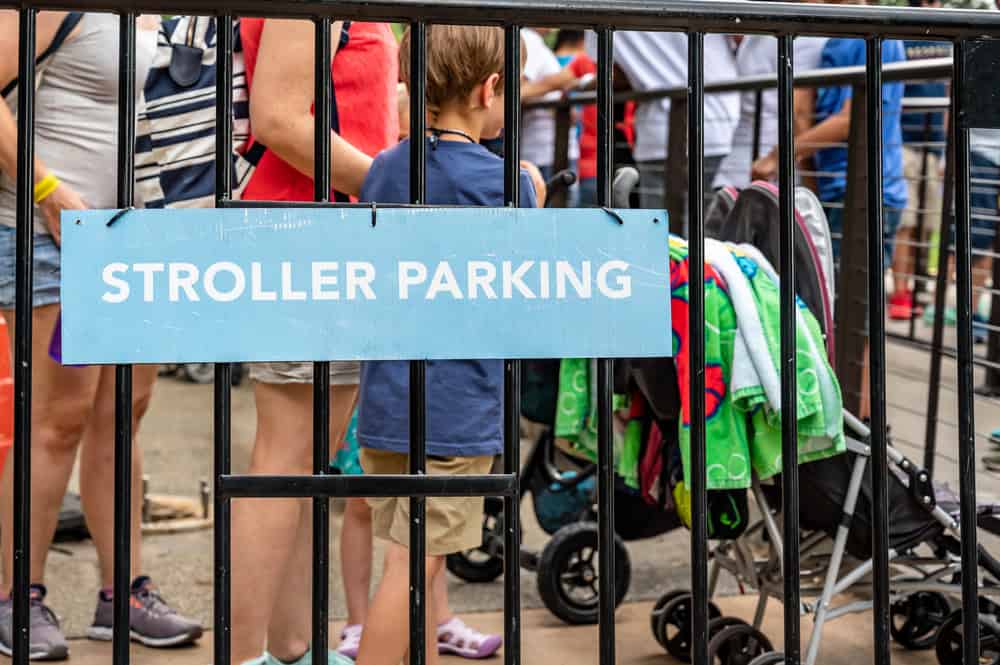
Families can make Sesame Place stroller parking simpler and less stressful by:
- Marking the Stroller: Use bright identifiers and a contact tag so your stroller is easy to recognize.
- Using a Home Base: Park near a memorable landmark and make shorter attraction loops from there.
- Keeping Valuables Close: Carry phones, wallets, keys, medications, and other essentials with you.
- Following a Routine: Set the brake, show your marker, remove valuables, and note the nearest landmark.
Check out our places to stay near Sesame Place.
If you searched for Sesame Place stroller parking tips because you can already feel the “where did we leave it?” stress, you’re in the right place. We wrote this for parents and grandparents who want a calmer day with infants and toddlers, even when the walkways fill up and nap time gets weird.
Stroller parking at Sesame Place gets easy when you treat it like a repeatable system, not a one-time decision. You’ll set your stroller up so it’s unmistakable, park with a landmark habit that sticks and run a tiny routine that keeps snacks, wipes and tiny shoes from disappearing into the stroller void.
Kids come for Sesame Street, parades and splash zones. You’ll enjoy it more when stroller parking stops stealing your attention.
The “Stroller Parking Reality” at Sesame Place
Stroller parking works like silent choreography. Team members may shift parked strollers to keep paths clear, other families may park right beside you, and the same attraction can have two different parking clusters depending on crowd flow. That’s why “I left it right here” fails, while “I parked by that landmark with my bright tag showing” works every time.
You’ll also do better when you assume you’ll park and re-park throughout the park. That mindset turns stroller parking into a rhythm, and once you find your rhythm, you stop burning energy on micro-decisions.
If you’re visiting as a grandparent…
Pick one big landmark you can remember without a phone, then keep using it. A bright sign or a named building beats “near the bench.”
Before You Arrive: Set Up Your Stroller Like a Pro
A smoother day starts before you park near the entrance. Your stroller should roll well, turn quickly and stay comfortable when toddlers flop asleep mid-afternoon. A double stroller can be the MVP for families with two little riders, but only if it fits tight stroller parking areas and you can push it one-handed when the other hand is holding a snack cup.
Stroller organization matters too. When your storage basket behaves like a junk drawer, you’ll waste time at every stop. Build a simple layout with “grab fast” items on top and “only if needed” items deeper down.
Make your Sesame Place stroller parking setup instantly recognizable
Start with visual ID. Pick one color and commit, then add it in two spots so it shows even when someone parks tight beside you. A bright handle wrap plus a matching ribbon on the back bar works, and a loud clip-on fan in a unique color helps too.
If you’re flying in or driving a long distance, consider simplifying your setup by renting gear. Services like BabyQuip allow you to rent high-quality, full-size strollers, wagons, cribs, high chairs, and car seats, and they will deliver and pick up directly at your hotel or vacation rental. This lets you skip the bulk of travel gear, and we even offer same-day delivery!
Add a simple ID system, because strollers can be moved after they’re brought into Sesame Place. Write your name and phone on a luggage tag and attach it low on the frame, and if you’re comfortable, add a second tag inside the basket where it’s harder to grab.
Add a simple ID system (in case it’s moved or mistaken)
A tag helps, but a photo helps more. Take one fast picture of your stroller parked next to a big landmark right after entry into the park, then take one more when you switch zones. That single habit gives you a visual reference if you need to ask a team member for directions, and it keeps you from second-guessing your memory.
Pack with the “Two-Bag Rule”
One bag stays on the stroller, one bag stays on you. The stroller bag holds bulky items you can replace, while your personal bag holds the stuff that ruins your day if it vanishes, and this one rule will prevent the classic “everything valuable was in the bottom basket” regret.
For families traveling, using a gear rental service like BabyQuip to provide your full-size stroller, carrier, or crib can significantly lighten the load and help you stick to this rule without needing to pack bulky items.
Stroller bag ideas: diapers, backup outfit, sunscreen, swim diapers, extra wipes, water shoes, a small towel. Personal bag ideas: phone, wallet, keys, medications, car fob and IDs. Decision threshold: if losing it would end your day, it goes on you, not on the stroller.
Sesame Place stroller parking: The “Home Base” Strategy
Think in zones, not in steps. Pick a “home base” area where you’ll park, reset and return between attractions, then do shorter loops from that point. You’ll walk less, your kid will spend less time strapped in and you’ll always know where your backup supplies live.
At Sesame Place Philadelphia, lockers are conveniently located at the front of the park near Elmo’s Surf ‘n’ Slide, which makes that area a natural reset point for snacks, extra clothes and a quick breath (lockers are conveniently located).
At Sesame Place San Diego, lockers are also at the front, and rentals sit next to them, so the same “front reset” strategy works even when the rest of the park feels like a maze (Lockers are conveniently located at the front).
Choose parking spots that minimize stress
A good stroller parking choice has three traits, and you can test all three in five seconds. You can describe it without pointing, you can return without weaving through a bottleneck, and it keeps you close to what you’ll use most, like restrooms, shade and water bottles. Parking slightly off the main flow makes the return walk calmer, and it also reduces the odds that your stroller gets bumped as crowds surge.
Use “landmarks + photo” without being glued to your phone
Landmark names stick, and a quick photo locks them in. Snap the stroller, the landmark and the nearest sign. Now you have a three-part memory cue you can reference later, even when you’re tired and your toddler is chanting “snack, snack, snack.”
The 60-Second Parking Routine (Do this every time)
This routine saves minutes every hour, and it saves your patience when the park is busy.
- Park with the wheels angled inward so the stroller takes up less space.
- Lock the brake, then push down on the handle to confirm it’s set.
- Clip your bright marker forward so it shows.
- Move anything valuable into your personal bag.
- Look at the nearest landmark and say it out loud.
That last step sounds goofy, but it works because naming the landmark turns it into a sticky memory.
If you’re visiting as a grandparent…
Say the landmark and the direction you’ll walk next. “We’re by the lockers and heading toward the theater” becomes an instant breadcrumb trail.
What NOT to Leave in Your Stroller
Sesame Place is direct that unattended strollers are on you, and Sesame Place is not responsible for strollers or their content left unattended in the park (not responsible for strollers).
Even when you trust the crowd, a stroller can be moved, bumped or mistaken. Keep the day-proofing items with you, and let the stroller hold the replaceable stuff.
Avoid leaving your phone, keys, wallet, medications, tickets and anything sentimental. Use a small zip pouch clipped inside your personal bag, then keep one snack and one wipe on your body so you can handle a surprise moment without a ten-minute hike back to the stroller.
Stroller Parking for Rides vs. Shows vs. Water Play
Your parking plan shifts based on what you’re doing next, and when you match the plan to the stop, you waste less time.
For rides
Rides create stroller clusters, and those clusters shift as lines grow. Park at the edge of the cluster, not the middle, because that edge stays easier to spot and faster to exit when your kid decides they’re done.
If your group uses child swap, bring your personal bag into the line with you. You’ll see language like Sesame Place offers a child swap, or you’ll hear that Sesame Place offers a child swap program on select Dry Attractions (Child Swap is not available on Water Attractions at the Philadelphia park)
The practical rhythm stays the same: one adult rides with one child while the other waits with a non-rider, then children switch spots so you don’t wait twice.
For shows and parades
Show crowds compress space, so park farther back than you think you need, then walk forward without the stroller. That move keeps you from getting boxed in when the show ends, and it protects the well-being of other park guests because you aren’t trying to reverse a stroller through a tight crowd.
For water rides and splash areas
Water rides change what you carry, so stroller parking becomes a dry-bag problem. You’ll want a wet bag, a towel, a change of clothes and water shoes, and you’ll want a plan for where the wet stuff goes after.
Swim diapers are required for diaper-wearing kids, and the dress code language also calls out clothing while in the park, proper swimwear and what’s allowed on water attractions (Swim diapers are required for diaper-wearing children). Park your stroller a little farther from splash edges so the storage basket stays drier, then return for towels and a change when you need them.
Lockers, rentals and the “leave it now, not later” mindset
Lockers sound boring until you’re carrying a soggy backpack through a gift shop, and that’s when a locker becomes the quiet hero. At the Philadelphia park, the locker area is conveniently located at the front, so you can stash extra clothes and return between loops (self- service).
At the San Diego park, strollers can be rented inside the park at the Reservation Center, and Wheelchairs and Electronic Scooters (ECVs) may be rented at Stroller Rental inside the park near the locker location, which means your “gear decisions” can happen after you walk in, not in the parking lot.
Wheelchairs and Electronic Scooters may be rented at Stroller Rental inside the park near the locker location, and that setup helps when a grandparent needs a break or when a toddler’s nap turns into a long stroller push (inside the park near locker location).
Stress-Saving Gear Add-Ons (Optional, not over-the-top)
A few small add-ons create a smoother stroller parking day without turning your stroller into a space station. A zip-top organizer keeps snacks contained, and one bright clip item makes your stroller easier to spot from ten feet away.
A simple lock can add peace of mind, yet you don’t want to create a tripping hazard or break a park rule. Check policies prior to entering the park, then keep any lock low and tight so walkways stay clear.
We also see a travel pattern a lot: families fly in, then realize the bulk of their gear is what makes the day hard. If you’re traveling, we can help you avoid hauling gear by setting you up with what you need at your destination, and you can walk into the park lighter.
Grandparent-Friendly Tips (Mobility, comfort and pacing)
Stroller parking gets easier when adult stamina stays high. Reduce “decision fatigue” by choosing a simple day rhythm: two snack times, one quiet reset spot and one “big moment” you all care about, then let everything else be a bonus.
If walking is hard, Sesame Place offers mobility rentals and other support, and the park maintains an accessibility guide that you can review prior to your visit (Accessibility Guide).
If you’re visiting as a grandparent…
Use the locker as your pacing tool. Drop extra weight early, then pick it up later when you’re already heading toward the front of the park.
If a wheelchair day makes sense for your group, plan it early so you aren’t improvising at noon. The mobility pages describe forms of personal transportation, including electric convenience vehicles and standard wheelchairs, and that language helps you pick the right option before you arrive (forms of personal transportation).
Accessibility and mobility devices that change stroller flow
Strollers share pathways with mobility devices, and those policies can change where you can linger or park.
At Sesame Place San Diego, the park notes it cannot permit the use of two-wheeled, self-balancing electric vehicles, and that’s part of why stroller zones can feel tightly managed on busy days (two-wheeled, self-balancing electric vehicles such as Segways).
The policies also mention wheels or devices that cannot, devices that cannot maintain stability and cannot maintain stability and balance, plus stability and balance when stopped. That language pushes everyone toward predictable movement in crowded areas.
You’ll also see wheeled mobility devices with less, devices with less than 3, less than 3 wheels and 3 wheels or devices. The point is simple: strollers and mobility devices need clean lanes, especially in dense stroller parking clusters (Wheelchairs and Electric Convenience Vehicles).
When you park, leave the widest part of the walkway open. That small courtesy helps guests with special needs, and it keeps stroller traffic moving.
Service animals and stroller space
Crowds make leashes and wheels complicated, so service animal rules show up in stroller conversations more than you might expect.
Service animals are limited, animals are limited to dogs, limited to dogs and miniature and dogs and miniature horses, and the animals must be horses that have been individually trained to do work for the benefit of an individual and the benefit of an individual with a disability (limited to dogs).
On the same pages, you’ll also spot the phrases “service animals are limited” and “guests are responsible,” and reading them ahead of time makes stroller lane planning simpler when crowds get dense.
The same policy language also covers control: use a leash or harness, and if a leash or harness due to a disability can’t be used, the handler is unable to use it, or unable to use a leash in that moment, then alternative control methods apply.
Guests are responsible for the animal, responsible for the clean-up, and the animal must be housebroken. If service animal’s behavior becomes disruptive and animal’s behavior becomes a threat to the safety and well-being, removal can be required (safety and well-being).
If you’re sharing stroller parking lanes with a service animal team, keep a passing lane open so leashes don’t snag on spokes.
For extra clarity on what counts as a service animal, the ADA explains that service animals are defined as dogs that are individually trained to do work or perform tasks for a person with a disability. The ADA also has a separate provision for miniature horses that have been individually trained to do work or perform tasks for people with disabilities.
Entry, security screening and what you carry on the stroller
Your day starts at security, and stroller parking goes smoother when you pass screening without a bag explosion. Organize once in the car, then cruise through calmly.
Sesame Place states that persons are subject to screening for prohibited items using security checks, including walk-through screening and hand-held methods.
You’ll see phrasing like “walk-through” or “hand-held metal” detectors, along with “hand-held metal detectors” prior to entering. The Philadelphia park also screens all bags, backpacks and packages with an X-ray machine, and San Diego subjects all bags, backpacks and packages to inspection before entering the park.
Security language also appears on the prohibited list. You’ll see weapons of any kind, objects that appear to be weapons, plus water play toys such as inflatables and recreational devices such as drones, and at the Philadelphia park, even furniture of any kind (including umbrellas, chairs, infant walkers, high chairs, etc.).
A fast pre-entry stroller setup helps:
- Put snacks in one clear bag
- Keep water bottles accessible
- Put metal items in one pocket
This action will speed your entry into the park, because the line moves faster when your bag check takes ten seconds instead of two minutes.
When Things Go Wrong (Quick Fixes)
Bad moments happen, and the hack is having a default response, so you don’t burn time or patience.
“My stroller is gone.”
Start by scanning the nearest 30 feet. Strollers get moved to open a lane, so look for your bright marker, not the exact spot, then widen the circle and scan along the nearest fence line.
If you still can’t find it, head to Guest Services or the welcome center and describe your stroller color, tag and landmark, then show the photo you took. Moving fast helps because strollers also get claimed by mistake when families are rushing.
“We can’t find stroller parking.”
Look for the edge, not the center. A stroller parking area might be around a corner from the ride entrance, behind a fence line or near the exit path.
If you’re still stuck, speak with a supervisor or an Ambassador near the attraction. You’ll get the approved parking spot without guessing.
“My kid melted down, and everything is in the stroller.”
This is why the Two-Bag Rule works. You’ll have one snack, one wipe and one comfort item on you, even if the stroller is ten minutes away, and that small buffer will prevent the meltdown from escalating.
Move to shade, reset, then walk back for the bigger supplies when things are calmer.
A few policy phrases that show up in stroller days
Some park rules sound intense on paper, but they make your day easier when you plan around them. For example, line-cutting rules can apply even when you step out to use a locker, and at the San Diego park, the policy notes that line-cutting can result in ejection from the park (Line cutting is prohibited).
Security language also explains why packing light helps. You’ll see items that a guest presents and items that security deems unsafe or inappropriate; if something is deemed unsafe or inappropriate, it will also be denied. That’s why you want your essentials easy to show, not buried under toddler toys.
You may also see, leave any unnecessary articles secured, unnecessary articles secured within, articles secured within your vehicle and within your vehicle to expedite, plus vehicle to expedite your entry. The message is simple: keep the car as your storage closet, then bring only what you need so you expedite your entry (expedite your entry).
Food and baby supplies are another place where policy language matters. The Philadelphia FAQ notes exceptions may be made for guests with special dietary needs, and it asks families to plan ahead prior to their visit (special dietary needs).
Quick FAQ for Sesame Place stroller parking
Can we bring a stroller inside the park?
Yes, and stroller rentals also exist. San Diego notes strollers can be rented inside the park, and Philadelphia notes a large double stroller with seat belts and canopy available for all day rental at Photos & Rentals, located just inside the main entrance.
Where should we park strollers?
Follow posted stroller parking areas near attractions, then lean on your “home base” zone so you return to the same familiar spot between activities. That habit removes the mental load, and it keeps your day calmer.
Is a locker worth it?
A locker is worth it when you have water rides, extra clothes or a long day planned, because you can dump weight early and stop carrying a backpack everywhere.
How does child swap work?
Ask which rides offer it, then do the routine: one adult rides, the other waits with a non-rider, then children switch spots. You’ll also hear that the park offers a child swap program, and the wording place offers a child swap comes up in FAQs (Sesame Place offers a Child Swap program).
What should we wear for water play?
Follow the posted signs, and remember swim diapers are required and water shoes are recommended, while proper swimwear rules apply across water attractions (Are there specific dress requirements for water attractions).
Where do we find hours?
Check the seasonal operating schedule before you drive, because dates can vary by location and time of year (Park hours and show schedule).
When you use these Sesame Place stroller parking habits on purpose, stroller parking stops feeling like a liability and becomes a reliable base camp. You’ll spend less time searching, more time enjoying the day and Sesame Place stroller parking will finally feel simple again.